 Saturday, November 21, 2026
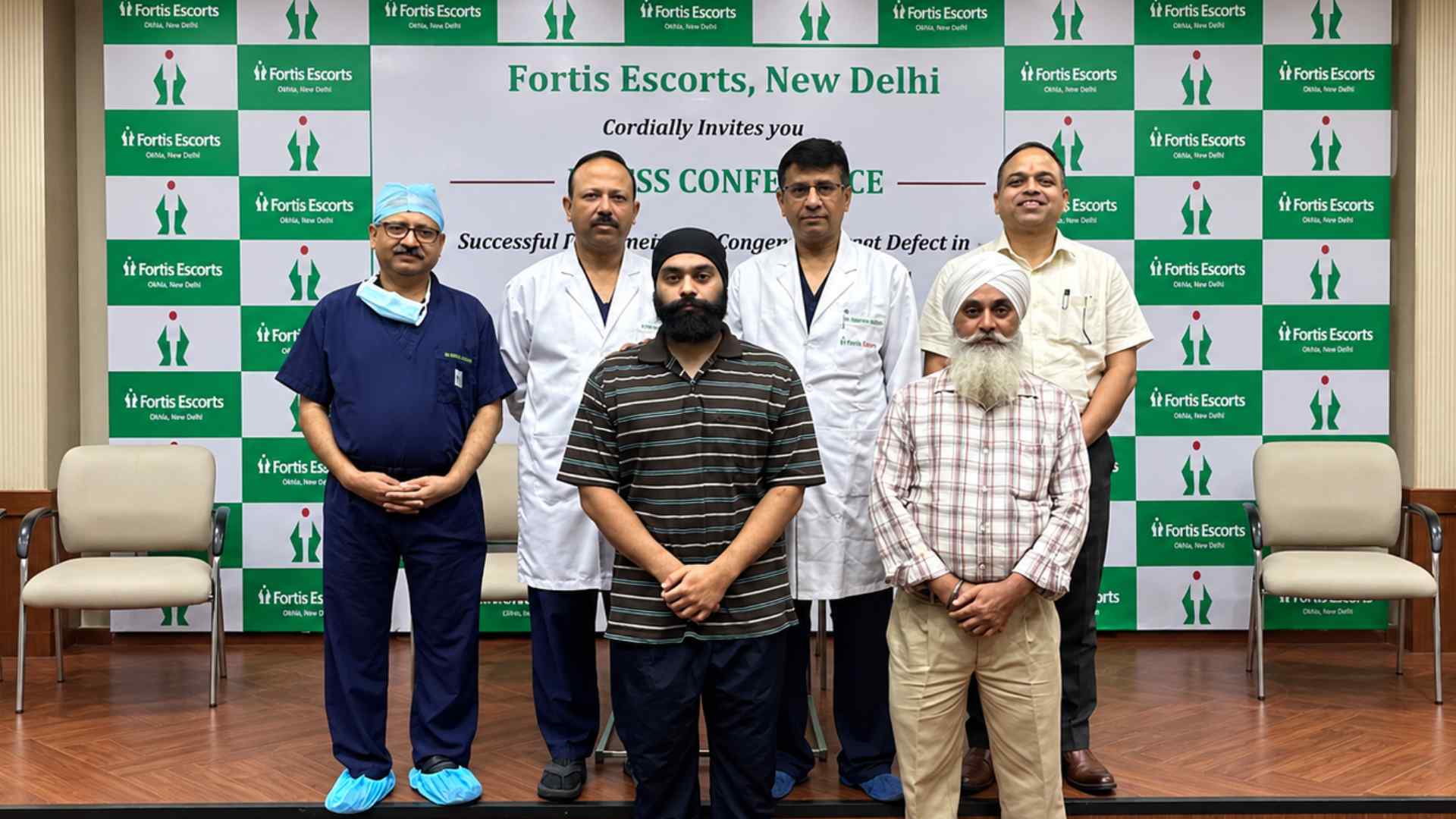
 Minimally invasive robot-aided surgery repairs a large congenital hole in the heart, without the need for conventional open-heart surgery, enabling faster recovery for a young.





New Delhi, September 17, 2026: Doctors at Fortis Escorts, Okhla, have successfully repaired a large congenital heart defect in a 26-year-old Merchant Navy officer through robot-assisted surgery, thus clearing the way for him to pursue his dream of joining the merchant navy. The procedure was led by Dr. Ritwick Raj Bhuyan, Senior Director, Cardio Thoracic Vascular Surgery, Fortis Escorts Hospital, Okhla, along with Dr. Nishith Chandra, Principal Director, Cardiology, Fortis Escorts Hospital, Okhla.
The congenital heart defect was detected during a routine health check-up after the 26-year-old had already joined the Merchant Navy. Although he had previously undergone mandatory medical screening for clearance to join the Merchant Navy, the condition remained undetected on ECG. A subsequent echocardiogram (ECHO), performed as part of a routine health assessment, revealed a large atrial septal defect (ASD) - a congenital opening in the wall separating the heart’s two upper chambers. The defect was allowing excess blood flow to the lungs and placing additional strain on the right side of the heart. Following the diagnosis, the patient was declared medically unfit for service, putting his career and aspirations on hold. Seeking a definitive treatment that would enable him to return to his chosen profession, he was evaluated at Fortis Escorts, Okhla, where the cardiac team opted for a robot-assisted minimally invasive procedure to repair the defect.
Using the Da Vinci Xi robotic surgical system, the doctors accessed the heart through small ports and a limited working incision, avoiding conventional splitting of the breastbone. Using the advanced robotic system, doctors repaired the large hole in his heart using a specialized patch. The surgery went smoothly without complications, and the patient was taken off the ventilator on the same day. He had a smooth recovery and was discharged in stable, healthy condition with normal heart function.
Thanking the doctors team, The Patient said “I was born with this heart defect, but I had never experienced any major symptoms and was always active and focused on my career. Being told that I had a congenital heart defect was difficult, especially when I had dreams of serving at sea. The successful robot-assisted surgery at Fortis Escorts Okhla has given me a new sense of confidence and hope. I am deeply grateful to my doctors and the entire team for helping me move forward and pursue my dream of working with the merchant navy.”
Giving details of the case, Dr. Ritwick Raj Bhuyan, Senior Director, Cardio Thoracic Vascular Surgery, Fortis Escorts Hospital, Okhla, said, “Atrial septal defect is not an uncommon condition, but in a young person, the presence of a significant hole in the heart can have implications beyond the medical condition itself. In this case, the patient was aspiring to join the Merchant Navy but was unable to pursue the opportunity because of his ASD. This can create significant psychological stress and anxiety for a young individual who is otherwise fit and looking forward to starting his professional career. Since the defect was large and not suitable for device closure, we chose a robotic-assisted surgical approach.
The procedure allowed us to close the defect without conventional open surgery, thereby supporting a quicker recovery and helping the patient move towards his goal of returning to work at the earliest.”
Dr. Nishith Chandra, Principal Director, Cardiology, Fortis Escorts Hospital, Okhla said “While many heart defects can be closed through a catheter-based device inserted through the blood vessels in the groin, the size and anatomy of the defect in this case made it unsuitable for device closure. Traditionally, surgical ASD closure is performed through open-heart surgery where the breastbone is divided to access the heart. However, given the patient’s young age, otherwise fit health and need for an early return to his professional aspirations, the team opted for a robotic-assisted approach.”
Dr. Vikram Agarwal, Regional Director, Fortis Escorts Hospital, Okhla, said, “At Fortis Escorts Okhla, our focus is on combining clinical expertise with advanced technology to provide patients with effective and minimally invasive treatment options. This case highlights how robotic-assisted cardiac surgery can make a meaningful difference in the recovery journey of young patients, particularly when they are looking to resume their professional and personal lives at the earliest. The successful management of this complex ASD reflects the expertise of our cardiac surgical team and our commitment to advancing minimally invasive cardiac care.”





-23-300x250.png)




















