Sunday, October 25, 2026
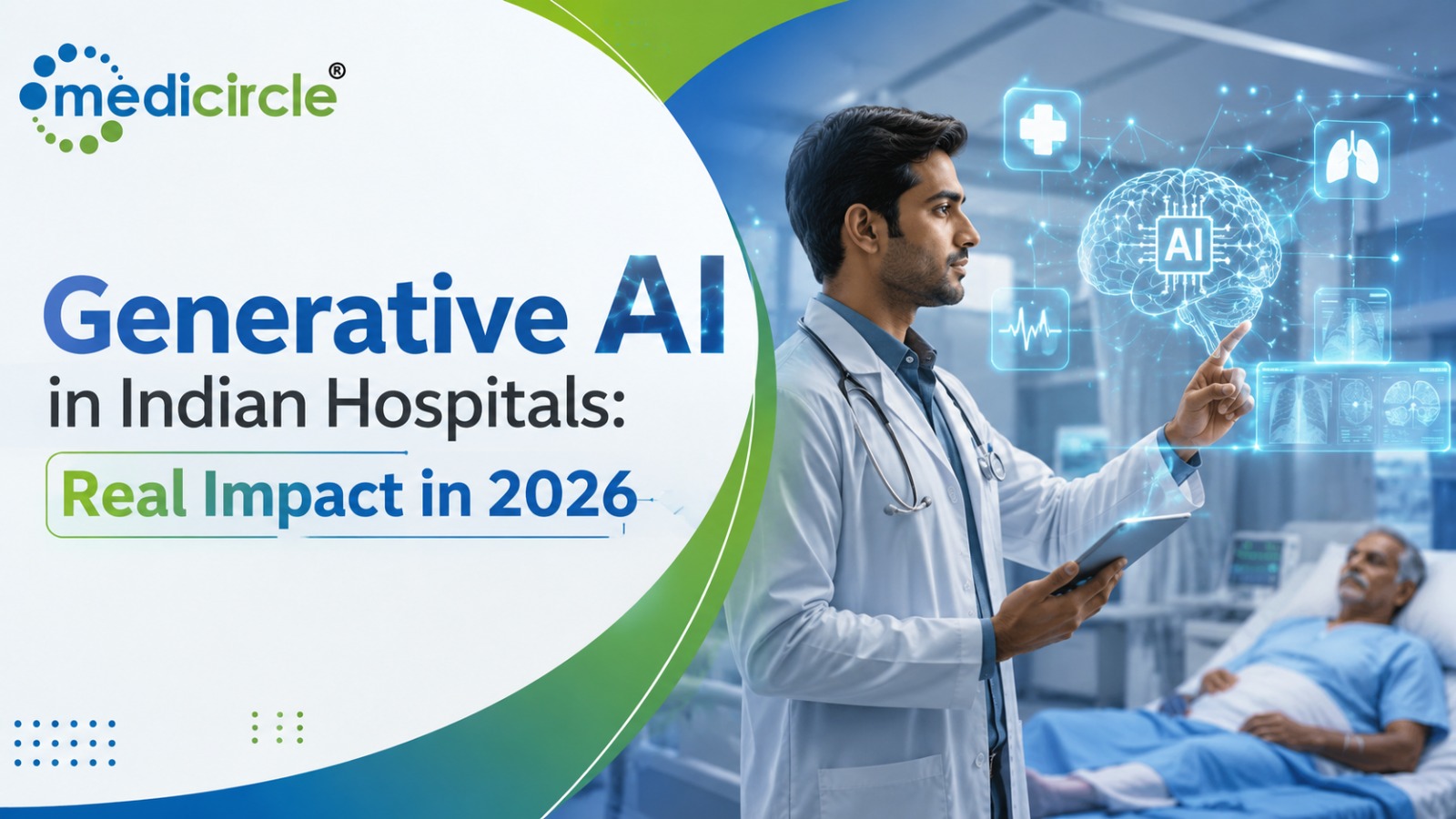
 Generative AI is delivering measurable results in Indian hospitals through diagnostics, telemedicine, clinical documentation, maternal care, and disease surveillance, supported by robust government policy and digital health infrastructure in 2026.





Introduction
The conversation around artificial intelligence in Indian healthcare has shifted significantly. It is no longer about possibility or potential. In 2026, the question that hospital administrators, clinicians, and policymakers are asking is far more practical: where is generative AI actually working, and what results is it producing on the ground?
India is home to more than 1.4 billion people, a severe shortage of specialist doctors in rural and semi-urban areas, and a healthcare infrastructure that has historically struggled to reach the last mile. Against this backdrop, generative AI and broader AI-enabled systems are not a luxury. For a growing number of hospitals and public health programmes, they are becoming essential tools for closing persistent gaps in care delivery.
The government's IndiaAI Mission, approved with a budget outlay of Rs 10,371.92 crore in March 2024, has given institutional momentum to this shift. Simultaneously, a vibrant private sector ecosystem of health technology companies is deploying solutions at scale. From chest X-ray analysis to AI-assisted clinical documentation and disease outbreak surveillance, the impact of these tools in 2026 is measurable, documented, and expanding.
Understanding Generative AI in the Context of Indian Healthcare
Before examining specific applications, it is worth clarifying what generative AI means in the clinical setting, because the term is often used loosely.
Generative AI refers to artificial intelligence systems that can produce new content, whether text, images, structured data, or clinical summaries, by learning from large datasets. In hospitals, this translates into tools that can generate differential diagnoses, summarise patient records, draft clinical notes from voice inputs, interpret medical images, and flag high-risk patients for early intervention.
What distinguishes generative AI from earlier rule-based hospital software is its ability to process unstructured information. A doctor's verbal consultation, a free-text nursing note, a patient's description of symptoms in their regional language. These are precisely the kinds of inputs that traditional hospital management systems could not interpret, but that generative AI tools are now beginning to handle with increasing accuracy.
India's particular healthcare context makes this capability especially valuable. The country has approximately one government doctor for every 10,000 citizens in many states. Specialists are concentrated in large cities. Generative AI, when deployed responsibly, allows non-specialists and frontline workers to perform functions that previously required years of clinical training.
Where Generative AI Is Making a Real Difference in 2026
Diagnostics and Medical ImagingPerhaps the most clinically significant deployment of AI in Indian hospitals today is in diagnostic imaging. Tools that use deep learning to read chest X-rays, retinal photographs, and CT scans are now operating at meaningful scale.
Qure.ai, one of India's most prominent AI health companies, deploys deep learning algorithms to analyse chest X-rays and CT scans and detect more than 35 clinical findings including tuberculosis, lung cancer, and cardiac abnormalities. The platform is now used across more than 1,000 clinical sites and serves approximately 15 million patients annually. TB detection accuracy has improved by 30 percent, and the speed of diagnosis has reduced significantly, enabling faster treatment initiation, which is critical in infectious disease management.
The government's own DeepCXR initiative under the National TB Elimination Programme is deployed across eight states and union territories, enabling frontline health workers without radiology expertise to flag presumptive TB cases for specialist review. This has contributed to a reported 27 percent decline in adverse tuberculosis outcomes.
In ophthalmology, MadhuNetrAI and solutions like 3Nethra are allowing community health workers to photograph retinas and receive AI-generated grading reports that prioritise which patients need urgent referral to an ophthalmologist. India's first AI-based community diabetic retinopathy screening programme launched in December 2025, benefiting over 7,100 patients across 38 facilities in its initial phase. The 3Nethra device has screened more than three million people and is now adopted in 75 countries, reducing unnecessary specialist referrals by 70 percent.
AI-Assisted Clinical DocumentationOne of the quieter but genuinely transformative applications of generative AI in Indian hospitals is in clinical documentation. Doctors in India, particularly those in outpatient departments handling 60 to 100 patients per day, have long faced the burden of maintaining accurate written records while simultaneously consulting patients.
AI-powered voice scribing tools are now addressing this directly. Sunoh.AI by eClinicalWorks and Eka Scribe both enable doctors to consult patients verbally while the AI transcribes, structures, and generates electronic prescriptions in real time. Eka Scribe has supported the creation of more than five lakh ePrescriptions using AI. eClinicalWorks has helped create 34 lakh ABHA-linked health records across 219 hospitals.
These tools are not simply replacing typing with voice recognition. They are using generative AI to convert conversational clinical language into structured medical documentation, which is a qualitatively different and far more complex task.
Telemedicine and AI-Assisted Differential DiagnosisThe eSanjeevani platform, the Government of India's national telemedicine service, has incorporated an AI-powered Clinical Decision Support System that assists doctors with differential diagnosis recommendations based on patient-reported symptoms.
From April 2023 to November 2025, eSanjeevani recorded 282 million consultations nationwide. Of these, 12 million consultations were specifically aided by AI-generated diagnostic recommendations. For patients in remote Tier 2 and Tier 3 towns who would otherwise travel hours to reach a general physician, this represents a genuine shift in access to clinical reasoning support.
The integration of generative AI into telemedicine is particularly significant for India because it creates a multiplier effect. A single specialist located in a city can, through AI-assisted decision support, effectively extend clinical insight to hundreds of consultations taking place simultaneously across the country.
Disease Surveillance and Outbreak DetectionThe Ministry of Health and Family Welfare's Media Disease Surveillance system uses AI to continuously scan digital news sources across India for reports of symptom clusters, unexplained fevers, and unusual disease patterns. Since April 2022, the system has generated more than 4,500 event alerts that have enabled health authorities to investigate and respond to potential outbreaks before they escalate.
This application of AI is generative in a specific sense: the system synthesises information from thousands of unstructured news sources and produces structured alerts that public health teams can act upon. This kind of early warning capability, which previously required large teams of epidemiologists manually monitoring media, is now running at scale with minimal human effort.
Maternal and Neonatal CareAI is making measurable progress in areas that India has historically struggled with: maternal mortality and neonatal outcomes.
CareNX has deployed portable antenatal care kits and wireless fetal monitoring devices that frontline workers use to screen pregnant women at the household level for blood pressure, haemoglobin levels, and fetal heart rate. AI analyses the data and flags high-risk pregnancies for referral. The platform has supported more than 500,000 mothers across 20 states, reducing out-of-pocket expenditure and operational costs for health systems.
NemoCare Raksha is a wearable device for newborns that continuously monitors heart rate, respiratory rate, blood oxygen saturation, and body temperature. One nurse using this AI-powered system can monitor between 40 and 50 newborns simultaneously. Since 2022, the platform has supported more than 20,000 newborns.
ICU Monitoring and Critical CareCloudphysician's remote ICU platform connects critical care units in smaller hospitals to specialists in real-time command centres. The platform uses AI-powered tools including AIRA for clinical note assistance and NETRA for computer vision-based patient monitoring. It has impacted more than 130,000 patients across 280 hospitals and reduces clinical documentation time by 40 percent.
This application is particularly relevant for India's Tier 2 cities and district hospitals, where ICUs exist but intensivists are scarce. AI does not replace the specialist. It enables the specialist to extend their reach across multiple facilities simultaneously.
The Foundational Infrastructure Enabling This Transformation
The scale of AI deployment in Indian hospitals has been made possible by a parallel investment in digital health infrastructure. The Ayushman Bharat Digital Mission has created 799 million digital health IDs as of August 2025. More than 410,000 healthcare facilities and 670,000 healthcare professionals are registered on the ABDM digital repositories, and over 671 million health records have been linked with Ayushman Bharat Health Accounts.
This foundational data layer is what allows AI tools to function meaningfully at the population level. Without structured, accessible patient data, even the most sophisticated generative AI model cannot deliver consistent clinical value.
Three institutions have been designated as Centres of Excellence for AI in healthcare:
- AIIMS Delhi
- PGIMER Chandigarh
- AIIMS Rishikesh
These centres are tasked with developing indigenous AI solutions suited to the Indian clinical environment. A National Federated Learning Platform, established through a partnership between the National Health Authority and IIT Kanpur, is creating open benchmarking infrastructure to validate AI health models using ABDM ecosystem data.
All deployments are governed by the ICMR Ethical Guidelines for AI in Healthcare published in 2023, alongside MeitY AI Governance Guidelines that mandate privacy-by-design principles and secure data exchange protocols.
Challenges That Still Require Honest Attention
The progress is real, but so are the challenges. AI tools trained predominantly on datasets from urban tertiary hospitals may not perform with equal accuracy in rural primary care settings where image quality, patient demographics, and disease prevalence differ significantly.
Digital and health literacy among frontline workers in Tier 3 districts and tribal areas remains uneven, which affects how effectively AI tools are used in practice. Language diversity in India, with hundreds of spoken languages and dialects, continues to present challenges for voice-based generative AI tools designed primarily in English or Hindi.
Integration with legacy hospital management systems used by many district and taluka hospitals is another ongoing technical challenge. The SAHI framework, the government's upcoming Strategy for AI in Healthcare for India, is expected to address several of these concerns through a structured policy roadmap developed in consultation with both public and private stakeholders.
Frequently Asked Questions
Q1: What is generative AI and how is it being used in Indian hospitals in 2026?
Generative AI refers to AI systems that can produce new content such as clinical summaries, diagnostic reports, and ePrescriptions. In Indian hospitals, it is being used for interpreting medical images, assisting differential diagnosis in telemedicine, creating voice-based clinical documentation, and monitoring patients in critical care units.
Q2: Which government programmes are using AI in Indian healthcare?
Several major programmes are deploying AI, including the National TB Elimination Programme using DeepCXR for X-ray analysis, eSanjeevani for AI-assisted telemedicine, MadhuNetrAI for diabetic retinopathy screening, and the Media Disease Surveillance system for outbreak detection. These operate under the IndiaAI Mission and the Ministry of Health and Family Welfare.
Q3: How is AI improving outcomes in rural and Tier 2 hospitals in India?
AI is enabling non-specialist health workers to perform diagnostic screening tasks that previously required specialist expertise. Tools like MadhuNetrAI, CareNX, and remote ICU platforms from Cloudphysician allow frontline workers and district hospitals to deliver more sophisticated care, reducing the need for long-distance specialist referrals.
Q4: Is AI use in Indian healthcare regulated?
Yes. All AI deployments in Indian healthcare are required to follow the ICMR Ethical Guidelines for AI in Healthcare published in 2023 and the MeitY AI Governance Guidelines. These frameworks mandate data privacy, secure exchange, and ethical oversight.
Q5: What is the role of ABDM in enabling AI in Indian hospitals?
The Ayushman Bharat Digital Mission provides the foundational data infrastructure for AI deployment. With 799 million digital health IDs and 671 million linked health records as of 2025, ABDM creates the structured, accessible patient data ecosystem that AI tools require to function accurately at population scale.
Resources
- Ministry of Health and Family Welfare (MoHFW): Official press releases and programme updates on AI integration in national health programmes
- ICMR Ethical Guidelines for AI in Healthcare 2023: Framework governing responsible AI deployment in Indian clinical settings
- IndiaAI Mission, Government of India: Policy and programme documentation on the national AI strategy including healthcare applications
- Ayushman Bharat Digital Mission (ABDM): Information on digital health infrastructure and ABHA-linked health records
- NITI Aayog Frontier Tech Hub: Case studies and impact documentation of AI-enabled healthcare innovations in India
Interlinking Keywords:
generative AI in Indian hospitals, AI diagnostics India, eSanjeevani telemedicine, IndiaAI mission healthcare, ABDM digital health, diabetic retinopathy screening India, AI clinical documentation, National TB Elimination Programme
Medical Disclaimer:
This article is intended for informational and educational purposes only. It does not constitute medical advice, diagnosis, or treatment recommendations. Readers should consult qualified healthcare professionals for any medical concerns or clinical decisions. Information presented is based on publicly available government and research sources and reflects conditions as reported up to August 2026.
Last medically reviewed by:
Editorial and Medical Review Team, Medicircle on 22 August 2026





-23-300x250.png)

.jpeg)


.jpg)
.jpg)
.jpg)
.jpg)
.jpg)
.jpg)
.jpg)
.jpg)
.jpg)