Tuesday, October 27, 2026
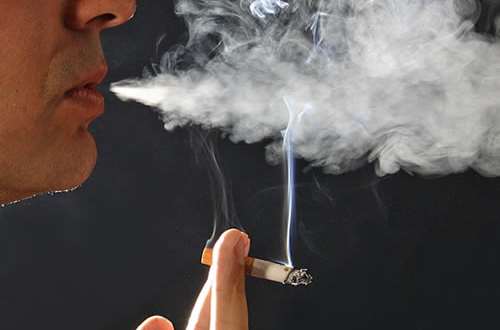
 Earlier this week, delegates to the intergovernmental meeting of global tobacco treaty were greeted with calls to make Big Tobacco pay for its abuses.




Would you not be surprised to learn that an industry whose products kill over 8 million people every year (even when used as the manufacturer intended), and cause an array of health and environment disasters of epidemic proportion, has not been held to account fully? Yes, we are referring to the Big Tobacco. Well, perhaps a very long wait could be over as governments of over 180 countries are meeting in Panama for advancing progress on global tobacco treaty - and it is likely that such a decision to make Big Tobacco Pay - may come forth, finally.
Earlier this week, delegates to the intergovernmental meeting of global tobacco treaty were greeted with calls to make Big Tobacco pay for its abuses. Civil society, led by the Network for Accountability of Tobacco Transnationals (NATT), and government champions urged governments to the global tobacco treaty to accept a draft decision strengthening nations' ability to hold the industry liable and accountable. The proposal is being championed by Oman, Pakistan, and the Islamic Republic of Iran and co-sponsored by Brazil, Djibouti, Ghana, Iraq, Kuwait, Panama, Qatar, Saudi Arabia, Syrian Arab Republic, and Yemen. The global tobacco treaty is formally called the World Health Organization Framework Convention on Tobacco Control (WHO FCTC).
"When an individual violates someone's health or safety, we as a society are supposed to hold them accountable. The same is true of tobacco corporations, which have inflicted enormous harm around the world. We must hold them responsible for their actions - not only to redress past harms, but also to prevent them from continuing their abusive behavior unchecked," said Daniel Dorado, Tobacco Campaign Director of Corporate Accountability, a NATT member.
For decades, the tobacco industry has caused millions of deaths and cases of preventable disease, polluted the environment, and violated human rights.
Annual tobacco-related global healthcare costs are estimated at $US 422 billion and economic costs more broadly at $US 1.85 trillion. There are also extraordinary environmental costs that have not been factored into prior accounting, such as the $US 2.6 billion tab to clean-up tobacco product waste in China alone.
Holding the industry liable could help governments recoup billions in such costs.
"Big Tobacco can only be profitable because we as a society bear the true costs of their business," said Irene Reyes, a NATT member and public health attorney from the Philippines. "While the tobacco industry rakes in nearly one trillion dollars a year, regular people are forced to pay the price of their deadly products with our lives, our land, and our taxes. And the people who bear the most are those whom the industry targets: youth, people of color, and residents of low income countries. Now, it's time our governments hold the industry liable, and make Big Tobacco pay its many debts to society."
NATT and its allies presented COP10 delegates with a petition to make Big Tobacco pay for its harms, which was endorsed by more than 85 legal experts and garnered more than 30,000 signatures - representing people in 95 countries and territories and all 6 WHO regions.
Five countries are proposing a measure that would further strengthen Article 19 of the global tobacco treaty (FCTC), a groundbreaking but underutilised provision that enables the governments to pursue liability. Several nations, including Brazil, Ireland, and Canada, have already filed health-related lawsuits against the industry, while the U.S. city of Baltimore launched a first-of-its-kind lawsuit to make tobacco corporations pay for cigarette butt pollution.
"I strongly and respectfully encourage all governments present at this COP [Conference of the Parties to the WHO FCTC] to support the draft decision on Article 19 of the WHO FCTC. [...] Panamá is with you. Together, we can hold Big Tobacco accountable for their abuses," said H.E. Dr. Ivette Berrio Aquí, Vice Minister of Health of Panamá.
Delegates will decide on the proposal in the coming days of the talks, which end on 10th of February 2024. The decision could serve as a model to hold other abusive industries liable, setting a strong precedent for the UN climate treaty, the nascent plastic treaty, and other international bodies.
"Abusive corporations from Big Tobacco to Big Oil are selling a deadly product and saddling society with all the costs that come with it. It's not right and it's past time for us to put an end to this corporate stranglehold on society," said Akinbode Oluwafemi, Executive Director of Corporate Accountability and Public Participation Africa.
The Network for Accountability of Tobacco Transnationals (NATT) is a global coalition to hold Big Tobacco accountable made up of environmental, public health, human rights, and corporate accountability organizations around the world.
Additional petition sponsors include African Tobacco Control Alliance, Action on Smoking & Health, Coalición América Saludable, Southeast Asia Tobacco Control Alliance, and European Network for Smoking and Tobacco Prevention.
"In 2019, the Office of the Attorney-General of Brazil filed a lawsuit against the largest tobacco corporations in the country and their parent companies abroad to recover healthcare costs for the treatment of patients suffering from 26 tobacco-related diseases, treatment for future patients, and collective moral damages caused by the tobacco public health burden. So far the decisions have been favourable to the federal government, but there is still a long way to go, in part because the tobacco industry has delayed the case by submitting more than 25,000 pages of documents over the past 4 years," said Thiago Lindolpho Chaves and Viníscus de Azevado Fonseca of the Office of the Attorney-General of Brazil.
"Tobacco executives and shareholders should be held to the same standards as the rest of us. Our leaders need to show these corporations that they can't get away with murder, theft, or environmental degradation anymore," said Kelsey Romeo-Stuppy, Managing Attorney at Action on Smoking & Health.
The Global Youth Voices, in an open letter to COP10 delegates said: "The tobacco industry should not be given the power to mislead our generation further […]. Instead, it must be held accountable for the lasting pain and suffering it has inflicted and will continue to inflict upon countless lives. It must bear the financial consequences of the devastation it has wrought on the planet. Front groups and persons that voice industry positions should also be held accountable as they put us in danger. We urge you to prioritize ensuring easy access to justice for the youth and future generations."
"The tobacco industry kills more than 8 million people every year, and sickens many millions more. Nothing can bring back those mothers and fathers, brothers and sisters, and friends. But we must make Big Tobacco pay for what they have done and continue to do. A healthier world is possible if our governments act with urgency and conviction to hold tobacco corporations accountable," said Labram Musah, Executive Director of Vision for Alternative Development
Samuel Ochieng, Executive Director of Consumer Information Network, best sums it up: "Billions of people worldwide need the Parties to the WHO FCTC to forestall the ravaging socio-economic effects caused by Big Tobacco. Let's all act now to stop this genocide and blatant destruction of Mother Earth on which we all depend. Let's make Big Tobacco pay."





-23-300x250.png)

.jpeg)






.jpg)
.jpg)
.jpg)
.jpg)
.jpg)
.jpg)
.jpg)
.jpg)
.jpg)