Friday, October 23, 2026
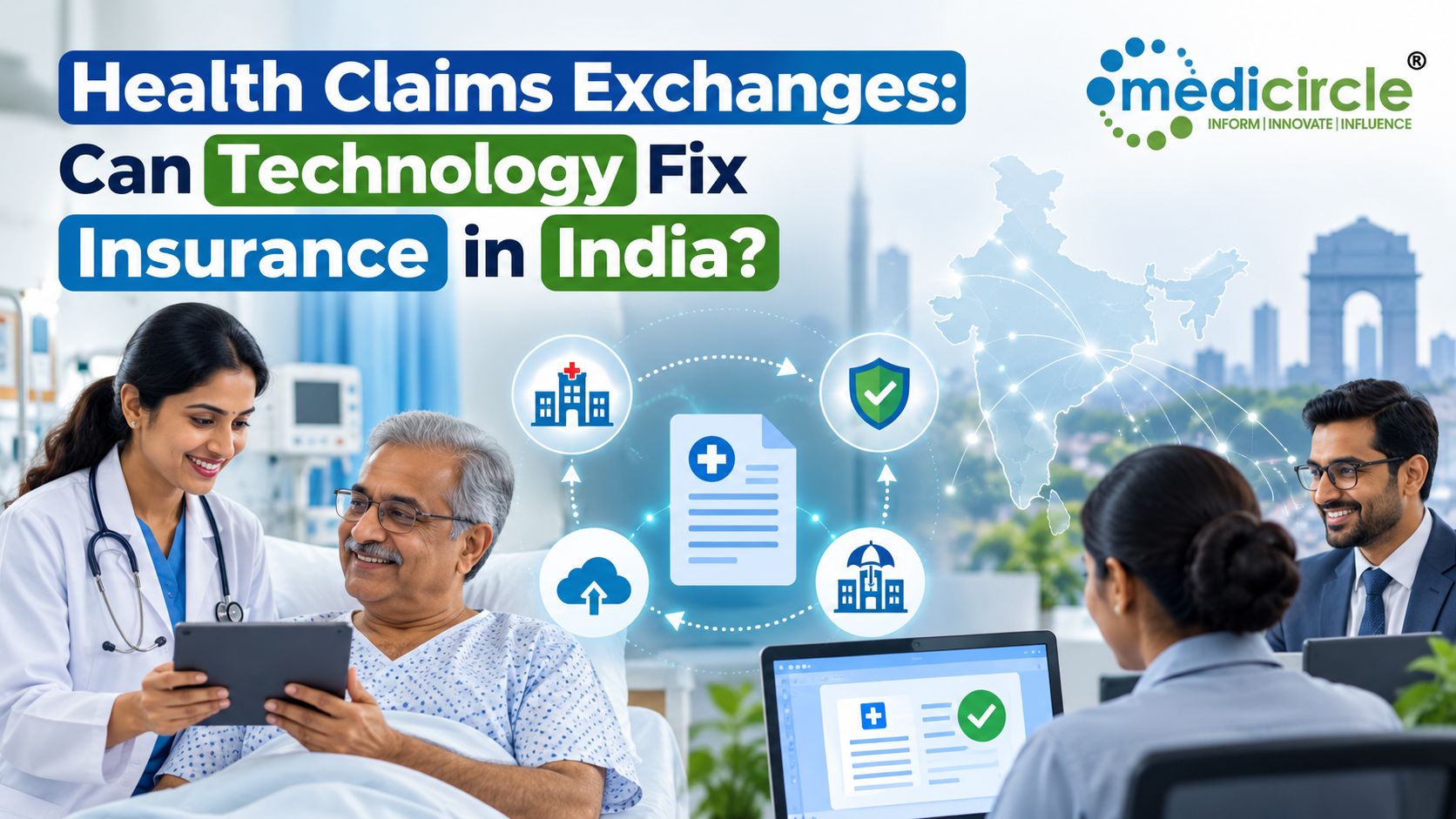
 India's NHCX is digitizing health insurance claims under ABDM, connecting hospitals, insurers, and TPAs to reduce delays, improve transparency, and transform healthcare finance nationally.





Introduction
For millions of Indians, health insurance has long promised financial protection during medical emergencies. Yet for decades, the actual experience of claiming that protection has been frustrating, slow, and riddled with uncertainty. Hospitals wait months to receive payments. Patients find themselves caught between providers and insurers. Third-party administrators process documents manually, introducing errors and delays at every step. The system has worked, but barely, and often at great cost to everyone involved.
That reality is now beginning to shift. India's National Health Authority (NHA) has introduced the National Health Claims Exchange (NHCX), an online system designed to standardize and simplify the exchange of health claims, making it easier for insurance companies, government schemes, and healthcare providers like hospitals and labs to share data, documents, and images. This initiative represents one of the most significant structural reforms in Indian healthcare finance in recent memory, and its implications stretch well beyond administrative efficiency.
For patients, hospitals, insurers, and policymakers alike, understanding what health claims exchanges are, how they function, and what they can realistically deliver is essential. This article examines the technology behind these platforms, the problems they aim to solve, the challenges that stand in the way, and what the future of health insurance processing in India could look like.
Understanding the Broken Claims Ecosystem
Before exploring solutions, it is important to understand the scale of the problem that health claims exchanges are designed to address.
India's health insurance sector has historically operated in fragments. Every insurer maintained its own proprietary portal, its own data submission format, and its own adjudication logic. A hospital working with fifteen or twenty different insurance companies was effectively required to build and maintain fifteen or twenty completely different administrative workflows. This fragmentation was not merely inconvenient. It was operationally punishing.
Days Sales Outstanding on insurance claims routinely runs between 60 and 120 days, and rejection rates on first submission hover around 15 to 20 percent for most hospitals. For smaller nursing homes and single-specialty clinics, these delays translate directly into working capital stress. A hospital that performs 500 insured procedures a month and waits four months for reimbursement is essentially providing an interest-free loan to the insurance industry.
Patients are not insulated from these problems either. Delayed settlements affect hospital willingness to offer cashless treatment. Opaque processes mean that patients often cannot track the status of their own claims. Rejected or partially settled claims force families to make out-of-pocket payments they were never prepared to make, defeating the very purpose of having insurance.
The existing health claims processing system has been identified as suffering from claims tracking issues, with hospitals struggling to track the status of claims as they move through the insurer's adjudication process. This lack of visibility affects trust at every level of the healthcare ecosystem.
What Is a Health Claims Exchange and How Does NHCX Work?
The National Health Claims Exchange is a standardized digital gateway that securely routes health insurance claims information between healthcare providers such as hospitals, clinics, and diagnostic labs, and payers including insurance companies, third-party administrators, and government schemes in India. Its single most important characteristic is that NHCX is a router, not a repository. It moves claims data between parties in a common format but does not store patients' clinical or financial records.
This distinction matters enormously for data privacy. Patient information is not consolidated into a single centralized database. Instead, the system facilitates structured communication between parties while preserving the security of sensitive records.
NHCX was developed by the National Health Authority in consultation with the Insurance Regulatory and Development Authority of India (IRDAI), under the Ayushman Bharat Digital Mission (ABDM). It went live in June 2024, and IRDAI has since urged all insurers and providers to onboard.
The technical backbone of NHCX relies on the HL7 FHIR (Fast Healthcare Interoperability Resources) standard, which is widely used in global digital health infrastructure. This means that claims data submitted through NHCX follows a universally recognized format, reducing the risk of errors caused by incompatible data structures.
Key functions that NHCX enables include:
- Standardized claim submission by hospitals across all participating insurers through a single interface
- Pre-authorization requests sent and responded to digitally
- Real-time tracking of claim status for hospitals and, eventually, for patients
- Reprocessing requests for disputed or rejected claims
- Secure communication between providers and payers without relying on fax, email, or physical documents
The Role of ABDM and Government Backing
NHCX does not exist in isolation. It is one of the most consequential components of a much larger national project. NHCX is one component of the Ayushman Bharat Digital Mission (ABDM), which aims to build an integrated digital health infrastructure across the country. Within this ecosystem, NHCX serves as the foundational layer for financial and administrative data exchange between providers and payers.
The scale of ABDM itself gives a sense of the ambition involved. As of August 2025, approximately 79.91 crore Ayushman Bharat Health Accounts (ABHAs) have been created, and 4.18 lakh health facilities have been registered on the Health Facility Registry.
The government is also bringing PM-JAY (Pradhan Mantri Jan Arogya Yojana) claims onto the same platform, meaning that both government-funded and private insurance claims will eventually flow through one unified system. This integration is significant because PM-JAY is one of the world's largest publicly funded health insurance schemes, covering over 50 crore beneficiaries. Bringing both public and private claims under a single exchange would create a genuinely unified national claims infrastructure.
The IRDAI panel has recommended standardising hospital treatment rates and mandating the National Health Claims Exchange, noting that NHCX digitises claims, eliminates discharge delays, curbs fraud, and reduces out-of-pocket medical expenditure. This regulatory direction signals that NHCX adoption is shifting from optional to expected for all major stakeholders.
Technology as the Core Driver: AI, Automation, and Interoperability
While NHCX provides the structural backbone, the full transformation of insurance processing depends on the technologies built on top of it. Artificial intelligence and machine learning are already beginning to reshape how claims are adjudicated and how fraud is detected.
India's insurance sector has seen a tech boom in AI and ML for underwriting and claims, a surge in digital policy issuance, and new products like usage-based and embedded insurance as part of the sector's 2025 inflection point.
AI-powered claims adjudication can cross-reference submitted claims against historical treatment patterns, standard medical costs, and policy terms in a fraction of the time required by manual processing. This reduces the workload on TPAs while improving accuracy. Machine learning models can flag potentially fraudulent claims before payment is released, protecting both insurers and honest policyholders from the costs of fraud.
Claims processing and servicing timelines are expected to compress significantly as automation and artificial intelligence workflows move from pilot stages to full-scale implementation. For hospitals in India's Tier 1 cities like Mumbai, Bengaluru, and Delhi, where insurance volumes are highest, this acceleration can translate directly into improved cash flow and operational stability.
The integration of ABHA (Ayushman Bharat Health Account) with NHCX adds another dimension. Patients with ABHA IDs can have their health records and insurance information linked, enabling faster eligibility verification at the point of admission. This reduces the back-and-forth between hospitals and insurers that currently adds days to the pre-authorization process.
Challenges That Must Be Addressed
Despite genuine momentum, the path to a fully functional health claims exchange ecosystem in India is not without significant obstacles.
Digital readiness gaps across hospital types. One of the biggest hurdles is getting hospitals, especially in rural areas, on board. Many smaller hospitals still rely on paper-based processes, and transitioning to a fully digital system can seem daunting. The lack of adequate technological infrastructure in these areas makes the adoption of NHCX more difficult. India has tens of thousands of small nursing homes and single-doctor facilities, and bringing all of them onto a standardized digital platform requires sustained investment in training and infrastructure.
TPA integration and legacy systems. Third-party administrators play a crucial role in the adoption and success of NHCX. As intermediaries between insurers and healthcare providers, TPAs are essential in facilitating claims processing. However, many TPAs currently rely on manual processes, leading to inefficiencies, delays, and errors. Legacy systems that do not communicate with NHCX-compatible software create integration bottlenecks that slow the entire ecosystem.
Cybersecurity and data governance. As health claims increasingly move online, the importance of robust cybersecurity frameworks cannot be overstated. The sensitivity of medical and financial data means that any breach would have serious consequences for patient trust and system credibility.
The discussion at the NHCX Hackathon acknowledged that scaling NHCX will require addressing systemic challenges including the need for interoperability across diverse hospital information systems, investments in technology and workforce capacity, and alignment between insurer and provider processes. Concerns around data standardization, cybersecurity, and regulatory clarity were also identified as critical areas that will shape the pace and success of adoption.
What This Means for Patients, Hospitals, and Insurers
The practical implications of a well-functioning health claims exchange ripple through every part of the healthcare financing chain.
For patients, the most immediate benefit is the possibility of genuinely seamless cashless hospitalization. When a hospital can obtain pre-authorization quickly and receive payment reliably, it has no reason to ask patients for large deposits or advance payments. The anxiety of not knowing whether a claim will be settled, and for how much, can be replaced by transparency and predictability.
For hospitals, particularly those in Tier 2 and Tier 3 cities that are increasingly offering insurance-linked services, NHCX addresses a chronic working capital problem. NHCX ends TPA portal-hopping, meaning one FHIR claim reaches all payers. For hospital CFOs, TPA receivables represent the single biggest working-capital drag. Faster settlement cycles mean better financial health for providers, which ultimately supports better patient care.
For insurers, standardized data from claims exchanges enables more accurate actuarial modeling and better product design. When claims patterns are visible in structured, machine-readable formats, insurers can design policies that are more precisely priced, reducing the cross-subsidization that currently distorts premiums for many consumers.
The Road Ahead: India's Health Insurance in 2026 and Beyond
The trajectory is clear even if the destination has not yet been fully reached. Looking ahead to 2026, the direction is clear. Growth will be driven less by just expanding coverage and more by improving quality, consistency, and trust.
In March 2026, the NHCX Innovation Meet at IIT Hyderabad showcased tools that help older hospital systems connect to NHCX, with teams building solutions to convert paper-based workflows into digital formats that the platform can read. This kind of grassroots innovation is essential for broadening NHCX adoption beyond large urban hospitals.
The regulatory environment is also becoming more supportive. IRDAI has been pushing insurers onto NHCX in phases, with major private insurers already live and public sector undertaking insurers being onboarded through 2025 to 2026. As adoption becomes effectively mandatory, the network effects of the exchange will strengthen. More participants mean more standardization, fewer errors, and faster processing for everyone.
Platforms like Medicircle, which are committed to credible healthcare communication, have an important role in this transition. Patients need to understand their rights under digital claims systems, hospitals need clear guidance on integration requirements, and policymakers need honest assessments of where the system is working and where it is not. Bridging the information gap between technical implementation and public understanding is as important as the technology itself.
Conclusion
Health claims exchanges represent one of the most structurally important interventions in Indian healthcare finance in recent years. The National Health Claims Exchange, built under the Ayushman Bharat Digital Mission, addresses a fragmented and inefficient system that has long penalized hospitals, frustrated patients, and complicated the work of insurers. By standardizing data formats, enabling real-time communication, and laying the groundwork for AI-powered adjudication, NHCX creates the conditions for a genuinely faster, more transparent, and more equitable insurance processing ecosystem.
The challenges are real, particularly in bringing smaller hospitals and legacy TPA systems into the fold, and the work of full adoption is far from complete. However, the regulatory direction, the technological momentum, and the scale of the ABDM ecosystem all point toward a future where insurance claims no longer pile up in inboxes or expire in filing cabinets, but move efficiently through a digital infrastructure built for the needs of a modern, healthcare-aware India.
Frequently Asked Questions
Q1: What is the National Health Claims Exchange (NHCX) in India?
NHCX is a standardized digital gateway developed by the National Health Authority under the Ayushman Bharat Digital Mission. It routes health insurance claims between hospitals, insurers, and third-party administrators using a common data format, replacing the earlier system of fragmented, proprietary portals. It went live in June 2024.
Q2: How does NHCX benefit patients?
NHCX enables faster pre-authorization, reduces delays in cashless hospitalization, and improves transparency in claim status tracking. When hospitals receive timely reimbursements, they are less likely to demand large deposits from patients, reducing the out-of-pocket burden during medical emergencies.
Q3: Is NHCX mandatory for all hospitals and insurers in India?
As of 2026, IRDAI has strongly nudged all insurers and healthcare providers to onboard NHCX, with major private insurers already live and public sector insurers being integrated. While full mandatory compliance is being phased in, regulatory direction indicates that universal adoption is the intended goal.
Q4: What role does artificial intelligence play in health claims processing?
AI and machine learning are being used to automate claims adjudication, detect potentially fraudulent submissions, cross-reference treatment costs against standard benchmarks, and reduce the time needed for claim settlement. These tools are expected to significantly compress processing timelines as they move from pilot to full-scale implementation.
Q5: What are the main challenges to NHCX adoption in India?
The primary challenges include the limited digital readiness of smaller rural hospitals, the reliance on manual processes by many third-party administrators, interoperability issues between different hospital information systems, and the need for stronger cybersecurity and data governance frameworks. Sustained government support, financial incentives, and affordable ABDM-compliant software are essential for broader adoption.
Resources
- National Health Authority (NHA): Official body overseeing NHCX development and implementation under ABDM
- Insurance Regulatory and Development Authority of India (IRDAI): Regulatory framework and guidance for insurer onboarding on NHCX
- Ayushman Bharat Digital Mission (ABDM), abdm.gov.in: National digital health infrastructure encompassing NHCX
- Ministry of Health and Family Welfare (MoHFW), mohfw.gov.in: Government policy updates on health insurance and digital health reforms
- NATHealth India: Industry body analysis and white papers on NHCX adoption challenges and implementation
Interlinking Keywords:
health claims exchange, NHCX India, Ayushman Bharat Digital Mission, cashless hospitalization, health insurance processing, IRDAI regulations, ABHA health account, digital health infrastructure, TPA claims settlement, PM-JAY insurance claims
Last medically reviewed by:
Editorial and Medical Review Team, Medicircle on 5, September 2026
Medical Disclaimer:
This article is intended for informational and educational purposes only. It does not constitute medical, legal, or financial advice. Readers are advised to consult qualified healthcare professionals and licensed insurance advisors for decisions related to their individual health and insurance needs. Information regarding regulatory and policy developments is based on publicly available sources and is subject to change.





-23-300x250.png)

.jpeg)
.jpg)
.jpg)
.jpg)
.jpg)
.jpg)
.jpg)
.jpg)
.jpg)
.jpg)