 Thursday, October 08, 2026
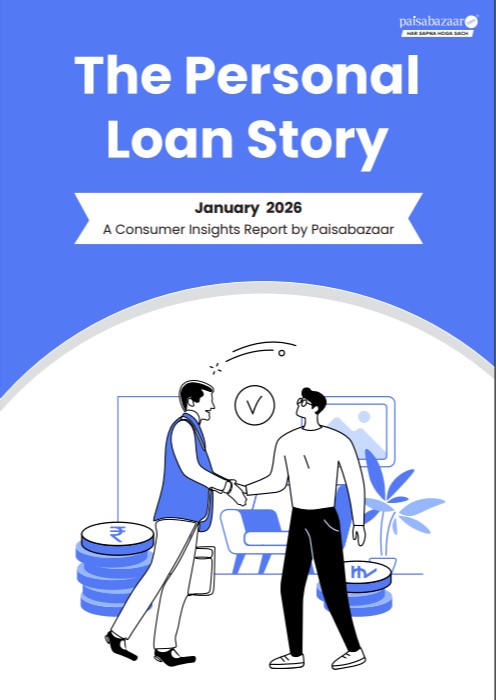
 Medical emergencies are among the biggest reasons for taking a personal loan in urban India, reveals a consumer research report by Paisabazaar.




Gurgaon, January 21, 2026: Medical emergencies are among the biggest reasons for taking a personal loan in urban India, reveals a consumer research report by Paisabazaar.
According to “The Personal Loan Story” released by Paisabazaar, 11% borrowers in India took a personal loan to meet emergency healthcare and medical expenses, with the share rising to 14% in Tier 1. The same stood at 10% in Tier 2 and 8% in Tier 3. The insight clearly points to low health insurance penetration and rising medical costs leading to dependence on personal loans during medical emergencies.
The report is based on in-depth interviews with 2889 personal loan borrowers across 23 cities and towns, offering insights into key borrowing triggers, preferences, decision drivers, and awareness levels across regions, city tiers, and age groups in India.
Along with medical needs, borrowers cited essential day-to-day essential expenses, urgent home repairs, and wedding or celebratory events as the most common reasons for availing personal loans.
Key Highlights of the report:
- Borrowing is no longer driven only by need. 48% took personal loans for essential requirements, while 36% borrowed to fund aspirations and 16% for business investments.
- Tier 3 borrowers are 2.4x more likely to borrow for daily needs than Tier 1 borrowers.
- Apart from self-employed borrowing for business investments, salaried individuals (9%) are also leveraging personal loans to fund family/side businesses or passion projects.
- Middle-income India is the most credit-active for aspirational led borrowing. Borrowers earning between Rs. 7.5 to 10 lakh annually show the highest lifestyle borrowing at 40%.
- Credit is being used for life events, with 11% of borrowers financing weddings and celebrations, led by Tier 1 cities at 14%.
- Despite the growth of online loans, many still rely on offline channels for borrowing. Only 32% availed personal loans online
- Impulse borrowing is becoming mainstream, with 25% of borrowers skipping evaluation of other credit alternatives, a behaviour most pronounced among Gen Z at 31%.
Santosh Agarwal, CEO, Paisabazaar, said, “Borrowing decisions today are shaped as much by life events, aspirations and urgency as by interest rates or eligibility. This study is our effort to move beyond transactional data and better understand the motivation and behaviour behind borrower decisions. As consumer behaviour evolves rapidly, it is becoming increasingly important for the ecosystem to understand these shifts and enable responsible, transparent and inclusive credit delivery.”
The study also revealed that post-purchase experience was rated “good” or “very good” by a remarkable 91% of borrowers. Speed was the single strongest driver of satisfaction across both offline (58%) and online channels (57%), followed by simplified processes and less paperwork, reinforcing the premium consumers place on efficiency over form.
In terms of credit understanding, the report also shed light on how Indians, though majorly credit aware, are yet to grasp the full depth and breadth of credit intricacies. 98% knew what a credit score is, but only a mere 7% fully understood how it affected their loan approval and pricing.






.jpeg)








.jpg)
.jpg)
.jpg)
.jpg)
.jpg)
.jpg)


.jpg)
.jpg)
.jpg)