 Tuesday, October 13, 2026
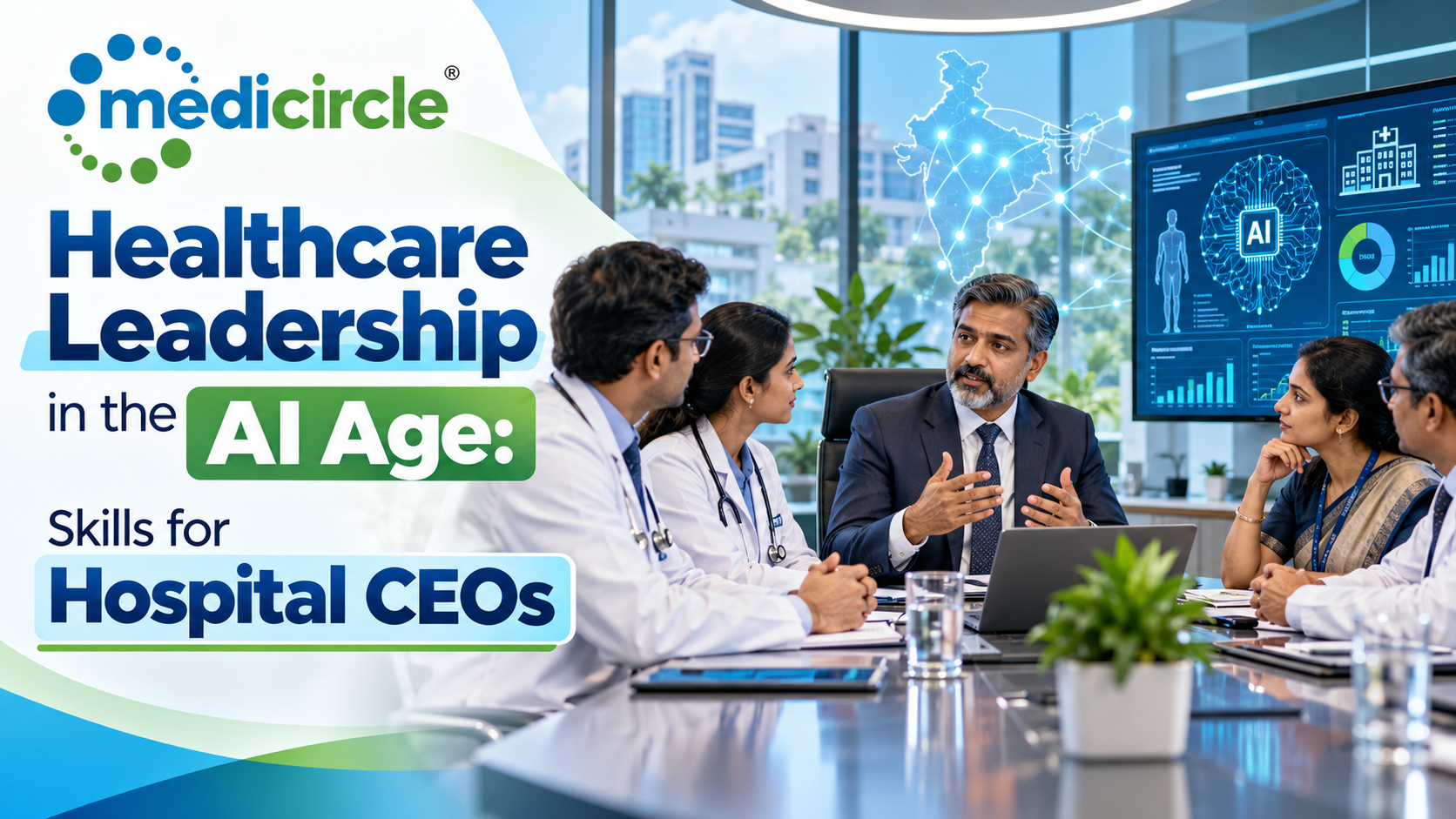
 Hospital CEOs in India must develop AI fluency, data governance skills, change leadership capability, and emotional intelligence to lead effectively in a rapidly transforming healthcare environment.





Introduction
The role of a hospital CEO has never been simple. Managing clinical teams, balancing financial performance, ensuring patient safety, and navigating regulatory requirements have always demanded a rare combination of skills. But as artificial intelligence steadily moves from research papers into actual hospital operations, the expectations placed on healthcare leaders have shifted considerably.
In India, where the healthcare sector is simultaneously dealing with infrastructure gaps, a rising disease burden, expanding health insurance coverage under Ayushman Bharat, and a rapidly growing healthtech ecosystem, hospital CEOs are facing a genuinely new kind of pressure. They are being asked to lead organizations that are transforming from within, where algorithms are beginning to assist radiologists, where predictive models are flagging high-risk patients before symptoms worsen, and where administrative functions are being automated at a pace that few anticipated even five years ago.
The question that hospital boards, medical directors, and healthcare investors are now asking is direct: what does an effective hospital CEO actually look like in this environment? What knowledge, what capabilities, and what qualities separate a leader who can guide a hospital through an AI-driven transformation from one who simply manages the present while the future moves ahead without them?
This article explores those questions with specific attention to the Indian healthcare context, drawing on the realities of managing hospitals across tier 1 and tier 2 cities, the demands of digital health integration, and the unique pressures of leading large clinical organizations through technological change.
Understanding the New Landscape of Hospital Leadership
Until recently, hospital CEOs were primarily evaluated on clinical outcomes, revenue generation, bed occupancy rates, and accreditation performance. These metrics remain important. But technology has introduced an entirely new layer of responsibility that sits alongside traditional administrative leadership.
AI in healthcare is no longer a future possibility. It is a present operational reality in many Indian hospital networks. Leading hospital chains are already deploying AI-powered diagnostic support tools, intelligent triage systems, smart scheduling platforms, and automated billing workflows. The ABDM framework is building the digital backbone that will connect hospitals, clinicians, labs, pharmacies, and insurers through interoperable health records. NABH accreditation standards are increasingly reflecting the need for digital governance. The National Health Policy continues to push for technology integration as a core pillar of health system strengthening.
In this environment, a hospital CEO who is uncomfortable with technology, data, or digital strategy is not simply behind the curve. They risk becoming a genuine liability to their organization. The hospitals that will thrive through this transition will be the ones led by individuals who understand both the clinical mission and the technological possibilities, and who can translate between those two worlds effectively.
Core Skills That Hospital CEOs Must Develop
Digital Health Literacy and AI FluencyThe first and perhaps most widely discussed competency is digital health literacy. This does not mean that a hospital CEO must be a data scientist or a software engineer. It means that they must be sufficiently fluent in the language of AI and digital health to have informed conversations with technology vendors, evaluate proposals critically, set realistic expectations for their boards, and understand what a particular AI implementation will and will not deliver.
A CEO who can read a vendor's AI performance report, ask the right questions about training data, model bias, and clinical validation, and make a grounded decision about whether a tool is ready for deployment is far more valuable than one who defers entirely to an IT team without engaging with the substance.
In practical terms, this means understanding key concepts such as:
- Predictive analytics and how risk stratification models are built and evaluated
- The difference between narrow AI tools with specific clinical applications and broader decision support platforms
- Data privacy obligations under India's Digital Personal Data Protection Act and how they apply to patient information
- The infrastructure requirements for AI integration, including electronic health record readiness and connectivity
This level of fluency is achievable through dedicated learning, not through years of technical training. Several executive education programs, including those offered through Indian business schools and international health leadership bodies, now offer modules specifically designed for healthcare executives navigating digital transformation.
Data Governance and Ethical ResponsibilityOne of the most significant and underappreciated leadership demands of the AI era is data governance. Hospitals generate enormous volumes of patient data. AI systems need that data to function. But the questions of who owns the data, how it is stored, who can access it, how long it is retained, and how it is protected are not IT questions. They are leadership questions.
Hospital CEOs must be capable of setting and enforcing institutional policies around data governance that go beyond compliance checkboxes. India's Digital Personal Data Protection Act places specific obligations on organizations that handle health data. ABDM's health data management policy creates additional standards that hospitals participating in the national digital health ecosystem must meet.
Beyond legal compliance, there is the ethical dimension. AI systems trained on unrepresentative data can produce biased clinical recommendations. A diagnostic algorithm trained primarily on data from affluent urban populations may underperform when applied to patients from rural backgrounds with different disease presentations and comorbidity patterns. Hospital CEOs must be asking these questions of their technology teams and demanding accountability for algorithmic fairness.
Strategic Vision and Change LeadershipTechnology adoption in hospitals does not fail because of bad software. It most often fails because of poor change management. Clinical staff may resist new workflows. Nurses may feel that AI tools are monitoring their performance rather than supporting it. Doctors may view AI-assisted diagnosis as a threat to their professional judgment rather than as a tool that extends their capabilities.
A hospital CEO must be an effective change leader. This means communicating a clear and compelling vision for why AI adoption serves patients and staff alike, creating structures that allow frontline clinical teams to provide feedback on new tools, addressing resistance with patience and transparency, and recognizing that the pace of adoption must be calibrated to the readiness of the workforce.
In Indian hospitals, this challenge is compounded by workforce diversity. A large teaching hospital in Chennai may have senior clinicians trained in a very different era of medicine working alongside young residents who are entirely comfortable with technology. A CEO who can lead across that generational and professional divide is genuinely rare and genuinely valuable.
Financial Acumen in a Technology-Intensive EnvironmentAI implementation costs money. Significant money. And in India, where the majority of hospitals operate under tight margins and where the insurance reimbursement environment is still maturing, the financial case for AI adoption must be made carefully and honestly.
Hospital CEOs must be capable of evaluating the total cost of ownership of a technology investment, understanding not just the upfront licensing or implementation costs but the ongoing maintenance, staff training, and integration expenses. They must be able to model return on investment across a multi-year horizon, accounting for the possibility that early-stage AI tools may require refinement before delivering the efficiencies they promise.
At the same time, CEOs must make the case to hospital boards and investors that technology investments are not optional. The hospitals that delay building digital infrastructure will face a significant competitive and clinical disadvantage as the Indian healthcare market becomes more technology-driven over the next decade.
Emotional Intelligence and Human-Centered LeadershipAmong all the skills discussed in this article, emotional intelligence may be the one that is most often undervalued in conversations about AI and healthcare leadership. But it is arguably the most important.
AI can assist with diagnosis. It can optimize scheduling. It can predict readmission risk. What it cannot do is manage the human complexity of a hospital. It cannot tell a family that a loved one has received a serious diagnosis. It cannot mentor a junior doctor through a difficult professional setback. It cannot rebuild trust with a clinical team that has been through a period of organizational disruption.
Hospital CEOs who lead with genuine empathy, who are present with their teams rather than managing from a distance, and who remain focused on the human dimensions of care even as they oversee technological change are the ones who build the institutional cultures that allow hospitals to perform at their best. In the AI era, human leadership is not less important. It is more important, precisely because it is the thing that machines cannot replicate.
Preparing for the Future: What Indian Hospitals Must Do Now
The path forward for Indian hospital leadership is not mysterious. The capabilities described in this article are real, learnable, and being demonstrated by forward-thinking leaders across the country already.
What is needed is institutional commitment. Hospital boards must recognize that CEO capability in the digital health domain is a governance priority, not an afterthought. Healthcare leadership development programs must be updated to reflect the competencies that AI-era hospital management actually requires. Medical education bodies, including the National Medical Commission, have a role to play in ensuring that future clinicians who move into administrative roles have exposure to health informatics and digital health leadership.
At the individual level, hospital CEOs who are serious about preparing for this future should invest in continuous learning, seek mentorship from peers who have navigated successful digital health transformations, and build relationships with healthtech companies and research institutions that are working at the frontier of AI in medicine.
Medicircle's commitment to amplifying healthcare leadership conversations reflects the broader need for platforms that bring these discussions into the open, where hospital leaders, clinicians, policymakers, and healthcare innovators can engage with each other, learn from experience, and collectively raise the standard of leadership across the Indian healthcare system.
Conclusion
The hospital CEO of tomorrow is not simply an administrator who has added technology to their portfolio. They are a leader who understands that AI is fundamentally reshaping what it means to deliver healthcare, and who has built the skills, the mindset, and the institutional culture to navigate that reshaping thoughtfully and effectively.
For India, where the healthcare system is at a critical inflection point, the quality of hospital leadership will play a defining role in whether the promise of AI-driven healthcare is actually realized. The skills outlined in this article are not aspirational ideals. They are the practical requirements of effective leadership in the healthcare environment that already exists and will continue to evolve rapidly.
Frequently Asked Questions
Q1: What AI skills does a hospital CEO need in 2026?
Hospital CEOs need a working understanding of AI applications in clinical workflows, data governance, predictive analytics, and digital health infrastructure. Deep technical expertise is not required, but informed engagement with these areas is essential for sound leadership decisions.
Q2: How is AI changing hospital administration in India?
AI is transforming hospital administration through automated diagnostic support, intelligent resource allocation, patient flow management, billing automation, and clinical decision support systems. Indian hospitals aligned with ABDM are increasingly building the digital infrastructure that makes these capabilities possible.
Q3: Why is emotional intelligence important for hospital CEOs in the AI era?
Emotional intelligence helps hospital CEOs manage workforce anxiety around AI adoption, build trust among clinical staff, and maintain patient-centered care standards during periods of rapid technological change. It remains the leadership quality that technology cannot replicate.
Q4: What is the role of data literacy in healthcare leadership?
Data literacy allows healthcare leaders to interpret AI-generated insights, make evidence-based decisions, assess the accuracy of predictive models, and govern the use of patient data responsibly under frameworks such as India's Digital Personal Data Protection Act.
Q5: How can Indian hospital CEOs prepare for AI-led healthcare transformation?
Indian hospital CEOs can prepare by investing in continuous learning and executive education, collaborating with healthtech companies and research institutions, aligning AI adoption with ABDM and NABH standards, and building the data infrastructure that enables meaningful AI integration.
Resources
- Ayushman Bharat Digital Mission (ABDM): Official government framework for India's national digital health ecosystem, including health data management and interoperability standards.
- National Board of Accreditation for Hospitals and Healthcare Providers (NABH): Standards and guidelines for hospital accreditation in India, increasingly reflecting digital health governance requirements.
- World Health Organization (WHO) Global Strategy on Digital Health 2020 to 2025: International framework for integrating digital health technologies into health systems responsibly and effectively.
- Indian Council of Medical Research (ICMR): Publications and guidelines on the use of AI and emerging technologies in Indian clinical and research settings.
- Ministry of Health and Family Welfare, Government of India: Official health policy documents, including the National Health Policy and guidelines on health technology integration.
Interlinking Keywords
AI in healthcare India, hospital CEO leadership skills, digital health transformation India, ABDM hospital integration, healthcare leadership development, AI hospital administration, health data governance India, future of hospital management, NABH digital accreditation, healthtech India
Last reviewed by:
Dr. Manthan Tripathi, Medicircle Editorial and Medical Advisory Team on 13, October 2026.
Disclaimer
This article is intended for informational and educational purposes only. It does not constitute medical, clinical, or professional management advice. Readers seeking guidance on specific hospital leadership decisions, AI implementation strategies, or organizational change management should consult qualified healthcare management professionals and relevant regulatory bodies. Medicircle does not endorse any specific technology vendor, platform, or service mentioned or implied in this content.





.jpeg)





.jpg)
.jpg)
.jpg)
.jpg)
.jpg)
.jpg)