Friday, October 23, 2026
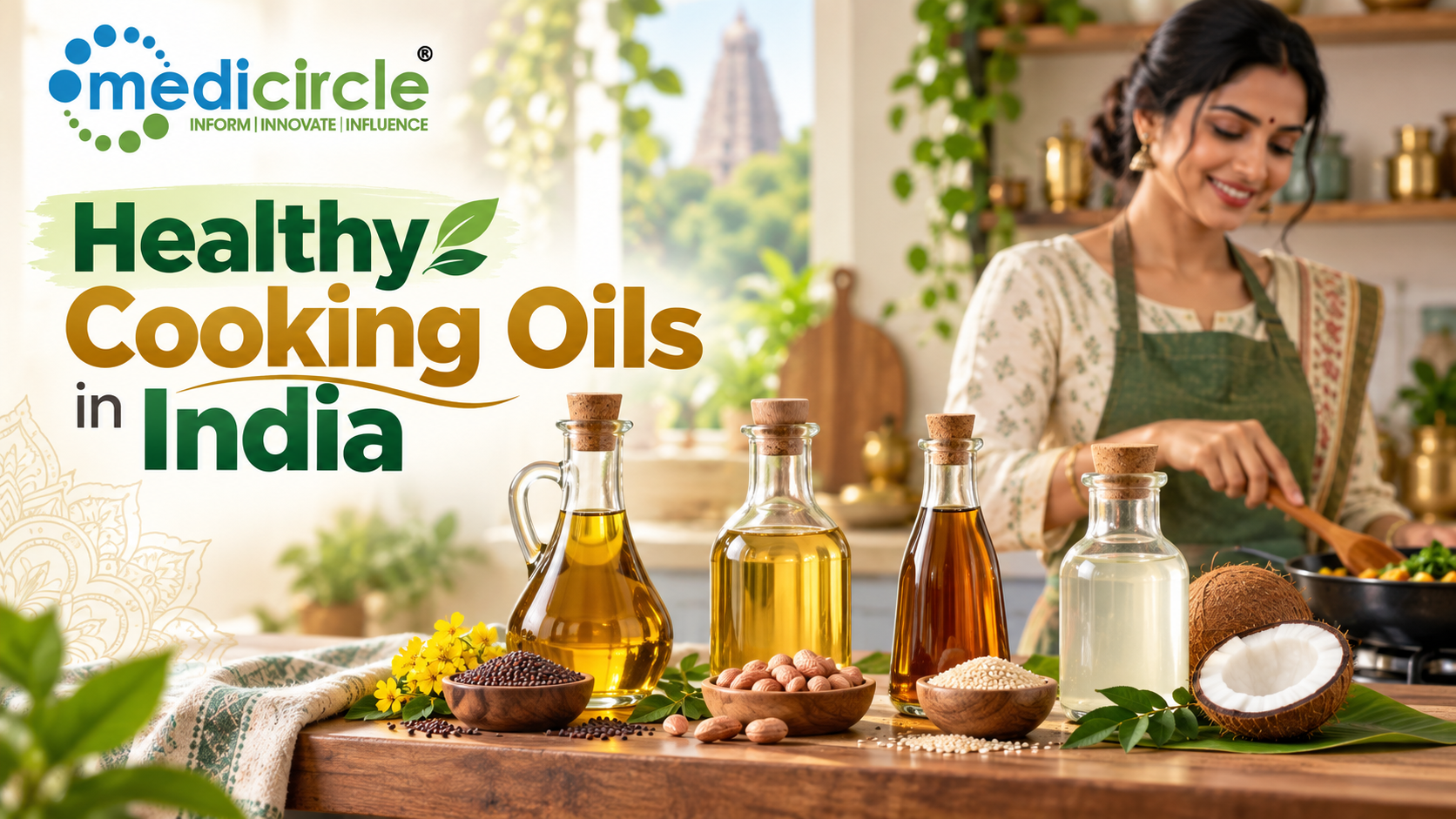
 Choosing healthy cooking oils in India means balancing fat quality, cooking method, taste, and cost. Prefer unsaturated fats, limit saturated and trans fats, control portions, and avoid repeatedly reheating oil.




You open the kitchen cabinet and stare at a row of bottles: mustard oil, groundnut oil, sunflower oil, a small bottle of olive oil you bought last month. Which one should you reach for to make dal, fry aloo, or dress a salad? For many Indian families, choosing a cooking oil feels like balancing taste, tradition, health and the household budget.
This guide is written for Indian readers who cook for families and want practical, evidence-based advice on healthy eating—especially around cooking oil choices. I’ll explain different types of dietary fats in plain language, compare common Indian oils, give realistic tips for everyday cooking and portion size, and answer common questions people ask at home.
I won’t prescribe or diagnose. If you have high cholesterol, heart disease, diabetes or other health concerns, please consult your doctor or a registered dietitian for personalised advice.
What it means: basic fats and why they matter
We often hear the words unsaturated fats and saturated fat. Here’s what they mean simply.
- Unsaturated fats: These include monounsaturated and polyunsaturated fats. Foods high in unsaturated fats (for example, mustard oil, groundnut oil, soybean oil, and olive oil) are generally considered better for heart health when they replace saturated fats in the diet. Unsaturated fats can help maintain healthy blood lipid levels if used sensibly within total calorie needs.
- Saturated fat: Found in higher amounts in coconut oil, palm oil, ghee, butter and some processed fats, saturated fat has been associated with higher LDL (‘bad’) cholesterol when eaten in excess. That said, cultural uses and taste preferences matter; the goal is moderation rather than complete avoidance.
- Trans fats: Industrial trans fats are harmful and linked to heart disease. They mostly come from partially hydrogenated oils used in some processed foods and commercial frying. In India, regulations and food industry changes aim to reduce trans fats, but it's still wise to limit processed fried snacks and reuse of deep-frying oil.
Other practical concepts:
- Smoke point: This is the temperature where an oil starts to smoke and break down. For high-temperature frying, choose oils with higher smoke points. Reaching smoke point not only ruins flavour but may form unhealthy breakdown products.
- Calorie density: All fats provide 9 kcal per gram. Switching oils does not reduce calories dramatically; portion size matters.
Why it matters: health and household realities
Oils are a major source of dietary fat in Indian cooking. Small choices add up: the oil you use for tempering, drizzling, shallow-frying or deep-frying will affect the flavour of food and the overall fat profile of your family’s meals.
Heart disease and diabetes are common in India, and healthy eating patterns that moderate saturated fats while including unsaturated fats can play a role in long-term risk reduction. That doesn’t mean every dish must change overnight. Practical, culturally appropriate swaps and portion awareness can make a real difference.
Cost and availability also matter. Not every household can buy imported extra-virgin olive oil for daily cooking. A useful plan combines healthful choices with affordability and taste.
Practical guidance: choosing and using oils in everyday Indian meals
Below I compare common oils and give suggestions for how to use them in real meals.
Mustard oilWhy people like it: Mustard oil is traditional in many regions of India. It gives a sharp, nutty taste and is commonly used for tadka, pickles and frying.
Nutrition and use: Mustard oil contains a mix of monounsaturated and polyunsaturated fats. It has a reasonably high smoke point, making it suitable for deep- and shallow-frying as well as sautéing. It pairs well with south Asian spices.
Practical tip: Use mustard oil for tadka on dals or stir-fried green vegetables. Balance strong flavours—use small amounts for tempering and consider mixing with a neutral oil if you prefer a milder taste.
Groundnut (peanut) oilWhy people like it: Groundnut oil is commonly used across India for its mild, slightly nutty flavour and fairly high smoke point.
Nutrition and use: It’s relatively high in monounsaturated fat, making it a reasonable everyday choice for frying and general cooking.
Practical tip: Use groundnut oil for shallow-frying chillas, sautéing vegetables, and making parathas. Beware of allergies—peanut allergy affects a minority of people.
Sunflower and soybean oilWhy people like it: These oils are affordable, neutral in flavour and widely available.
Nutrition and use: The fatty acid composition varies by brand (high-oleic sunflower oil has more monounsaturated fat). They work well for deep-frying and everyday cooking.
Practical tip: Read labels for trans fat content and choose options with better unsaturated fat profiles. Use sunflower oil for deep-fried snacks in moderation and avoid reusing oil multiple times.
Rice bran oilWhy people like it: Rice bran oil has a high smoke point and neutral flavour, useful for high-temperature cooking.
Nutrition and use: It contains a mix of unsaturated fats and is often recommended because of its stability when heated.
Practical tip: Use for deep-frying or when you need a neutral oil for large-batch cooking.
Olive oil (regular/light and extra virgin)Why people like it: Olive oil, especially extra virgin, is a staple of Mediterranean-style healthy eating and contains monounsaturated fats.
Nutrition and use: Extra virgin olive oil has a lower smoke point and is best for low-to-medium heat cooking and cold uses like salad dressings. Lighter/refined olive oils have higher smoke points and can be used for medium-heat cooking.
Practical tip: Keep a small bottle of extra virgin olive oil for salads and drizzling. For Indian sautéing, a regular/ light olive oil or mixing olive oil with another neutral oil can be practical.
Sesame oil (til oil)Why people like it: Sesame oil (especially toasted) has a strong flavour used in many regional recipes and dressings.
Nutrition and use: It contains polyunsaturated and monounsaturated fats and is often used sparingly for tempering or finishing dishes.
Practical tip: Add a small spoon of toasted sesame oil to salads, chutneys, or boiled vegetables for aroma rather than cooking large quantities.
Coconut oilWhy people like it: Coconut oil is traditional in coastal cuisines and gives a characteristic flavour.
Nutrition and use: Coconut oil is high in saturated fat, so regular use in large amounts may raise LDL cholesterol in some people.
Practical tip: Use coconut oil selectively for authentic regional dishes. For daily cooking, consider oils higher in unsaturated fats.
Palm oil and vanaspatiWhy people like it: Palm oil is cheap and used in some processed foods. Vanaspati (partially hydrogenated vegetable fat) is widely discouraged due to trans fats.
Nutrition and use: These are higher in saturated and sometimes trans fats. Limit use of processed foods containing these fats.
Practical tip: Avoid vanaspati and limit palm oil for regular home cooking; focus on natural oils with better unsaturated fat content.
Matching oil to cooking methods (practical examples)
- Tadka and tempering (ghee-style aroma): Use a small amount of mustard or sesame oil for regional authenticity. You can mix 1 part mustard or sesame with 2–3 parts neutral oil to control flavour.
- Shallow frying or stir-frying (sabzi, parathas): Groundnut, mustard, rice bran or refined olive oil work well.
- Deep frying (puris, pakoras, large-batch samosas): Oils with high smoke points—rice bran, refined sunflower, groundnut or mustard—are suitable. Avoid repeated reheating and strain oil after cooling if you plan one reuse.
- Dressings and finishing (salad dressings, dal drizzle): Extra virgin olive oil, sesame oil, or a spoon of mustard oil for flavour.
- Baking and low-heat cooking: Light olive oil or groundnut oil; consider the flavour profile and smoke point.
Portion size: practical family rules
All oils are calorie-dense. Even healthy oils can add calories quickly. Here are simple ways to manage portion size in an Indian home:
- Measure, don't pour: Use a tablespoon or ladle when adding oil. A teaspoon for tadka, a tablespoon for shallow frying per portion, and restrict deep-frying frequency.
- Cook with less oil techniques: Steam, roast, or pressure-cook vegetables and then add a small tadka for flavour. Use non-stick pans where suitable.
- Plan deep-fried foods as occasional treats rather than daily staples. Reserve deep frying for weekends or special occasions.
- For a family of four, estimate total oil used in a meal and divide by portions to get a sense of per-person intake. A general guideline for adults is roughly 20–40 ml (1½–3 tablespoons) per day of cooking oil, depending on energy needs and other fat sources in the diet. Adjust for children and older adults.
Safety, storage and reuse
- Store oils in cool, dark places and use within the manufacturer’s recommended shelf life.
- Avoid heating oils to their smoke point. If an oil smokes, discard it for cooking.
- Limit reuse: Repeated deep frying degrades oil quality and increases harmful compounds. If you must reuse, filter food particles, store in a clean container, and use within a day or two. For home cooking, try to avoid reusing oil many times.
- Watch for rancidity: Off smells or bad taste mean the oil has oxidised and should be discarded.
Common questions
Which oil is the best cooking oil for a healthy Indian diet?There isn't one single oil that fits every recipe and family. The "best" approach combines oils that are higher in unsaturated fats (mustard, groundnut, soybean, rice bran, light olive oil) for everyday cooking, with small amounts of flavourful oils (sesame, mustard, coconut) for regional dishes. Also pay attention to portion size and cooking methods.
Can I use olive oil for Indian tempering and frying?Extra virgin olive oil is best for low-to-medium heat and for dressings; for high-heat frying a lighter/refined olive oil or other high-smoke-point oil is safer. Mix olive oil with a neutral oil if you need both flavour and higher heat tolerance.
How often should we deep-fry at home?Limit deep-fried foods to occasional meals. Frequent consumption of fried snacks can increase calorie intake and exposure to damaged fats. Consider oven-baked or shallow-fried alternatives that use less oil.
Are expensive imported oils worth it every day?Imported oils like extra virgin olive oil are healthy for certain uses but can be costly. Use them for salads and finishing dishes; choose affordable, locally available oils (mustard, groundnut, rice bran) for daily cooking.
What about children and cooking oil?Children need fats for growth, but the type and amount matter. Use oils with more unsaturated fat and moderate total oil intake. Consult a paediatrician or dietitian for tailored advice, especially for infants and toddlers.
Does switching oil reduce weight?Switching to an oil with more unsaturated fats won't automatically cause weight loss because all oils are calorie-dense. Weight change depends on total calorie balance. Focus on portion control and overall healthy eating patterns.
Frequently asked questions (FAQs)
Q: Is mustard oil better than ghee?
A: Mustard oil contains more unsaturated fats compared with ghee (which is high in saturated fat). Ghee is used in traditional Indian cooking for flavour, and small amounts can be part of cultural dishes. Use either in moderation and consider overall saturated fat intake.
Q: Can I mix oils for cooking?
A: Yes. Mixing a small amount of flavourful oil with a neutral oil can balance taste, cost and smoke point. For example, mix one part sesame oil with two or three parts neutral oil for stir-fries or finishing.
Q: How can I make typical Indian foods (parathas, dal, sabzi) healthier?
A: Use less oil when kneading dough, shallow-fry parathas in a non-stick pan with minimal oil, steam or pressure-cook vegetables and add a small tadka of flavourful oil, and limit deep-fried snacks.
Q: Are blended or fortified oils better?
A: Some blended or fortified oils aim to improve nutrient profiles (for example, adding vitamin D). Check labels and choose products that meet regulatory standards. Fortified oils can help in specific deficiency contexts, but they are not a cure-all.
Q: Should people with high cholesterol avoid all oils?
A: People with high cholesterol should focus on reducing saturated fat and trans fat, while replacing them with unsaturated fats where possible. A healthcare professional can give personalised guidance.
Q: How do I know if oil is still good to use?
A: Smell and taste are practical checks. Rancid or off odours mean discard. Also check expiry dates and storage conditions.
Q: What about oils for pregnant women?
A: Healthy fats are important during pregnancy, but specific needs vary. Include unsaturated fats, but consult an obstetrician or dietitian for personalised recommendations.
Q: Is deep-frying at home safer than eating fried foods outside?
A: Home-cooked fried foods can be prepared more carefully (clean oil, controlled temperatures), but deep-fried foods are still high in fats and calories. Limit frequency and practice safe frying techniques.
Conclusion
Choosing the right cooking oil for Indian family meals is about balancing culture, taste, health and cost. There is no single answer, but practical steps can improve everyday choices:
- Prefer oils richer in unsaturated fats (mustard, groundnut, soybean, rice bran, light olive oil) for most cooking.
- Use strong-flavour oils like sesame or mustard sparingly to add aroma and taste.
- Limit saturated fats (coconut oil, ghee) and avoid industrial trans fats and frequent reuse of frying oil.
- Measure oil, reduce deep-frying frequency, and adopt cooking techniques that use less fat.
- Match the oil to the cooking method—high smoke point oils for deep frying, extra virgin olive oil for salads and finishing.
If you or a family member has heart disease, high cholesterol or diabetes, talk with your doctor or a registered dietitian about an eating plan tailored to your needs. Small, sustainable changes to how you cook can add up to better health over time.
---
Medical/Professional/Technology disclaimer
This article provides general information about cooking oils and healthy eating and does not constitute medical advice. It is not a substitute for professional medical evaluation, diagnosis or treatment. For personalised recommendations—especially if you have high cholesterol, heart disease, diabetes, dietary restrictions, or are pregnant—please consult a licensed healthcare professional or registered dietitian.
Resources
- World Health Organization – Healthy Diet: https://www.who.int/news-room/fact-sheets/detail/healthy-diet
- NHS – Types of Fat: https://www.nhs.uk/live-well/eat-well/different-fats-nutrition/
- Indian Council of Medical Research (ICMR) – Dietary Guidelines for Indians: https://www.nin.res.in/indian-dietary-guidelines.php
- Centers for Disease Control and Prevention – Fats and Cholesterol: https://www.cdc.gov/cholesterol/fats.htm
- Food Safety and Standards Authority of India (FSSAI): https://www.fssai.gov.in
- PubMed – Reviews on dietary fats and cardiovascular disease (search portal): https://pubmed.ncbi.nlm.nih.gov
Interlinking Keywords
balanced diet, heart health, Indian cooking oils, healthy snacks, portion control, diabetes diet, hypertension management, meal planning for families





-23-300x250.png)

.jpeg)
.jpg)
.jpg)
.jpg)
.jpg)
.jpg)
.jpg)
.jpg)
.jpg)
.jpg)