 Thursday, October 08, 2026
 The study will be aimed at early recovery in the symptoms of COVID patients by adding herbal immunoboosters




Bangalore Medical College & Research Institute will be conducting an open label, interventional and comparative study on the effect of immunity boosting herbal formulations by Sri Sri Tattva on 50 asymptomatic and mildly symptomatic COVID-19 confirmed patients.
The study will be aimed at early recovery in the symptoms of COVID patients by adding herbal immunoboosters which not only enhance immunity of one's body but also aid in the faster recovery of patients.
This trial is registered with CTRI as “A Clinical Study to Evaluate the Role of Herbal Immunomodulators as add on Treatment in Asymptomatic and Mildly Symptomatic COVID-19 Confirmed Cases.” The trial will be conducted at Bangalore Medical College and Research Institute, Dr. Jayanti, Director cum Dean BMCRI being the Principal Investigator.
Dr. Jayanti explains Herbal immunomodulators are substances which stimulate the components of immune system including both innate and adaptive immune responses.
Herbal Immunomodulators such as Tulasi, Garlic, Turmeric, Amla, Ashwagandha, Green Tea, Black Cumin, Ginger etc., are naturally obtained, safe and helpful in achieving optimum effectiveness of the immune system. Herbal Immunomodulators have potent anti-inflammatory, antibacterial, antiviral, stress relieving and cytoprotective properties.
The use of standardized immunomodulators of Sri Sri Tattva in specific doses will be helpful in achieving a higher protective antibody titers and development of more effective cell mediate immune response for protection against COVID-19. Therapy will be monitored by reduction in pro-inflammatory markers such as IL-6, INF alfa, C-reactive protein and improvement in anti-inflammatory markers such as interferon gamma, delta and Ig G antibody titers. In addition to this, role of herbal immunomodulatory formulations of Sri Sri Tattva is being explored in the inhibition of viral entry in collaboration with German researchers as a part of Ayurgenomics project.
The use of these herbal immunomodulatory in synergy with existing drugs may involve the functional manipulation of multiple molecular targets leading to improved therapeutic efficacy.
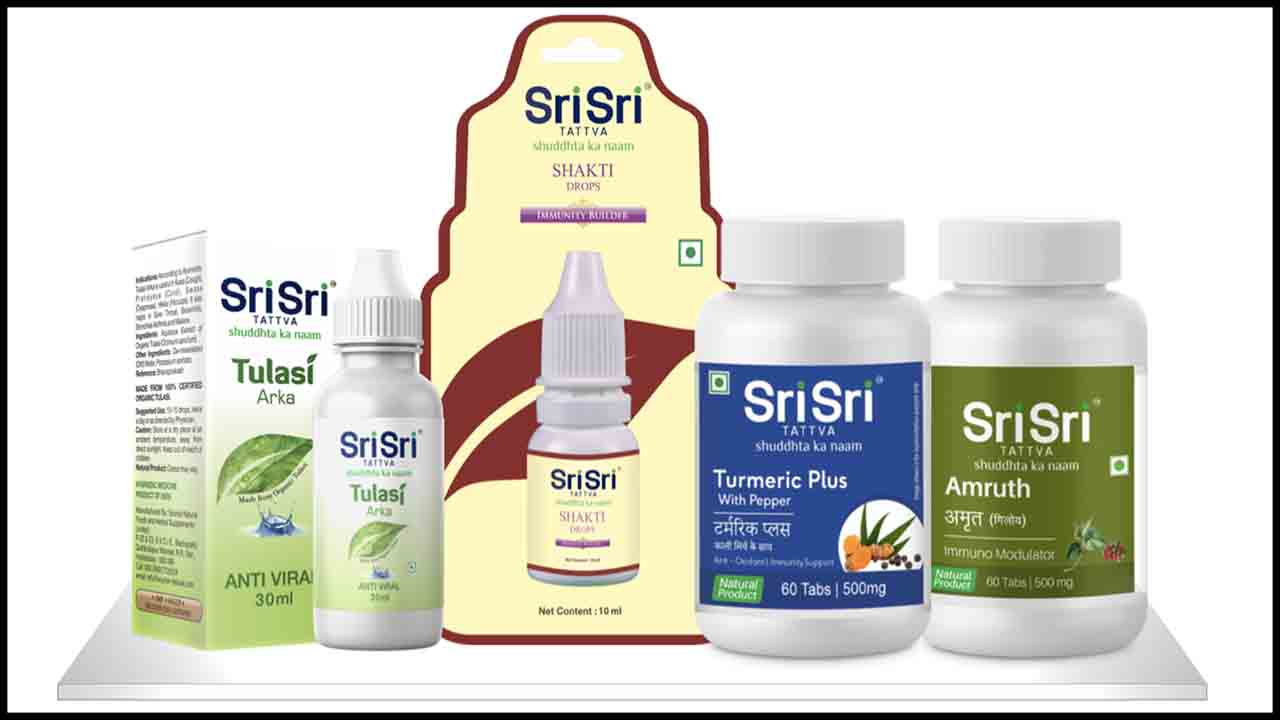
Commenting on the study, Arvind Varchaswi, Managing Director, Sri Sri Tattva said, “The Ayurveda herbal formulations being studied are a result of years of our R&D efforts. Over the years we have developed a range of herbal immunomodulators which have immensely benefitted people across the world. These are grouped as an Immunity Kit consisting of: 1. Amruth (Giloy) Tablets, 2. Turmeric Plus which is a combination of Turmeric and pepper, 3. Tulsi Arka, and 4. Shakti Drops which is a combination of Ashwagandha, Yastimadhu, Amruth and other herbs for a synergistic effect. These are manufactured at our Ayush Premium Mark Certified unit. We are hopeful that these can relieve patients from COVID-19 and its symptoms. There is recognition now worldover that the science of Ayurveda has a significant role in helping promote better health during these times. Our trial has all the necessary permissions in place with BMCRI and we appreciate their interest in Ayurveda. We will extend all possible support and are hopeful for the successful completion of this study thereby benefiting the general populous.”






.jpeg)








.jpg)
.jpg)
.jpg)
.jpg)
.jpg)
.jpg)


.jpg)
.jpg)
.jpg)