Monday, October 26, 2026
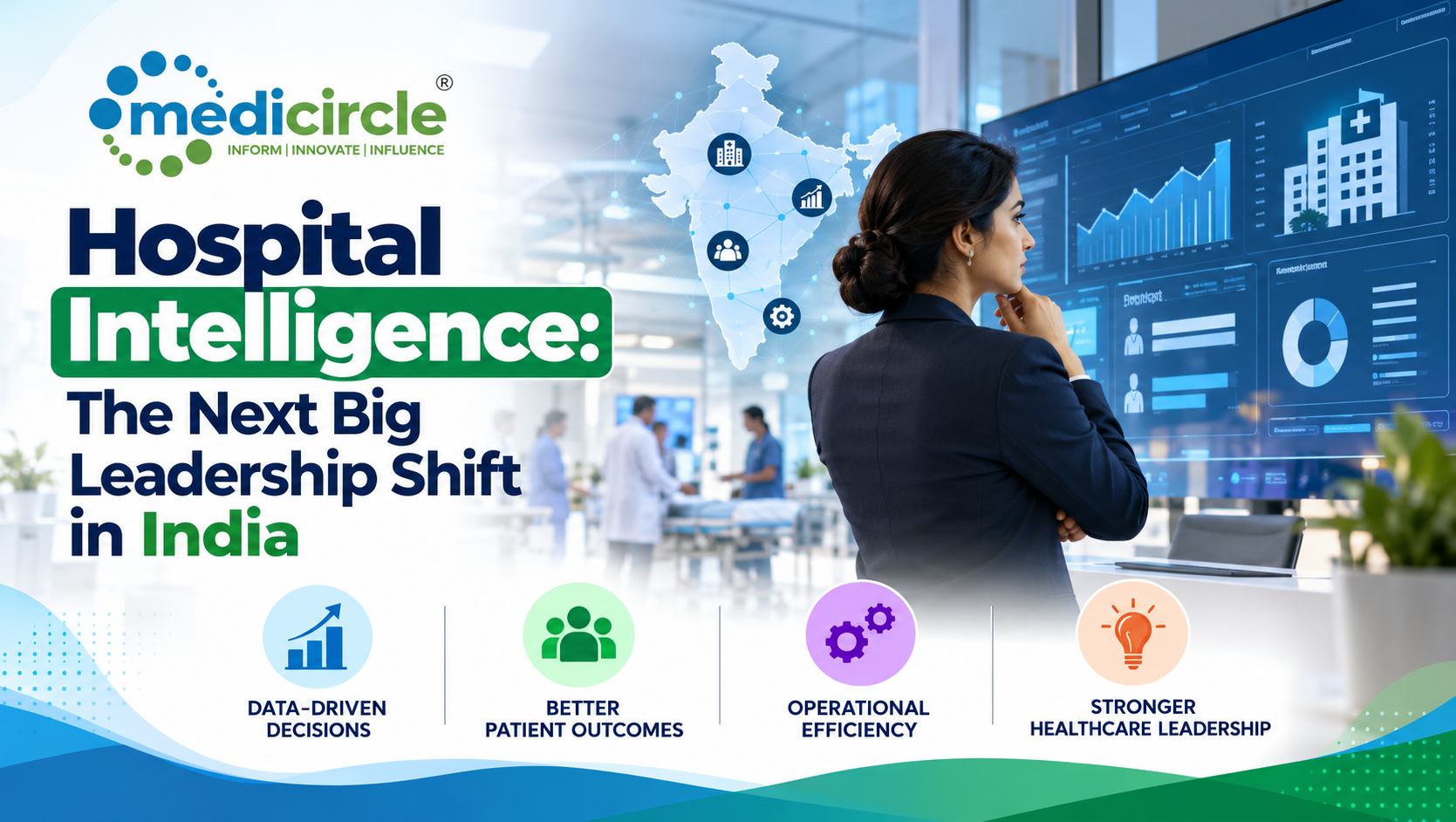
 Indian hospitals are transitioning from reactive management to intelligence-led leadership, using data, technology, and strategic foresight to improve clinical outcomes, operational efficiency, and patient experience.





Introduction
Indian healthcare is entering a period of fundamental transformation. The pressures are real, the expectations are rising, and the traditional frameworks of hospital management are beginning to show their limits. Hospitals across India, from multi-specialty tertiary care institutions in metropolitan cities to district-level facilities in Tier 2 and Tier 3 towns, are realising that managing operations alone is no longer sufficient. What the sector now demands is something sharper, more adaptive, and far more strategic: hospital intelligence.
Hospital intelligence is not simply a technology upgrade or a software deployment. It represents a fundamentally different approach to how healthcare institutions understand their environment, make decisions, lead their teams, and serve their patients. It is the convergence of data, clinical insight, strategic foresight, and human leadership into a unified model of institutional governance. For Indian healthcare, which serves the largest and most diverse patient population in the world, this shift is not optional. It is inevitable.
Understanding the Difference Between Hospital Management and Hospital Intelligence
To appreciate why this shift matters, it is important to first understand what separates hospital management from hospital intelligence as leadership philosophies.
Traditional hospital management operates primarily on the principle of control and coordination. It focuses on ensuring that departments function within defined boundaries, that budgets are adhered to, that staff are deployed appropriately, and that compliance requirements are met. This model served Indian hospitals well through decades of rapid expansion. It helped institutions scale their bed capacity, establish operational routines, and create administrative hierarchies that could handle growing patient volumes.
However, traditional management is inherently reactive. It responds to problems after they have already manifested. A spike in patient readmissions, a department running over budget, or a fall in patient satisfaction scores are all addressed after the fact. The tools available to most hospital administrators in this model are lagging indicators: reports generated at the end of a week or a month, financial statements reconciled quarterly, and clinical audits conducted periodically.
Hospital intelligence, by contrast, operates on a fundamentally different logic. It builds institutional capacity to anticipate, interpret, and act on information in real time or near real time. It treats data not as a reporting tool but as a strategic asset. It positions hospital leadership not as administrators of existing systems but as architects of continuously evolving ones.
The distinction can be understood across three core dimensions:
- Decision-making: Management relies on experience and hierarchy. Intelligence relies on evidence, analysis, and adaptive judgment.
- Information use: Management uses data to confirm what happened. Intelligence uses data to understand what is happening and to predict what will happen next.
- Leadership orientation: Management maintains stability. Intelligence drives transformation while maintaining patient safety and institutional trust.
Why India Is Ready for This Transition Now
Several converging forces make this the right moment for Indian hospitals to embrace intelligence-led leadership.
The Ayushman Bharat Digital Mission (ABDM) has created a foundational infrastructure for health data interoperability across India. Electronic health records, unique health identifiers, and standardised data exchange protocols are gradually being adopted across both public and private health systems. This creates, for the first time at national scale, the raw material that intelligent hospital leadership requires: structured, longitudinal, and comparable health data.
At the same time, the National Health Policy and various state-level health initiatives have shifted accountability expectations significantly. Hospitals, particularly those operating under government schemes or seeking NABH accreditation, are now expected to demonstrate outcomes, not just services. Regulators, insurers, and informed patients are all asking harder questions about clinical quality, patient safety, cost efficiency, and service delivery standards.
Indian hospitals are also facing intensifying competitive pressure. The healthcare sector has seen considerable investment from private equity, hospital chains, and health technology companies. Corporate hospital networks are expanding aggressively into Tier 2 and Tier 3 cities, bringing with them more sophisticated management practices and higher patient expectations. Standalone hospitals and smaller chains that continue to rely on intuition-based management will find it increasingly difficult to compete.
Furthermore, the post-pandemic period has accelerated the adoption of digital tools across Indian healthcare. Telemedicine platforms, hospital information management systems, digital billing and inventory solutions, and patient engagement applications have become mainstream. The groundwork for intelligence-led hospital leadership is being laid, even if the strategic vision to connect all these tools into a unified intelligence framework is still emerging.
The Core Pillars of Hospital Intelligence
Hospital intelligence as a leadership model rests on several interconnected pillars, each of which transforms a traditional management function into a dynamic capability.
The first pillar is clinical intelligence. This involves using data from patient records, diagnostic results, treatment protocols, and outcomes to understand patterns of care quality within the institution. Clinical intelligence allows hospital leadership to identify which departments are delivering outcomes aligned with best practices, where preventable complications are occurring, and how clinical performance compares across time periods, patient demographics, and care pathways. In the Indian context, where clinical variation across departments and between facilities can be significant, this capability has enormous potential to improve patient safety and treatment effectiveness.
The second pillar is operational intelligence. This covers the real-time understanding of hospital workflows, resource utilisation, bed occupancy, staff deployment, equipment availability, and supply chain status. Operational intelligence does not just tell leadership that a ward is overcrowded. It explains why, predicts when overcrowding is likely to occur again, and supports proactive decisions about capacity allocation, staff rostering, and patient flow management. For Indian hospitals managing thousands of outpatient visits and hundreds of inpatient admissions daily, operational intelligence is the difference between controlled growth and managed chaos.
The third pillar is financial intelligence. Indian healthcare operates under significant cost pressure, whether the institution is a public hospital managing government reimbursements, a private hospital navigating insurance claim processes, or a charitable hospital balancing subsidised and paying patient populations. Financial intelligence gives hospital leadership a granular and real-time view of revenue cycles, cost centres, payer performance, and profitability by service line. It supports smarter pricing decisions, faster claim processing, and more transparent financial governance.
The fourth pillar is patient experience intelligence. Indian patients are increasingly vocal, digitally connected, and willing to switch providers based on their care experience. Patient experience intelligence draws on feedback data, complaints records, digital reviews, and direct engagement metrics to give hospital leadership a clear picture of how patients perceive their care journey. This intelligence is particularly valuable for building long-term patient loyalty, managing reputation, and aligning service design with patient needs.
The Leadership Competencies Required for Hospital Intelligence
Moving from management to intelligence requires more than technology investment. It requires a fundamental evolution in the competencies of hospital leadership.
The Chief Executive Officer or Medical Director of a hospital operating on an intelligence model must be comfortable with ambiguity and capable of interpreting complex, sometimes contradictory data to make sound decisions. They must be able to foster a culture of inquiry within the institution, where clinical and administrative staff feel empowered to question existing practices and propose evidence-based improvements.
These leaders must also be skilled at bridging the worlds of medicine and management. Intelligence-driven hospitals do not separate clinical leadership from administrative leadership. The Chief Medical Officer and the Chief Operating Officer must work from shared data frameworks and aligned institutional goals. This integration of clinical and operational decision-making is one of the most significant structural changes that hospital intelligence demands.
In India, developing this leadership cadre requires intentional investment. Leading institutions such as AIIMS, select IIMs, and specialised healthcare management schools are beginning to offer programmes that blend clinical understanding with data literacy, strategic thinking, and leadership development. Healthcare organisations that invest in developing these capabilities internally, through structured learning pathways, mentorship, and exposure to global best practices, will be better positioned for the transition.
Challenges That Indian Hospitals Must Address
The journey toward hospital intelligence is not without significant challenges, particularly in the Indian context.
Data infrastructure remains uneven. While large corporate hospitals in metropolitan areas have invested in sophisticated hospital information systems, many mid-size and smaller hospitals still operate with fragmented or paper-based records. Without reliable, structured data, intelligence-led leadership is not possible. Bridging this infrastructure gap requires sustained investment and policy support.
Digital literacy among clinical and administrative staff varies considerably. A hospital information system or an analytics dashboard is only as valuable as the staff who can interpret and act on its outputs. Hospitals investing in intelligence tools must simultaneously invest in training and change management to ensure that the technology serves its intended purpose.
Privacy and data security concerns are also significant. As hospitals collect and analyse more patient data, they must comply with the Digital Personal Data Protection Act and other emerging data governance frameworks in India. Building patient trust in how their data is used is essential for the long-term viability of intelligence-led healthcare.
Finally, there is the challenge of cultural resistance. Many experienced clinicians and hospital administrators have built successful careers on the basis of intuition, personal expertise, and established authority. Introducing data-driven decision-making can feel threatening to those whose professional identity is tied to traditional models of knowledge and authority. Navigating this transition requires sensitive, inclusive leadership that values experience while demonstrating the additional value of intelligence.
What the Future of Intelligent Hospital Leadership Looks Like
The hospitals that will lead Indian healthcare in the next decade will look and function very differently from those that have dominated the landscape over the past generation. They will be institutions where clinical, operational, financial, and patient experience data flow together into integrated dashboards that leadership teams review not monthly or weekly, but daily.
They will be institutions where predictive analytics flag potential patient deterioration before a crisis occurs, where staffing models adjust dynamically to patient demand patterns, and where financial performance is managed with the same rigour as clinical outcomes.
They will also be institutions that participate actively in national health data ecosystems, contributing to and drawing from the shared intelligence that frameworks like ABDM are designed to enable. In this sense, hospital intelligence is not only an institutional strategy. It is a contribution to the broader goal of a smarter, more equitable, and more effective Indian health system.
Platforms like Medicircle play an important role in this transition by creating space for healthcare leaders, innovators, and institutions to share what they are learning and to build the collective understanding that the sector needs to move forward together.
Conclusion
The shift from hospital management to hospital intelligence is not a distant aspiration. It is a leadership transformation that is already underway in parts of the Indian healthcare ecosystem, and one that every hospital leader in the country needs to take seriously. The tools, the data infrastructure, and the policy environment are converging to make this transition both possible and necessary. What remains is the clarity of vision and the courage of leadership to embrace it fully.
Indian healthcare has always demonstrated remarkable resilience and adaptability. The next chapter of that story will be written by leaders who understand that intelligence, not just management, is what will determine which hospitals thrive, which patients are better served, and which institutions shape the future of health in India.
Frequently Asked Questions
Q1: What is hospital intelligence and how is it different from hospital management?
Hospital intelligence refers to the use of data, analytics, and strategic insight to guide hospital leadership decisions in real time. Unlike traditional hospital management, which focuses on coordination and control of existing systems, hospital intelligence enables hospitals to anticipate challenges, optimise outcomes, and continuously improve across clinical, operational, and financial dimensions.
Q2: Why is the shift to hospital intelligence particularly important for Indian hospitals right now?
Indian hospitals are under growing pressure from multiple directions, including rising patient expectations, regulatory accountability requirements, competitive market dynamics, and the opportunities created by digital health infrastructure like ABDM. These forces together make it both urgent and achievable for Indian hospitals to move toward intelligence-led leadership models.
Q3: What technologies are central to building hospital intelligence in India?
Key technologies include hospital information management systems, electronic health records, real-time analytics dashboards, artificial intelligence tools for clinical decision support, patient experience platforms, and interoperable data exchange frameworks aligned with ABDM standards. The effective use of these technologies depends equally on leadership commitment and staff capability development.
Q4: What leadership skills are most important for hospital intelligence-driven institutions?
Leaders in intelligence-driven hospitals require data literacy, cross-functional integration skills, the ability to foster a culture of inquiry and evidence-based decision-making, and the capacity to bridge clinical and administrative perspectives. Strategic foresight and change management capabilities are equally essential.
Q5: How can smaller hospitals in Tier 2 and Tier 3 Indian cities begin the transition to hospital intelligence?
Smaller hospitals can begin by investing in structured data collection through basic hospital information systems, training key staff in data interpretation, and participating in national digital health infrastructure initiatives. Incremental adoption of analytics tools, starting with operational and financial intelligence, can deliver early value and build internal confidence for broader transformation.
Resources
- Ayushman Bharat Digital Mission (ABDM): Official national digital health infrastructure initiative supporting health data interoperability across India.
- National Board of Accreditation for Hospitals and Healthcare Providers (NABH): Standards and quality accreditation framework for Indian hospitals, relevant to performance measurement and governance.
- World Health Organization (WHO) India Country Office: Research, policy frameworks, and guidance on health system strengthening and digital health in India.
- Indian Council of Medical Research (ICMR): Primary national body for biomedical and health research, offering evidence-based references relevant to clinical quality and hospital outcomes.
- Ministry of Health and Family Welfare, Government of India: Official policy guidelines, national health programmes, and healthcare governance frameworks applicable to hospital leadership and compliance.
Interlinking Keywords
hospital intelligence India, data-driven hospital leadership, ABDM digital health India, NABH accreditation standards, healthcare leadership transformation, clinical decision support India, smart hospital management, healthcare innovation India, hospital CEO competencies, patient experience in Indian hospitals
Last reviewed by:
Dr. Manthan Tripathi, Medicircle Editorial and Medical Advisory Team on 24, October 2026.
Disclaimer
The information presented in this article is intended for educational and informational purposes only. It does not constitute professional medical, clinical, or administrative advice for any individual hospital or healthcare institution. Readers are encouraged to consult qualified healthcare management professionals, legal advisors, and regulatory authorities before implementing any changes to hospital operations, leadership structures, or technology systems. Medicircle does not endorse any specific technology platform, vendor, or service provider mentioned or implied in this content.





-23-300x250.png)