 Thursday, October 08, 2026
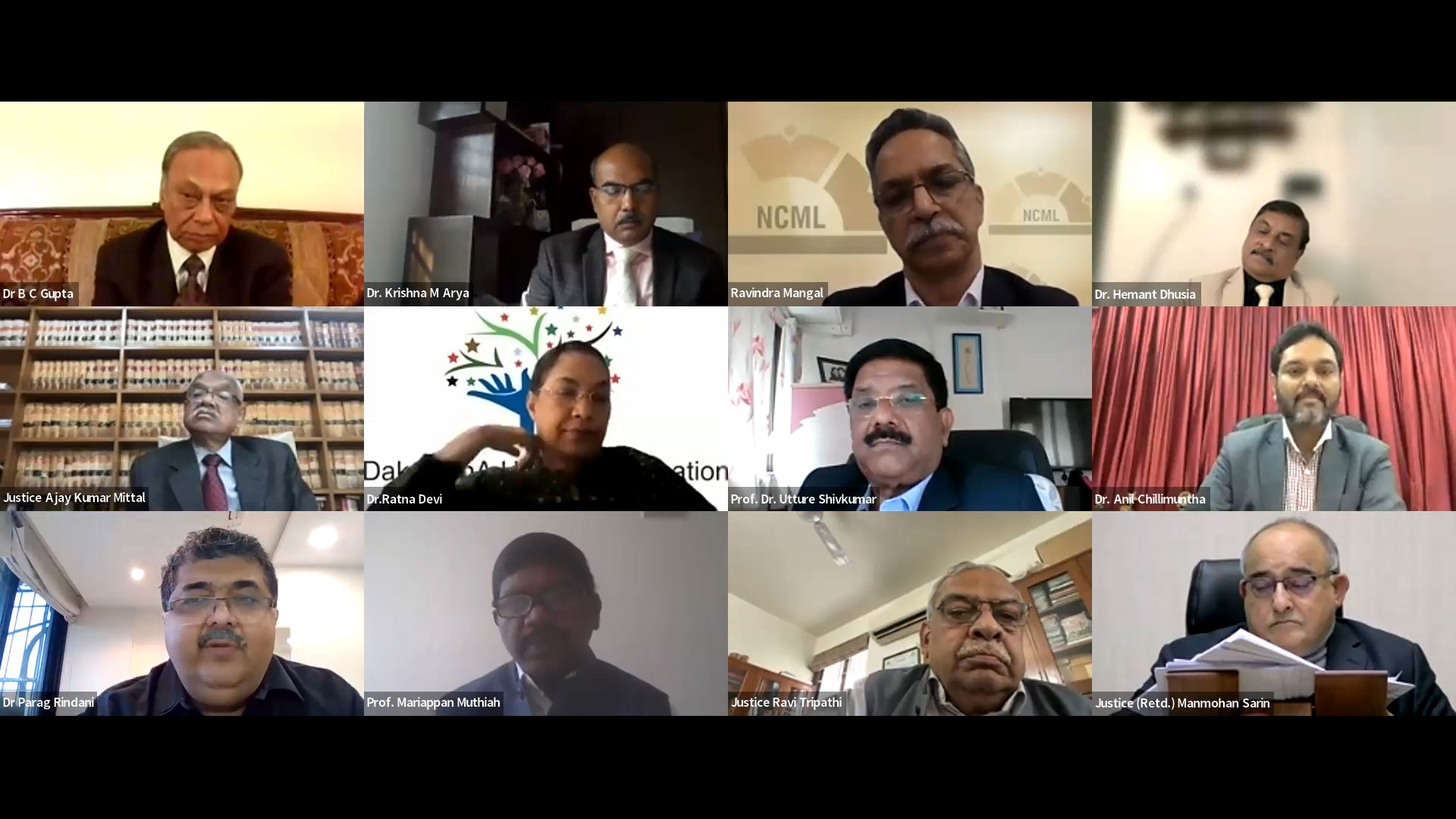
 Privileging should be introduced in stages opined Justice Manmohan Sarin, Former Chief Justice of the High Court of Jammu & Kashmir.




Mumbai Jan 18, 2024: The ‘8th National Convention on Medicine & Law 2023’ was successfully organized on Sunday, December 17, 2023 by the Institute of Medicine & Law.
Dr. Shivkumar Utture, Former Member of the National Medical Commission and the Vice President of the Indian Medical Association (IMA) (National) was the Convenor of the event. Dr. Parag Rindani, Group CEO of the Wockhardt Hospitals moderated the session. Thought leaders in healthcare which included prominent judges from the High Courts and the National Consumer Commission, doctors, hospital administrators, patients’ representatives, NGO’s, and lawyers discussed and deliberated on the issue of ‘Privileging in medical practice, the gravity of the problem and the possible solutions.’
There are opposing judgments on privileging by different courts pointed out by Dr. Shivkumar Utture. He further pointed out that while the Supreme Court recognises ‘the skills possessed’ by the doctors, the government is not sure about its stand on the subject and he raised the following questions: How could AYUSH doctors be privileged on the strength of “the extent of training”? how could MBBS doctors perform post mortems in government hospitals and not MD (Forensic)? and how could a doctor with 6 months of training be permitted to perform sonography under the PCPNDT Act?
Dr. Parag Rindani pointed out that privileging is not only an issue with doctors but also with nurses and paramedics. He highlighted two very important aspects - patient safety or ‘Bharat v/s India’ implying the urban-rural divide and the availability or the lack of doctors and infrastructure in rural areas and the challenges of privileging therein.
Justice Ravi Tripathi, Chairman of the Gujarat State Human Rights Commission stated that even though privileging is a must, yet it cannot happen overnight. He also felt that there must be different standards for corporate and individual-operated facilities. Further, India is in a developing stage with a low literacy rate and cannot operate like a developed nation. The rural-urban divide is a harsh truth that is bound to give the legislature a tough time whenever it decides to make law on this subject. Courts are not anti-medical professionals, added Justice Tripathi.
While pointing out that there was no system at all for privileging in India, Dr. B C Gupta, Former Member of the National Consumer Disputes Redressal Commission suggested that guidelines in accordance with the ‘established medical practice’ - Bolams Law, should be framed in the annual conferences that are held by every medical speciality. These inputs from medical professionals should guide the courts rather than the laws being made by the bureaucrats.
Justice Ajay Kr. Mittal shared an 8-point guideline. There should be an established criteria and ethical conduct of the doctor must be considered; the vetting process must be robust and peer-reviewed; technological adaption of the advancement must be used; regular audit and review must be done to ensure compliance; and public information and feedback must have a role to play. He further stated that the use of telemedicine has made this issue more complex.
Privileging should be introduced in stages opined Justice Manmohan Sarin, Former Chief Justice of the High Court of Jammu & Kashmir.
Dr Vijay Agarwal, President of the ‘Consortium of Accredited Healthcare Organizations’ (CAHO), stated that privileging must be institution specific and according to the situation on the ground. He further pointed out that the genesis of the problem is that specialists would like some sort of ‘exclusivity.’ The absence of official and comprehensive data of doctors and hospitals and poor documentation of training is also to be blamed for the sorry state of affairs. He agreed that broad guidelines must be there, but the basic systems must first be strengthened.
Prof. M Mariappan, from the Centre for Hospital Management, Tata Institute of Social Sciences stated that changes are needed at the operational level. Infrastructure, facility, and the area are important considerations; and the ‘patient needs’ must ultimately be promoted. He further opined that care has to be taken so that privileging does not reduce the autonomy of doctors or demotivate them.
The rural-urban divide is a fact, and the courts are taking cognizance of the same as far as privileging is concerned, pointed out Adv. Mayank Kshirsagar, Advocate Supreme Court. The area of operation, type of hospital - whether small or super-speciality, and emergency patients are some of the factors that are considered by courts. He further opined that the legal, medical, and societal systems in India are not prepared for privileging as of today.
Dr Ratna Devi, CEO and Co-founder of Dakshayani Health and Education raised the question about how the patient would know about the qualification or degree of the doctor and its worth and who would decide on privileging and at what point in time. She further stressed that good communication among doctors themselves is very much required and that back-biting among them must stop. She also emphasized that the shortage of doctors / nurses / pharmacists must be taken into account; and that the web-based services could bring some transparency on this issue. She pointed out that it is the patient who should have the right to choose the right doctor, yet the doctor is often assigned by the hospital instead.
The broad factors that must be considered in granting privileges must be the doctor's character, experience, judgment, and the facility, opined Dr. Gurbir Singh, Professor Emeritus: Chitkara University with over 5 decades of experience behind him. He suggested that ‘limited privilege’ should be given, and the maximum must be for 2 years, and there should be provisions for re-privileging. Dr. Singh also pointed out that the physical fitness and cognitive ability of older doctors must be ascertained. Further, if a doctor has not done a particular procedure in the past 2 years, the privilege to do so must be taken away.
Prof. (Dr.) Anil Kumar Chillimuntha, Chief Operating Officer at AWR 360 Health (USA) questioned whether India was ready for privileging. He pointed out that PHCs lack doctors, nurses are performing deliveries, and getting RMOs in rural hospitals is a challenge today and questioned whether we wish to drag the doctor-patient ratio that is currently at a pathetic 0.89 doctors per thousand patients further down?
Dr. Suven Shetty, Vice-Chair, Quality Health Professionals pointed out that illegal doctors and scarcity of specialists, even in big cities, must be taken into consideration.
Courts are not able to assess properly, and one needs to guide the court on this subject properly opined that Dr. Dhvani Mehta Co-Founder of the Vidhi Centre for Legal Policy. The existing information asymmetry whereby correct information does not reach the patients also needs to be addressed on a priority.
Dr. Utture shared his experience when, as the President of Maharashtra Medical Council, he ensured that a certificate of competency was given to eligible doctors after proper enquiries and checks. He stated that the different State Medical Councils can start such an exercise as the first step.






.jpeg)










.jpg)
.jpg)
.jpg)
.jpg)
.jpg)
.jpg)


.jpg)