 Saturday, October 10, 2026
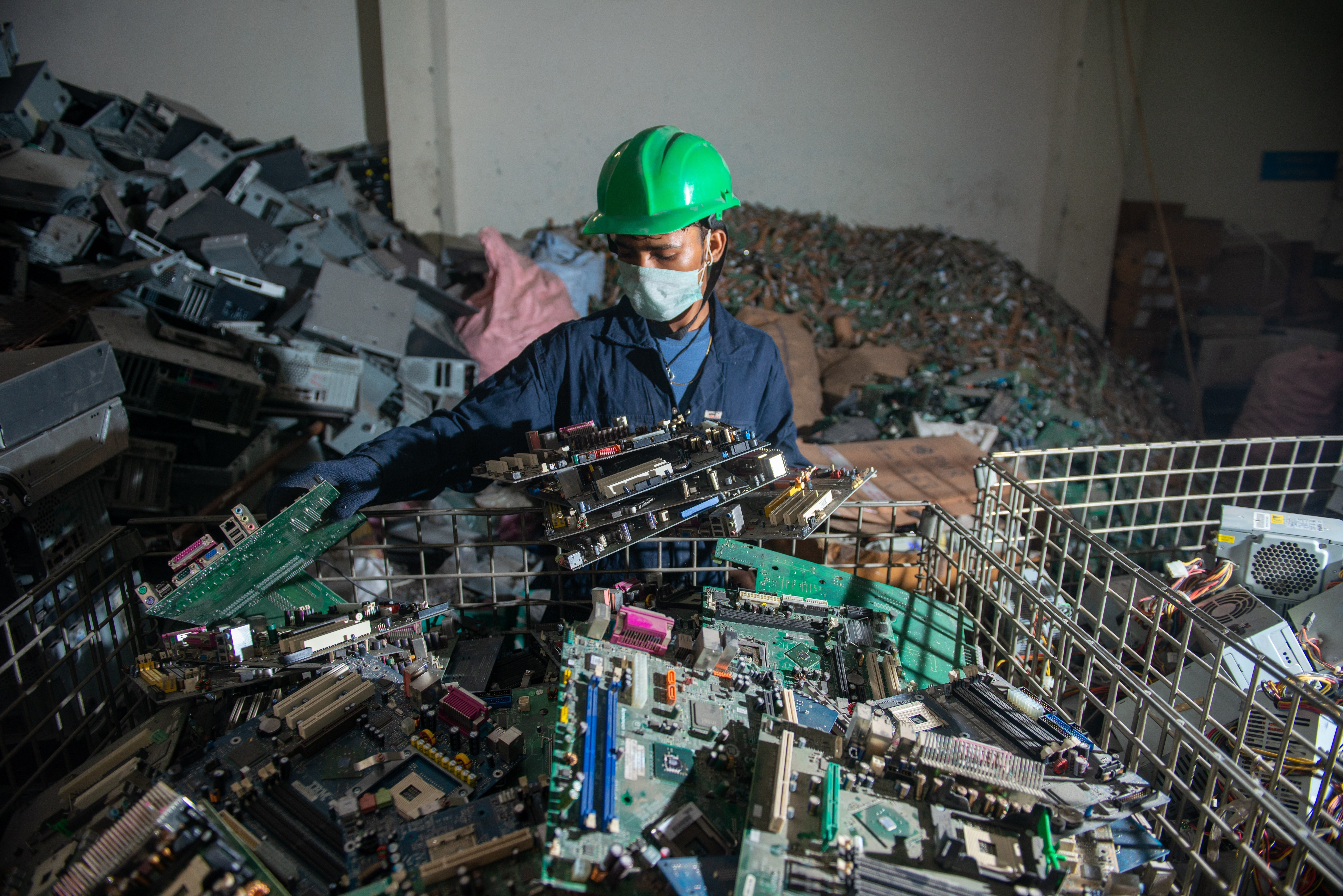
 India is the world’s third-largest generator of e-waste. And more than 80% is still processed in the informal sector using unsafe methods that release toxic chemicals into the environment.




New Delhi, India – A project supported by the Global Environment Facility (GEF) and implemented by the United Nations Development Programme (UNDP), in partnership with the Ministry of Electronics and Information Technology, Government of India, will support India’s transition to a circular economy in the electronics sector by ensuring the environmentally sound management of e-waste, one of the country’s fastest growing waste streams. This five-year initiative is designed to reduce hazardous material use, recover valuable materials, and improve resource availability in the electrical and electronics sector.
India is the world’s third-largest generator of e-waste. And more than 80% is still processed in the informal sector using unsafe methods that release toxic chemicals into the environment. Formal recycling remains limited, exposing workers and communities to serious health risks.
“The project comes at an important time when the Indian electronics sector is seeing rapid growth and development. The initiative will help us to drive innovation in eco-design, recycling and circular business models by working closely with industry partners and stakeholders. By promoting circularity, we will improve self-reliance in supply chain of secondary raw materials, create new opportunities, strengthen livelihoods, and safeguard health and the environment,” said Shri S. Krishnan, Secretary, Ministry of Electronics and Information Technology, Government of India.
“This project comes at a critical moment when India’s electronics market is expanding rapidly. At the same time, environmental and health risks from unsafe e-waste recycling practices are also rising. We are working with government and industry partners to ensure resources are used efficiently, workers are protected, and the sector grows sustainably. Together, we can turn this challenge into an opportunity for a safer, more sustainable future in alignment with India’s circular economy vision,” said Angela Lusigi, UNDP Resident Representative in India.
The GEF has approved US$15 million in financing for the initiative, which will unlock more than US$105 million in co-financing from the Government of India and industry stakeholders. With this combined US$120 million investment, the project will strengthen institutional mechanisms and enforcement of e-waste regulations, support innovation in eco-design and circular business models with manufacturers, pilot safe recycling and battery management systems, and improve infrastructure for the recovery of valuable materials.
Globally, electronic waste now exceeds 60 million tonnes each year, growing five times faster than the rate of recycling. Xiaofang Zhou, UNDP Chemicals and Waste Hub Director, said, “This flood of discarded devices contains toxic chemicals, including persistent organic pollutants (POPs), which do not break down easily and cause long-term damage to ecosystems and people’s health. UNDP works with countries, the GEF, and industries to strengthen policies that prevent hazardous chemicals in production, pilot safer recycling models, and recover valuable resources while protecting workers and communities. Addressing e-waste is central to building the circular economy we need for a healthier planet.”
Carlos Manuel Rodríguez, GEF Chief Executive Officer and Chairperson, said: “This project in India is more than a local solution, it can be a model to demonstrate how these toxic chemicals can be designed out of production and safely managed when products are discarded. By supporting this effort, the GEF is helping to chart a path toward cleaner industries and a circular economy that can be replicated in other countries.”
"This project will strengthen the Extended Producer Responsibility and Resource Efficiency in the country to meet critical minerals requirement of the Electronics Sector by promoting collection, environmental friendly recycling, formalisation of Informal workers, especially women, through various circularity pilot projects and training programmes," said Shri Amitesh Kumar Sinha, Additional Secretary, Ministry of Electronics and Information Technology, Government of India.
This project will build India’s capacity to advance the objectives of the National Policy on Electronics and implement its E- Waste (Management) Rules, 2022. It will strengthen systems for collection and recycling, pilot eco-design and valuable material extraction technologies, test business models for replacement-rebate schemes, and gender-responsive schemes for upgrading the informal sector.
The project is expected to benefit 6,400 people directly and reduce environmental and health risks. It will prevent the release of 8,000 tonnes of toxic heavy metals such as mercury, lead, cadmium, and chromium; eliminate 25 tonnes of hazardous flame retardants; and cut 600,000 tonnes of carbon dioxide (CO₂)-equivalent emissions.






.jpeg)










.jpg)
.jpg)
.jpg)
.jpg)
.jpg)
.jpg)


.jpg)