 Thursday, October 08, 2026
 Launch of a new logo that retains the iconic wheelchair symbol, reflecting the Indian Spinal Injuries Centre’s legacy of inclusion and its vision for future-ready care.




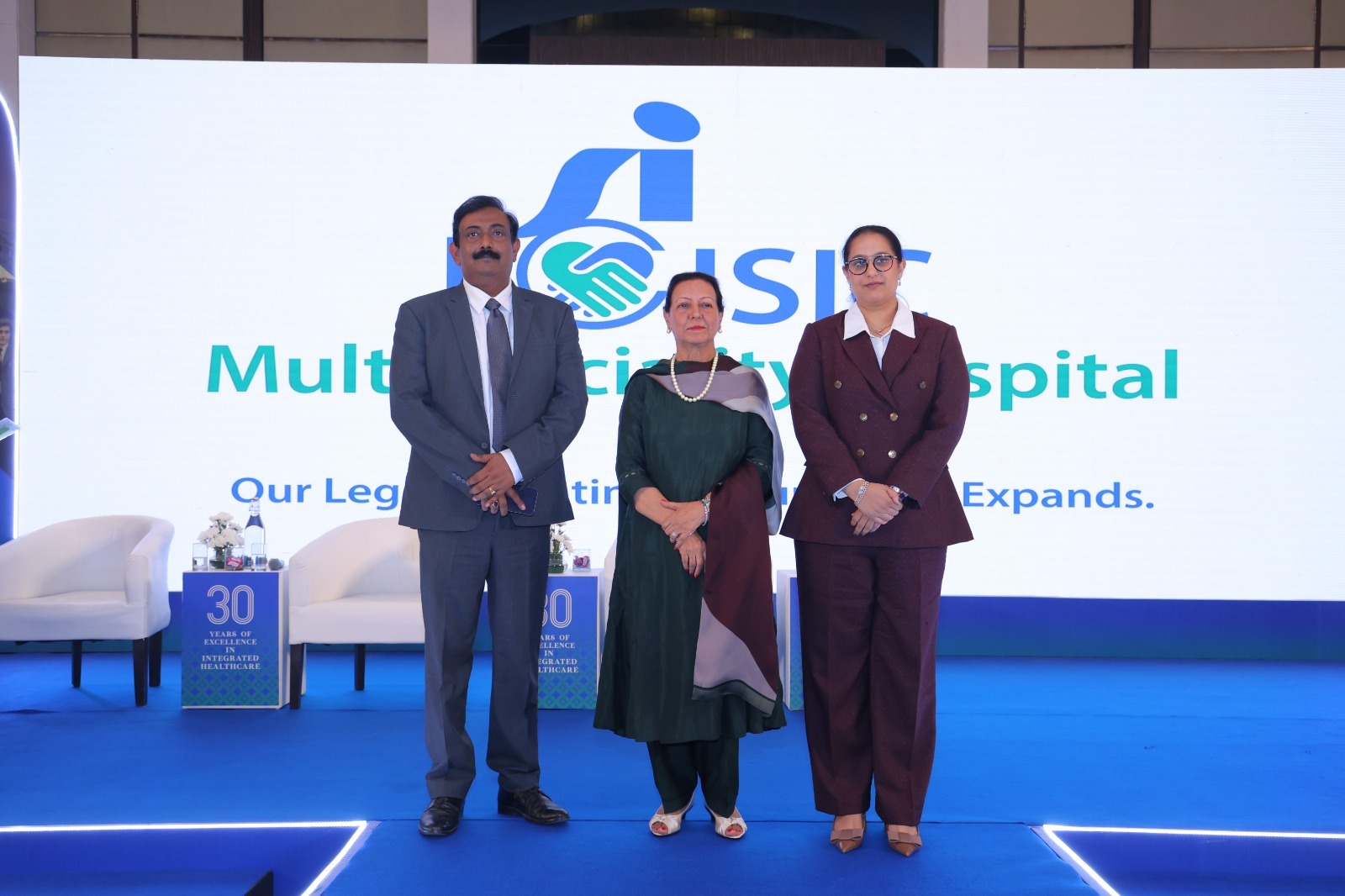
New Delhi, November 8, 2025: Marking three decades of pioneering excellence, the Indian Spinal Injuries Centre (ISIC) — India’s foremost institution dedicated to spinal disorders and rooted in the legacy of its founder, Major H.P.S. Ahluwalia — today announced the launch of its new identity, heralding a bold transformation into the ISIC Multispeciality Hospital. The milestone moment, celebrated as “The New Chapter Unfolds – A New Vision, in a New Avatar,” marks ISIC’s evolution from a single-specialty leader to a comprehensive multispeciality destination. Guided by its vision to deliver compassionate care and exceptional outcomes for every patient, and its mission to be recognized as a global leader in integrated, world-class healthcare, this transformation marks the beginning of a new era for ISIC. The institution also unveiled its new logo — a timeless symbol that retains the essence of its founding spirit while embracing the future of holistic, integrated healthcare.
The hospital will now have Cardiac Sciences, Renal Sciences, Neurosciences, and Gastro Sciences, with Orthopaedics and Spine as core Centres of Excellence, and Oncology to follow in the next phase. Each specialty will integrate advanced diagnostics, research, and rehabilitation, ensuring seamless care from prevention to recovery. The institution also plans to expand its capacity from 200 to over 600 beds in five years, starting with Phase I, which will add 100 beds and upgrade infrastructure, diagnostics, 15 bedded new dialysis unit and digital systems. The hospital is further enhancing patient-centric design, emergency services, and digital integration, reaffirming its commitment to delivering accessible, high-quality care with clinical excellence and compassion.
Reflecting on the extraordinary journey of the institution, Ms. Bholi Ahluwalia, Chairperson, ISIC Multi-speciality Hospital, said, “ISIC was born from one man’s courage and compassion — when Major H.P.S. Ahluwalia turned personal adversity into a lifelong mission of service and inclusion. For over three decades, that spirit has guided us to restore hope, dignity, and mobility to thousands. As we evolve into ISIC Multispeciality Hospital, we are expanding to meet the healthcare needs of today and tomorrow — while remaining deeply rooted in the values that shaped our beginning. This transition allows us to deliver comprehensive, world-class care under one trusted roof. What continues to set us apart is our deep-rooted culture of compassion and community — reflected in our CSR initiatives, from free screening camps and health education to accessibility projects for the elderly and differently abled. As we enter this new phase, we remain committed to serving with purpose, leading with empathy, and building a healthier, more inclusive India.”
Highlighting the institution’s long-term vision, Ms. Sugandh Ahluwalia, Chief Strategy Officer, ISIC Multi-speciality Hospital, said, “ISIC’s transformation into a multispeciality hospital represents both continuity and change — an evolution that builds on our strong foundation in spinal and rehabilitative care while expanding our horizons to deliver truly integrated healthcare. Our approach is rooted in creating a seamless, patient-first ecosystem where advanced clinical expertise meets empathy and innovation. The goal is to replicate the same quality, teamwork, and integrity that have defined ISIC for over three decades, across every new specialty we build. Over the years, ISIC has evolved into an institution of research, education, and clinical innovation, with many breakthroughs and technologies being pioneered here. With investments in AI, robotics, and digital health, we aim to enhance precision and accessibility through telemedicine and remote rehabilitation. Even as we grow, our identity remains anchored in inclusion — the enduring figure in our logo continues to symbolise resilience, empowerment, and hope.”
Sharing insights on the institution’s growth roadmap and operational direction, Dr. Ashish Chandra, Chief Operating Officer, ISIC Multi-speciality Hospital, said, “Our expansion marks a strategic leap toward building one of North India’s most advanced and patient-focused healthcare destinations. The emphasis is on integrating technology with compassionate care — ensuring that every process, from diagnosis to recovery, is efficient, transparent, and human-centered. Our integrated Hospital Information System — linked with mobile apps and patient portals — offers seamless access to reports, consultations, and real-time updates. Alongside infrastructure and digital enhancements, we are investing in clinical talent, training, and systems that reinforce our core promise of excellence. For us, growth isn’t just about capacity — it’s about elevating the entire care experience while staying true to ISIC’s ethos of empathy and trust.”
With over 20% projected CAGR growth, rising occupancy levels of 75%, and a consistent NPS above 90%, ISIC is poised for sustainable expansion while retaining its community-driven ethos. Its modernized digital ecosystem—integrating patient portals, mobile apps, and AI-enabled systems—ensures seamless, transparent, and accessible healthcare experiences.






.jpeg)










.jpg)
.jpg)
.jpg)
.jpg)
.jpg)
.jpg)


.jpg)