 Monday, October 05, 2026
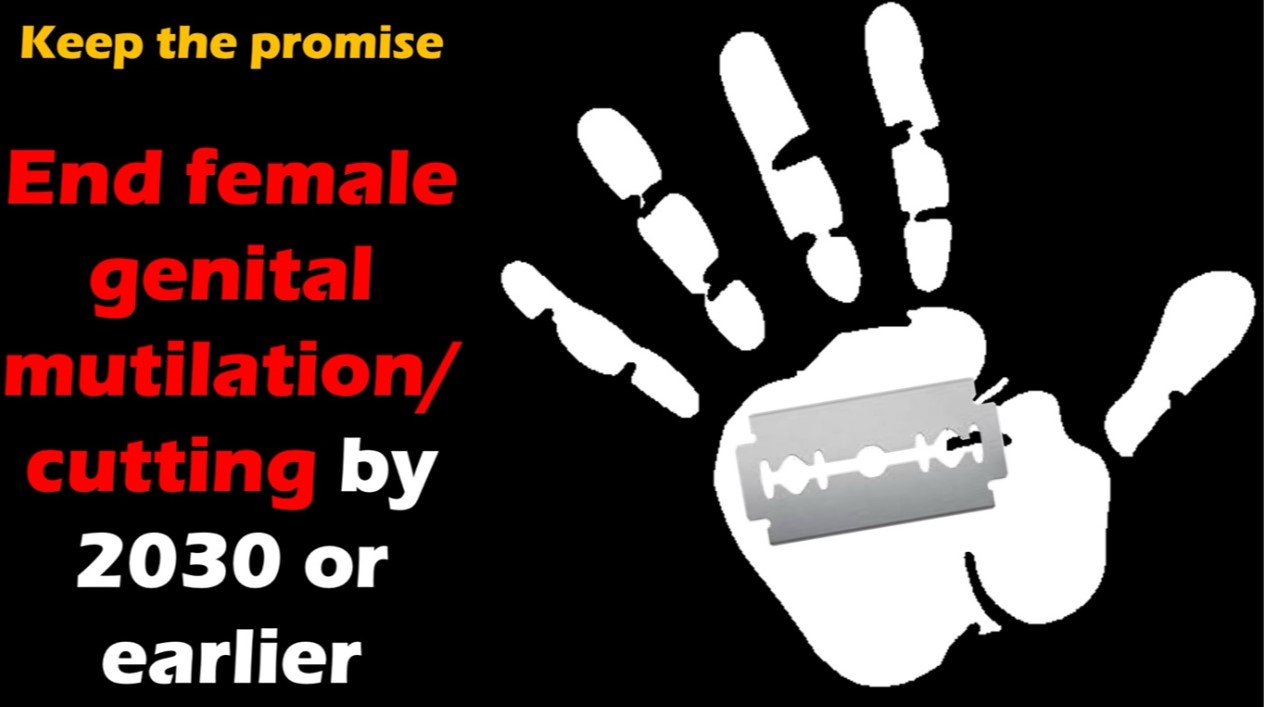
 Ten years back at the United Nations General Assembly, all world leaders promised to eliminate harmful practice of female genital mutilation/ cutting by 2030. But instead of declining, female genital mutilation/ cutting has instead increased by 15% over the past 8 years: from 200 million in 2016 to over 230 million in 2024.




Ten years back at the United Nations General Assembly, all world leaders promised to eliminate harmful practice of female genital mutilation/ cutting (SDG-5 target 5.3) by 2030. But instead of declining, female genital mutilation/ cutting has instead increased by 15% over the past 8 years: from 200 million in 2016 to over 230 million in 2024.
More than 230 million girls and women alive today have undergone female genital mutilation/ cutting in 92 countries – mostly in Africa (144 million), the Middle East (6 million), and Asia (80 million) where it is practiced still. Female genital mutilation/ cutting is a violation of the human rights of girls and women. Without urgent, accelerated action, an additional 27 million girls are projected to undergo the procedure by 2030.
“We cannot meet SDGs when half the population is harmed, silenced or excluded. Development justice demands that policies centre women's safety, agency, and bodily integrity. Female genital mutilation/ cutting is a human rights violation,” says Dr Huda Syyed, an Australia-based researcher, Founder of Sahara Sisters' Collective and a key part of Asian Network to end female genital mutilation/ cutting (FGM/C).
The devil of patriarchy ferments such gruesome and shocking practices like female genital mutilation/ cutting. After all, patriarchy is all about wrongly ‘normalising’ male privileges, entitlements and rights (and pleasures) and ‘legitimising’ their denial to women and girls and other genders.
FGM/C is a gross human rights violation
According to the UN health agency – the World Health Organization (WHO), the practice of female genital mutilation/ cutting is recognised internationally as a violation of the human rights of girls and women.
Female genital mutilation/ cutting reflects deep-rooted gender inequality and constitutes an extreme form of discrimination against girls and women. It is nearly always carried out on minors and is a violation of the rights of children. The practice also violates a person's right to health, security, physical integrity and bodily autonomy; the right to be free from torture and cruel, inhuman or degrading treatment; and the right to life, in instances when the procedure results in death.
FGM/C is never ‘safe’ and violates medical ethics too
There is no medical justification for female genital mutilation/ cutting and it is never ‘safe.’ It is a gross human rights violation. That is why the WHO strongly urges health workers not to perform female genital mutilation/ cutting. When performed in a clinical setting, FGM/C violates medical ethics.
“In a joint statement issued by several organisations including Asian Network to end female genital mutilation/ cutting, there was a condemnation of its medicalisation in all forms. Female genital mutilation/ cutting compromises bodily autonomy. Young girls are made to have it without prior knowledge or understanding and sometimes they were told that they are going to ‘another place’ whereas they are actually being taken to get female genital mutilation/ cutting,” said Dr Huda Syyed while speaking in SHE & Rights (Sexual Health with Equity & Rights) session hosted by Global Center for Health Diplomacy and Inclusion (CeHDI), Women Deliver Conference 2026, International Planned Parenthood Federation (IPPF), Asian-Pacific Resource and Research Centre for Women (ARROW), Women’s Global Network for Reproductive Rights (WGNRR), Asia Pacific Media Alliance for Health, Gender and Development Justice (APCAT Media) and CNS.
According to United Nations Population Fund (UNFPA), FGM/C can never be ‘safe,’ and there is no medical justification for it. Under any circumstances, FGM/C violates the right to health, the right to be free from violence, the right to life and physical integrity, the right to non-discrimination, and the right to be free from cruel, inhuman or degrading treatment.
“We are here to hold systems, institutions, and even governments accountable for gendered harm. So social and cultural notions of shame, secrecy and silence which is attached to girls and women's bodies, can lead to further silencing and perpetuation of various gendered customs including gender-based violence of various forms including female genital mutilation/ cutting,” said Dr Huda Syyed.
“We need to approach communities with a trauma-informed lens which could also help with dismantling shame, dismantling secrecy, and allow communities to share their voices with willingness and join us all in this advocacy to stop harmful gendered customs. Ending female genital mutilation or cutting in Asia and globally is not a ‘marginal issue’ rather it is a central issue to gender and development justice as well as central to bodily autonomy, public health, right to equality, human rights, children's rights and girl child rights. Patriarchal notions of women's bodies which are shaped into shame and secrecy need to be challenged and dismantled,” she concluded while speaking in SHE & Rights this month.
No gain but all to lose with FGM/C
Female genital mutilation/ cutting (FGM/C) comprises all procedures that involve partial or total removal of the external female genitalia, or other injury to the female genital organs for non-medical reasons. The practice has no health benefits for girls and women and can result in severe bleeding and problems urinating, and later cysts, menstrual difficulties, infections, as well as complications in childbirth and increased risk of newborn deaths.
WHO agrees that “female genital mutilation/ cutting has NO health benefits, and it harms girls and women in many ways. It involves removing and damaging healthy and normal female genital tissue, and it interferes with the natural functions of girls' and women's bodies.”
Although all forms of female genital mutilation/ cutting are associated with increased risk of health complications, the risk is greater with more severe forms of it. Its immediate complications can include severe pain, excessive bleeding (haemorrhage), genital tissue swelling, fever, infections (like tetanus), urinary problems, wound healing problems, injury to surrounding genital tissue, shock and death (source: WHO).
Long-term complications of female genital mutilation/ cutting can include urinary problems (painful urination, urinary tract infections); vaginal problems (discharge, itching, bacterial vaginosis and other infections); menstrual problems (painful menstruations, difficulty in passing menstrual blood, etc.); scar tissue and keloid; sexual problems (pain during intercourse, decreased satisfaction, etc.); increased risk of childbirth complications (difficult delivery, excessive bleeding, caesarean section, need to resuscitate the baby, etc.) and newborn deaths; need for later surgeries: women with severe types of female genital mutilation/ cutting might require deinfibulation (opening the infibulated scar to allow for sexual intercourse and childbirth), psychological problems (depression, anxiety, post-traumatic stress disorder, low self-esteem, etc.) (source: WHO).
Fundamentally, ending female genital mutilation/ cutting is human rights imperative. But even if you take economic impact into account, there is an astronomical economic cost too: Treatment of its health complications is estimated to cost health systems US$ 1.4 billion per year, a number expected to rise unless urgent action is taken towards its abandonment.
With only 5 years left to deliver on SDGs, it is high time for accountability because instead of progressing towards elimination of female genital mutilation/ cutting by 2030, the rates have risen in recent years.
We cannot deliver on Agenda 2030 of Sustainable Development "where no one is left behind" unless we completely end harmful practices like female genital mutilation/ cutting. Gender equality and human rights are bedrocks for progressing towards SDGs.






.jpeg)
.jpg)
.jpg)
.jpg)
.jpg)
.jpg)
.jpg)

.jpeg)
.jpeg)
.png)