 Tuesday, October 27, 2026
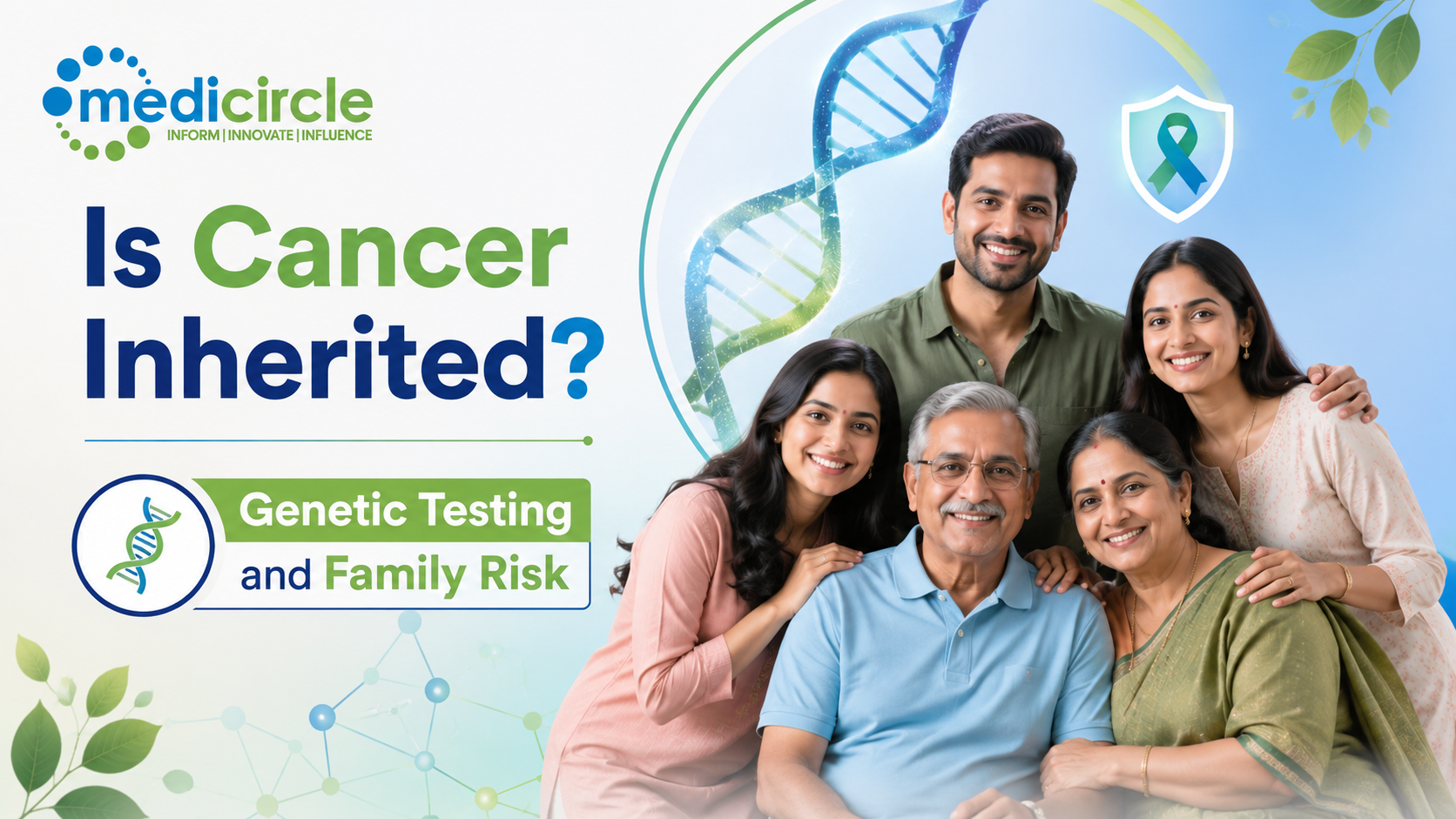
 A family history of cancer indicates risk rather than certain illness. Understanding genetic patterns, seeking counseling, and implementing early, personalized screenings allow individuals to protect their health proactively.




Family History of Cancer: How Much Risk Do You Really Carry?
When a loved one receives a cancer diagnosis, the emotional impact ripples through the entire family. Alongside the deep concern for their recovery, a lingering, uncomfortable question often surfaces. Many individuals worry that this illness is running through their bloodline, waiting to affect the next generation.
In India, where multi-generational families closely share their lives, medical anxieties are frequently passed down along with family stories. It is easy to assume that because a grandparent, aunt, or parent faced cancer, your own health destiny is already written. However, clinical oncology reveals a much more reassuring and nuanced reality.
A single diagnosis in the family rarely means you are guaranteed to develop the same condition. By understanding how cellular changes happen, distinguishing between different types of familial patterns, and knowing what steps to take, you can replace fear with a practical, proactive health strategy. Utilizing tools such as modern genetic testing for cancer allows individuals to evaluate true risk objectively.
Biology and DNA
To understand health risks passed down through generations, we have to look at how cells operate. Your body is made of trillions of cells, each governed by an internal instruction manual known as DNA. This genetic code tells cells exactly when to grow, work, divide, and eventually clear away to make room for new ones.
Cancer begins when errors, which are known as genetic mutations, disrupt these instructions. When a cell instruction manual gets corrupted, it ignores the natural boundaries of the body and begins multiplying uncontrollably, eventually gathering into a lump or tumor.
Most of these genetic mistakes are not inherited. They accumulate slowly over decades due to aging, environmental exposures, and everyday lifestyle habits. Because these alterations happen only in specific cells during your lifetime, they cannot be passed on to your children. This category encompasses the vast majority of cancer diagnoses worldwide.
A small percentage of individuals, however, are born with a genetic mutation already present in every cell of their body because it was passed down from a parent. This scenario represents a genuine hereditary cancer risk. Starting life with an inherited alteration does not mean you are born with cancer. Rather, it means one of the natural protective mechanisms of your body is less effective, increasing your susceptibility to the disease over time.
Three Cancer Types
Medical professionals categorize cancer into three distinct groups based on how and why it develops. Recognizing these categories can help you evaluate your own family medical tree with greater clarity.
- Sporadic Cancer: This is the most frequent scenario, accounting for seventy to eighty percent of cases. These cancers happen entirely by chance, typically later in life, and are driven by standard aging, environmental factors, or daily habits. For instance, if an elderly relative develops a tumor with no other instances in the lineage, it is almost certainly a sporadic event.
- Familial Cancer: This refers to families where a specific type of cancer appears more frequently than usual, but without a single, direct genetic defect moving from parent to child. Instead, these clusters usually happen because family members share a common environment, regional exposures, dietary habits, or lifestyle patterns.
- Hereditary Cancer: This is the rarest type, making up five to ten percent of cases. It occurs when a specific, altered gene is directly transmitted through the bloodline. Hereditary cancers leave clear patterns, often showing up in multiple generations or affecting individuals at unusually young ages.
Family Tree Flags
Because true hereditary conditions are rare, doctors do not worry about every diagnosis in a family tree. An isolated case of an older relative developing an illness later in life is generally considered a standard health event. Instead, clinical experts look for specific, distinct patterns before suspecting a strong genetic link.
First Degree Clustering
A significant warning sign is having multiple immediate family members, such as a parent, brother, sister, or child, diagnosed with the same type of cancer. It is also concerning if they have types that share genetic pathways, like ovarian and breast cancers.
Early Age Diagnoses
Most cancers are diseases of aging. When conditions typically seen in older adults show up in relatives who are under the age of fifty, it strongly suggests that an inherited genetic factor might be bypassing the typical aging process.
Multiple Primary Tumors
Doctors take note when a single relative develops two or more completely independent types of cancer over their lifetime, or when an illness occurs in paired organs, like both kidneys. Similarly, rare medical events, such as a male relative developing breast cancer, are strong reasons to look deeper into genetic tracking.
Counseling and Testing
If your family medical history displays these specific red flags, modern medicine offers a clear framework for finding answers through professional genetic counseling and targeted testing.
This process always starts with a comprehensive consultation rather than a lab test. A specialized genetic counselor sits down with you to map out a detailed family health tree spanning at least three generations. They look closely at types of illnesses, ages of onset, and maternal and paternal health patterns.
Genetic testing for cancer deals in probabilities, not certainties. A positive result indicates an elevated risk compared to the general population. It is not a diagnosis of illness, but a tool for early protection.
If the clinical patterns suggest a genuine hereditary link, the counselor may recommend a genetic test using a simple blood or saliva sample. This test looks for specific, known mutations, such as the BRCA1 and BRCA2 genes associated with breast and ovarian risks, or the genetic markers tied to Lynch syndrome, which impacts colon health.
Learning your results provides a roadmap. If a test is positive, it gives you and your physician the information needed to intervene early. If it is negative, it can provide profound reassurance, though it means you still carry the standard baseline risk common to everyone.
Prevention and Control
Discovering a genetic predisposition is an opportunity to manage your health actively before any disease has a chance to take root. Your family history allows you to collaborate with healthcare providers to build a customized prevention strategy.
Personalized Screening Timelines
When a hereditary risk is confirmed, standard public health screening schedules no longer apply. Physicians typically recommend starting routine diagnostic checks, such as specialized scans or endoscopic evaluations, a decade before the earliest diagnosis in your family. They may also utilize more precise imaging methods, like MRIs, performed at more frequent intervals to catch minor cellular updates when they are easiest to address.
Optimizing Your Lifestyle
You cannot alter the genetic code you were born with, but you can heavily influence how those genes behave. Maintaining a healthy weight, staying physically active, and centering your meals around whole foods, vegetables, and fiber creates an internal environment hostile to disease development. For families in India, avoiding all forms of tobacco and minimizing alcohol intake remain two of the most powerful, evidence-based steps you can take to protect your cells.
Shifting Your Perspective
A history of illness in your lineage does not have to feel like an unavoidable shadow over your future. Modern oncology proves that your genetic code is only one element of your overall health story. True hereditary conditions are rare, and even when a genetic mutation is present, it represents a risk factor, not an absolute outcome.
Taking the time to discuss health histories openly with relatives, recording accurate diagnoses, and sharing those details with your doctor can completely change your perspective. Trustworthy healthcare platforms like Medicircle provide the clear, objective insights necessary to navigate these complex topics. By trading worry for informed awareness, you can take practical, powerful steps to protect your personal well-being and build a healthier foundation for the generations to follow.
Frequently Asked Questions
Will I automatically get cancer if a parent had it?
No. The vast majority of cancer cases are sporadic and occur due to aging and environmental factors over time. Even in the rare event that the illness of your relative was caused by an inherited genetic mutation, there is only a fifty percent chance that the specific gene was passed down to you.
When should I begin screenings?
As a general medical rule, doctors often recommend starting screenings roughly ten years earlier than the youngest diagnosis among your first-degree relatives. If a parent developed a condition at age forty-eight, your personalized screening plan might begin at age thirty-eight. Talk to a physician to establish a timeline tailored precisely to your family tree.
Can lifestyle counteract genetic risk?
Yes, lifestyle choices are incredibly powerful. Inherited genes determine your baseline susceptibility, but environmental factors often act as the triggers that turn those genetic instructions on or off. Regular exercise, a balanced diet, avoiding carcinogens like tobacco, and managing chronic stress all help support your immune system and lower the chances of those genes causing harm.





-23-300x250.png)

.jpeg)





.jpg)
.jpg)
.jpg)
.jpg)
.jpg)
.jpg)
.jpg)
.jpg)
.jpg)



