 Saturday, November 21, 2026
 Advanced airway-based biopsy technique helps detect suspected lung cancer early, while reducing complications and enabling day-care recovery.





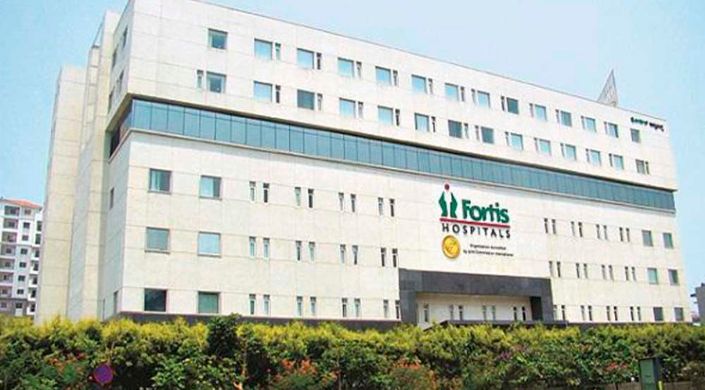
Bengaluru, 12 February 2026: Fortis Hospital Bannerghatta Road has achieved a significant medical milestone by successfully performing Karnataka’s first navigation-based bronchoscopy and lung biopsy, enabling early diagnosis of suspected lung cancer in a 65-year-old woman. The procedure was performed using the Synapse 3D Navigation System by Fujifilm, a first-of-its-kind advanced technology, by the Interventional Pulmonology team, led by Dr. Srivatsa Lokeshwaran, Director – Interventional Pulmonology and Lung Transplantation.
The patient had initially presented with cough and fever and was being treated for a lower respiratory tract infection. During evaluation, a routine chest X-ray revealed an abnormal shadow, prompting the treating physician to suggest a CT scan. The scan detected a 2-cm lung nodule in the right middle lobe, which appeared suspicious and required biopsy for confirmation
Traditionally, lung nodules of this nature are sampled using a CT-guided transthoracic needle biopsy, where a needle is inserted through the chest wall into the lung. While this approach is effective, it is often associated with risks such as lung collapse (pneumothorax which can occur in up to 20% of patients) and bleeding, resulting in longer hospital stays and higher overall cost to the patient. Although it’s extremely rare, there is a theoretical risk that inserting a needle through a tumor during a lung biopsy could dislodge a few cancer cells and deposit them along the needle track, a phenomenon known as ‘tumor seeding.’ However, this complication occurs in only a tiny fraction of cases and does not change the fact that biopsies are essential for accurate diagnosis and treatment planning.
At Fortis, doctors used navigation-based bronchoscopy, a newer technique where the biopsy is performed from inside the airway instead of puncturing through the chest wall. This enables greater precision, reduced risk and better patient safety.
Explaining the advantage of Synapse 3D Navigation System, Dr Srivatsa Lokeshwaran, Director of Interventional Pulmonology and Lung Transplantation at Fortis Hospitals, Bengaluru, said, “Approaching the lung nodule through the natural airway is much like entering a house through the front door instead of breaking in from behind. It greatly reduces complications and allows us to obtain multiple high-quality tissue samples, which is crucial in today’s era of personalised and targeted cancer therapy. In this case, the navigation-based technique also significantly improved procedural efficiency. We were able to reach the lung lesion in less than 2 minutes, compared to the conventional approach which can take over 30 minutes, while significantly lowering the risk of exposure to radiation. The procedure was completed successfully, with clear airway and the patient was discharged with advice for regular follow-up.”
Commenting on the milestone, Dr. Ananth Rao, VP & Business Head, Fortis Hospitals Bengaluru said, “Fortis Hospitals, Bengaluru continues to invest in advanced technologies that improve patient safety and outcomes. Introducing navigation-based bronchoscopy in Karnataka reflects our commitment to early cancer detection, precision diagnosis, and compassionate care for patients across the region and beyond.”
Globally, most lung nodules are discovered incidentally. For individuals at high risk, particularly those with a strong family history of lung cancer or a significant smoking history, low-dose CT screening is considered the gold standard. Large international studies, including the National Lung Screening Trial (USA), have shown that low-dose CT screening can reduce lung cancer mortality by up to 15%. In India, however, screening presents unique challenges due to the high prevalence of tuberculosis, which often results in benign lung nodules that can mimic cancer.





-23-300x250.png)




















