 Saturday, November 21, 2026
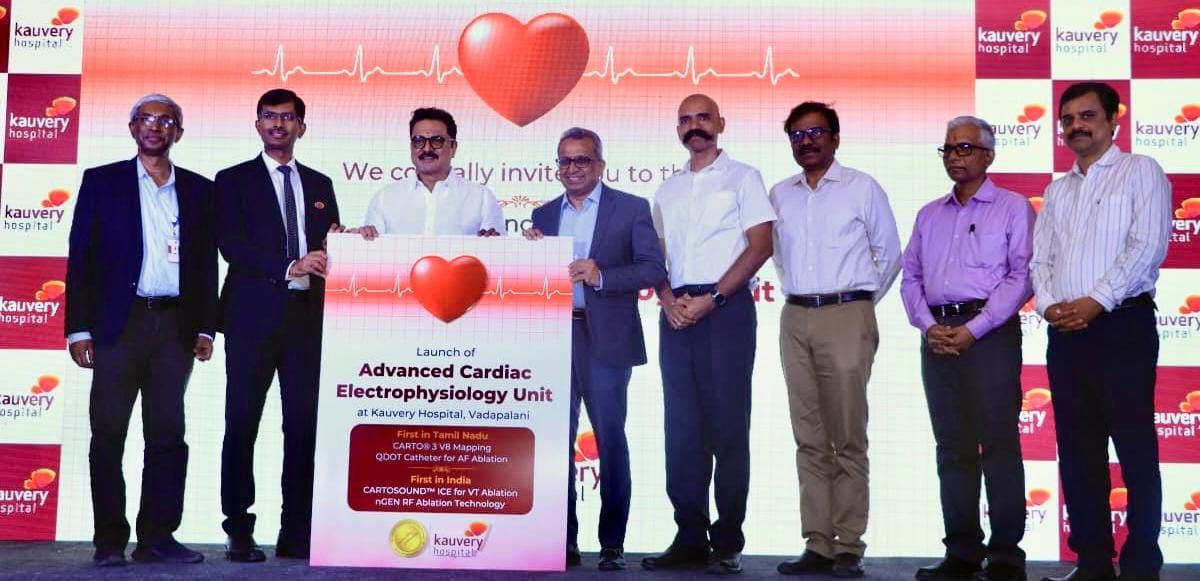
 Complex arrhythmias like atrial fibrillation and ventricular tachycardia can now be effectively treated in the city with specialised expertise and advanced technology.





Chennai, January 08, 2026: For the first time in Tamil Nadu, Kauvery Hospital, Vadapalani, has launched an advanced electroanatomical mapping technology, to provide cutting-edge cardiac electrophysiology treatments for complex heart rhythm disorders, including atrial fibrillation of the upper chambers and the dangerously fast ventricular tachycardia of the lower chambers.
The system along with a range of advanced cardiac electrophysiology technologies, that enable precise detection and targeted treatment of abnormal heart rhythm sources was launched in the presence of Actor R. Sarathkumar along with Dr. Aravindan Selvaraj, Co-Founder and Executive Director of Kauvery Group of Hospitals and, Dr. Deep Chandh Raja, Senior Consultant & Director of Cardiac Electrophysiology at Kauvery Hospital, Vadapalani
The CARTO™ 3 system allows doctors to create high-resolution, 3D maps of the heart’s electrical activity, helping them precisely locate and treat the sources of abnormal rhythms. The newly introduced CARTOSOUND® technology provides real-time imaging of the heart during procedures. Kauvery Hospital has also launched the QDOT® catheter, which delivers high-power, short-duration energy for faster and more controlled treatment of atrial fibrillation, along with the nGEN® radiofrequency system for ablation, which safely destroys the heart tissue responsible for irregular signals.
In his comments, Mr. Sarathkumar, said, “I am happy that Kauvery Hospital, Vadapalani is pioneering advanced approaches in the treatment of arrhythmias, helping patients lead healthier lives. Heart health is truly the foundation of overall well-being, and it is important for everyone to take care of it. Simple steps such as maintaining a proper diet, practicing discipline in daily routines, exercising regularly, and leading a stress-free life can make a huge difference in keeping the heart strong and healthy.”
Dr. Aravindan Selvaraj, Co-Founder and Executive Director of Kauvery Group of Hospitals, added, “These advanced technologies enable us to perform procedures with higher safety and success rates, even in challenging cases. This initiative positions Chennai on the global map for advanced arrhythmia care and marks a major milestone in cardiac treatment at Kauvery Hospital. By bringing globally established technologies to Tamil Nadu for the first time, we are ensuring patients can access world-class care closer to home.”
Talking about the new technologies, Dr. Deep Chandh Raja, Senior Consultant & Director of Cardiac Electrophysiology at Kauvery Hospital, Vadapalani, said, “Heart rhythm disorders, or arrhythmias, occur when new short circuits develop in the heart’s electrical system. Patients may experience palpitations, dizziness, breathlessness, or fainting. These electrical issues are evaluated using an Electrophysiology Study, and many can be safely treated with radiofrequency ablation. However, complex arrhythmias like atrial fibrillation and ventricular tachycardia require advanced technology and specialised expertise for safe and effective treatment. With these new launches, we are making some of the most sophisticated treatments for heart rhythm disorders available in Tamil Nadu, and in some cases in India, for the first time.”





-23-300x250.png)




















