 Friday, October 09, 2026
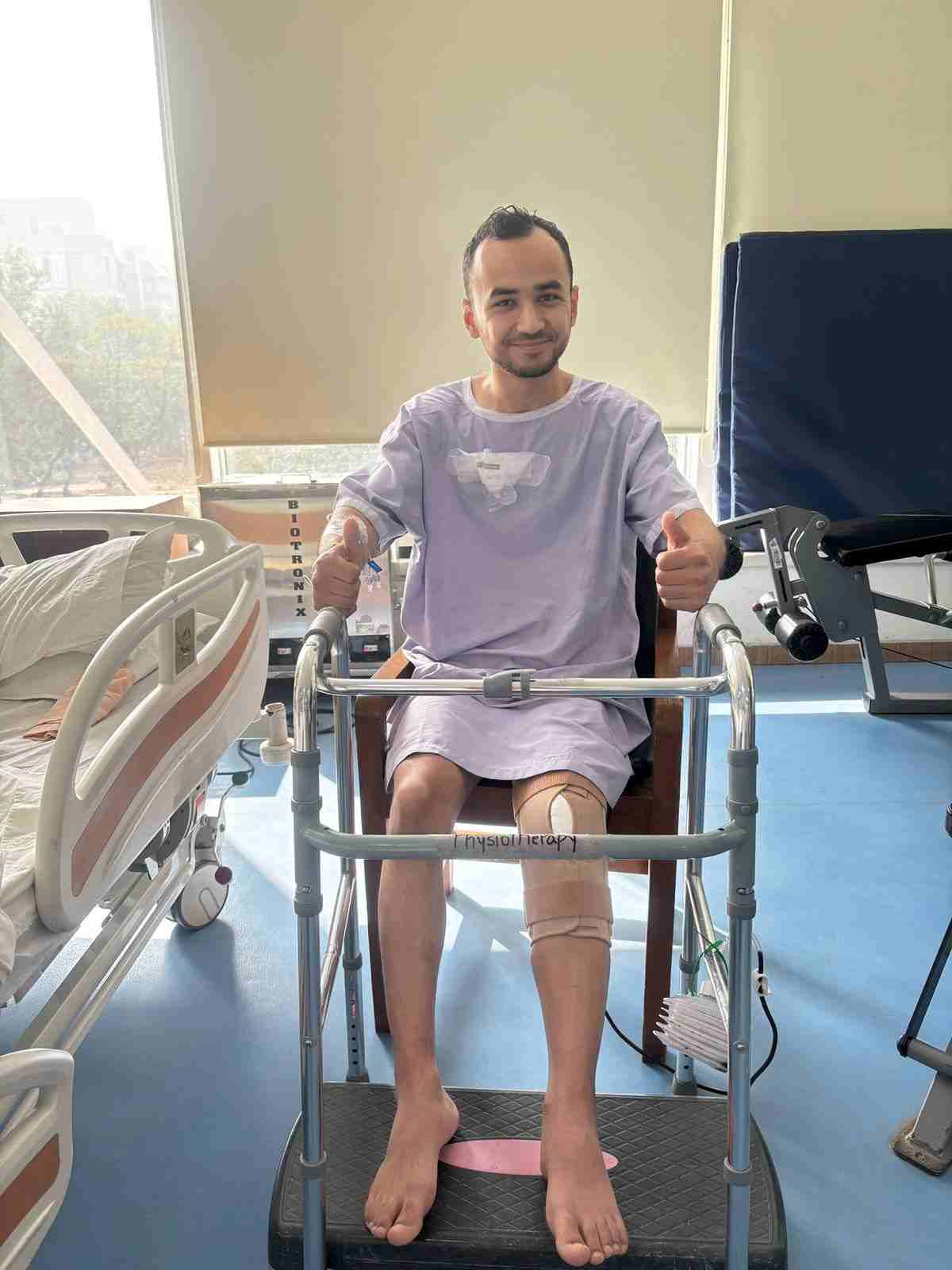
 A 25-year-old man Jamshedbek from Uzbekistan, whose leg had become “like a rod” due to advanced knee TB has regained mobility after undergoing treatment at Aakash Healthcare.




New Delhi, 19th February 2026
A 25-year-old man Jamshedbek from Uzbekistan, whose leg had become “like a rod” due to advanced knee TB has regained mobility after undergoing treatment at Aakash Healthcare
"At the age of 13, the patient had a low grade infection in the left knee, which resulted in Knee TB, for which he took medicines, but the pain in the knee persisted, progressive stiffness, and there was no movement left in the knee joint. As the disease advanced, the common movements of walking, climbing stairs, sitting in the car, and all activities where vital movement of knee bending was required, all were compromised. His knee gradually lost flexibility, eventually becoming rigid and non-functional.", informed Dr. Aashish Chaudhry, Head – Orthopaedics & Joint Replacement at Aakash Healthcare.
Dr Aashish Chaudhry further said, “We diagnosed the patient in Uzbekistan, and evaluation revealed end-stage Knee TB. His leg was like a rod, since he was 13 year old. While the joint was completely fused, his muscles were also very weak because they were not moving from last twelve years. Bieng a young boy, we wanted to give him complete mobility, hence with the help of special Hinge Implant, we were able to create a new joint in the already fused left knee. After the surgery, even the muscle were so tight that we had to do a special procedure on the thigh muscle to make it longer, so that patient is able to bend the knee, with the help of physiotherapy and rehabilitation,” he said.
The post-surgery care is important, and physio will play a very important role, as the muscles that were sleeping for last so many years, become strong and knee gains its mobility.
Dr. Aakarsh Mahajan, Associate Consultant – Orthopaedics, Joint Replacement & Arthroscopy Surgeon, Aakash Healthcare informed that Early treatment could save the joint, but once destruction becomes severe, creating a new joint becomes necessary,” he explained.
While TB is commonly associated with pulmonary infection, experts caution that extrapulmonary forms remain a significant concern. According to the WHO, an estimated 10.6 million people developed TB globally in 2023, with 15–20% of cases classified as extrapulmonary.
Skeletal or Bone TB accounts for around 10% of extrapulmonary cases. Among bone TB patients, knee involvement represents nearly 8%.
India continues to bear the highest global TB burden, reporting over 2.8 million cases in 2023 under the Ministry of Health and Family Welfare. Experts estimate that extrapulmonary TB contributes to nearly one-fifth of the country’s total TB load. However, joint TB particularly of the knee is frequently misdiagnosed due to its slow progression and absence of respiratory symptoms.
Dr Aashish Chaudhry emphasized that persistent, unexplained single joint pain in TB-endemic regions should raise suspicion for Bone TB. Timely imaging, microbiological testing, and early anti-tubercular therapy can prevent irreversible joint damage and long-term disability, especially in young and active individuals.






.jpeg)










.jpg)
.jpg)
.jpg)
.jpg)
.jpg)
.jpg)


.jpg)