Tuesday, October 27, 2026
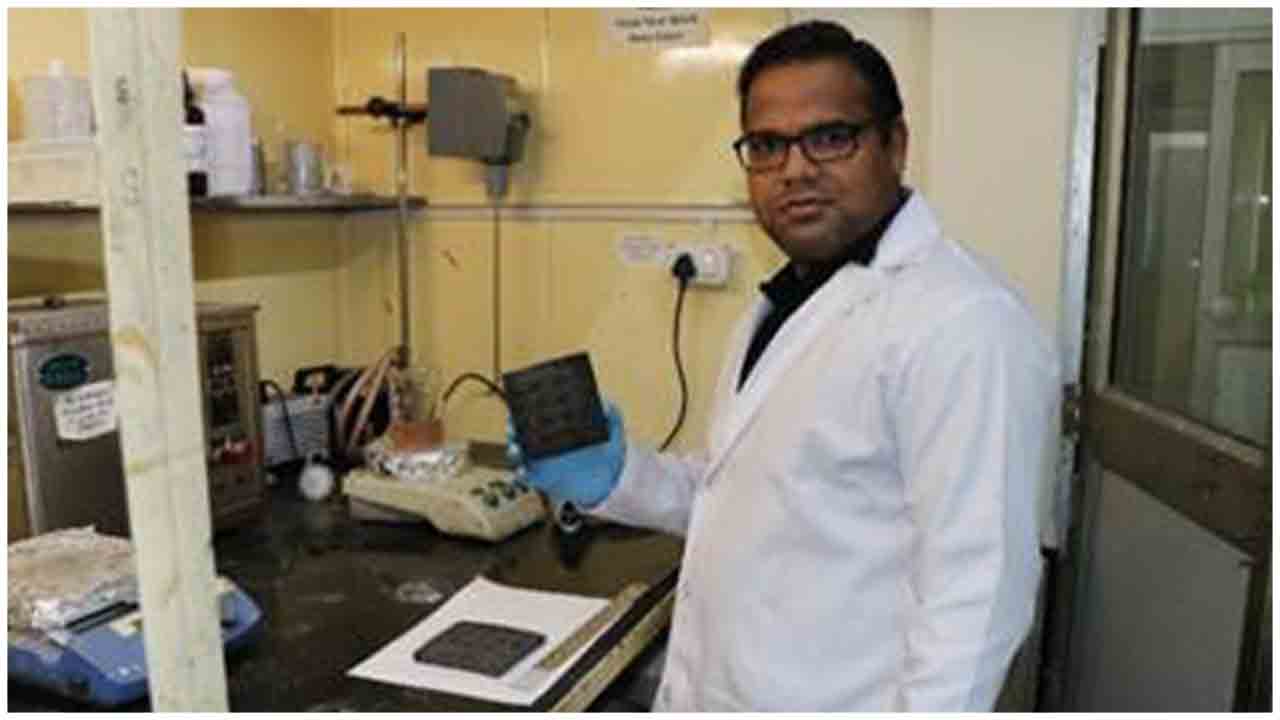
 The carbon foam will also be cost-effective for the removal of arsenic, oil, and other metals from contaminated water





Dr. Rajeev Kumar from CSIR-Advanced Materials and Processes Research Institute, Bhopal, a recipient of the INSPIRE Faculty award instituted by the Department of Science &Technology, Govt. of India, is developing porous carbon materials which have the potential to replace lead grid in lead-acid batteries.
It can also be useful for heat sinks in power electronics, electromagnetic interference shielding in aerospace, hydrogen storage and electrode for lead-acid batteries and water purification systems
The present grid-scale energy-storage sector is dominated by lithium-ion batteries, because of their higher energy density & specific power and long cycle life. However, there are some serious concerns regarding Li-ion batteries, such as safety risk, limited resource supply, high cost, and lack of recycling infrastructure. This necessitates the development of an alternative battery system with lower environmental concerns, economic and higher energy density. As a result, lead-acid batteries are still one of the most reliable, economical, and environmentally friendly options. However, electrodes in the lead-acid batteries suffer from the problem of heavyweight, corrosion, poor thermal stability, and diffusion of electrolytes in one dimension, which ultimately affects the output power.
Recently, Dr. Rajeev, along with his research group, have developed lightweight carbon foam with a density of less than 0.3g/cc, high porosity of over 85%, good mechanical strength. His group has published about 16 papers on carbon foam in highly reputed Scientific journals since 2016 (after joining as inspire faculty). The foam is highly resistive to corrosion, has good electrical and thermal conductivity with high surface area, and have recently attracted a lot of attention owing to their potential applications in various field.
“Through this fellowship, we have developed carbon foam with improved properties. We strongly depend on the energy storage system, such as lead-acid batteries used in automobiles and households. The lightweight carbon foam can replace the lead-acid batteries, which are heavy, corrosive, and have poor thermal stability.“ Dr. Rajeev Kumar explained.
The carbon foam developed under the INSPIRE fellowship will also be cost-effective for the removal of arsenic, oil, and other metals from contaminated water. These carbon foams are non-toxic, easy to fabricate, affordable, and insoluble in water. The raw material for the fabrication of carbon foam is easily available everywhere, and there is no requirement of any costly equipment for the fabrication of carbon foam and filtration. Such materials can be safely used in remote areas where power supply is scarce.





-23-300x250.png)

.jpeg)





.jpg)
.jpg)
.jpg)
.jpg)
.jpg)
.jpg)
.jpg)
.jpg)
.jpg)