Tuesday, October 06, 2026
 Parkinson’s is the second most common neurodegenerative disorder worldwide, affecting nearly 10 million people.




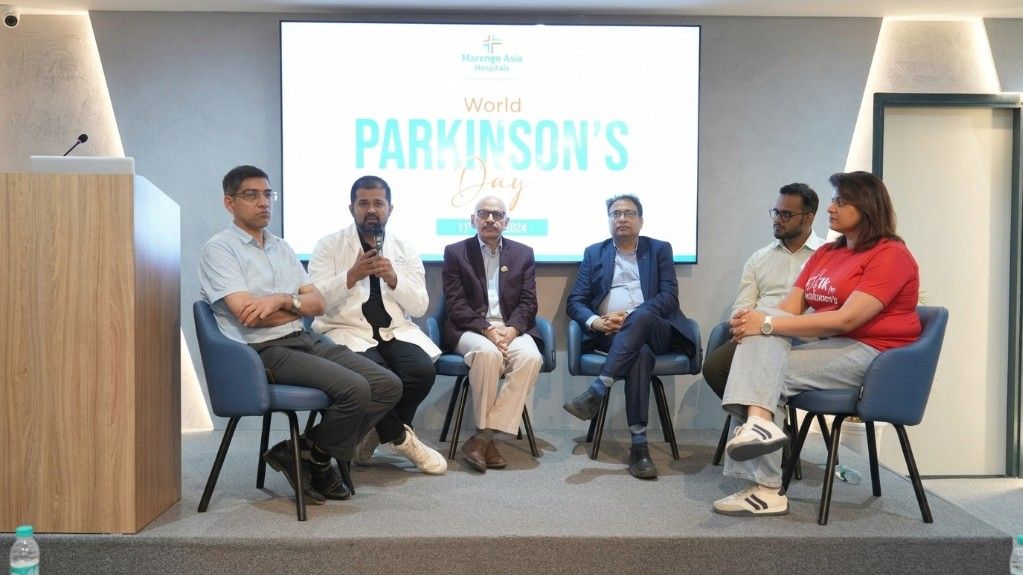
Gurugram, 16th April 2026: As part of its strategy focusing on early diagnosis, advanced treatment, and comprehensive long-term care for Parkinson’s disease, the Marengo Asia Hospitals, Gurugram has opened a functional neurosurgery centre along with a unique model of care that involves the use of movement-based dance therapy for Parkinson’s patients.
Parkinson’s disease is a degenerative condition that impacts one’s ability to move, coordinate, maintain balance, and control muscles. With the progression of the illness, a patient needs continued and comprehensive treatment. Despite medication being the main treatment for the illness, its efficacy may decline with time, especially with advanced stages.
Given that Parkinson’s disease is the second-most common degenerative condition, having close to 10 million people affected with it worldwide, doctors in Marengo Asia Hospitals, Gurugram have devised a new method for treating this illness.
.
Dr. Praveen Gupta, Chairman, MAIINS, Marengo Asia Hospitals, Gurugram, said, “Parkinson’s disease is often diagnosed late in India. With strong scientific evidence supporting Deep Brain Stimulation (DBS), there has been a paradigm shift in managing advanced Parkinson’s disease. DBS can significantly improve motor function, reduce medication dependence, and restore independence in appropriately selected patients. The establishment of our Centre for Functional Neurosurgery will make such advanced care more accessible.”
Deep Brain Stimulation (DBS) is an invasive therapy wherein electrodes are implanted in specific parts of the brain for controlling the abnormal functioning of neurons. Research has shown that around 70% - 75% of suitable patients show improvement in their motor function after receiving DBS.
Dr. Himanshu Champaneri, Clinical Director and Chief Functional & Epilepsy Neurosurgeon, Marengo Asia Hospitals, Gurugram said “Most of the people are scared when it comes to brain surgeries. However, things have come a long way. Procedures such as DBS are highly accurate and less invasive than expected. A large amount of time is taken in planning the surgery using MRIs. When the surgery finally takes place, it entails placing a thin wire at specific places in the brain where you have done your planning beforehand. It is not painful during the actual process. Patients begin experiencing improvements in mobility almost immediately, and after some time, the device helps the brain perform better.”
Recognising the progressive nature of Parkinson’s disease, the hospital has also launched a Movement-Based Dance Therapy Programme designed specifically for Parkinson’s patients. This structured programme integrates guided rhythmic movements, balance training, and coordination exercises to improve gait, posture, flexibility, and stability.
Experts emphasise that movement-based therapies play a critical role in Parkinson’s management. Regular, structured motor training helps stimulate neural pathways, promote neuroplasticity, reduce fall risk, and may help delay functional decline. The programme follows a multidisciplinary model involving neurologists, physiotherapists, trained movement therapists, psychologists, and dietitians. Psychological counselling supports emotional well-being, while personalised nutritional guidance optimises treatment response and overall health. This integrated approach ensures structured development and long-term monitoring of each patient.
According to Harpreet Singh, Facility Director, Marengo Asia Hospitals, Gurugram, We aim at educating people about neurological disorders and making state-of-the-art treatment methods available in their localities." He added, "By opening the Centre for Functional Neurosurgery, we have succeeded in bringing world-class treatments to our patients."
This initiative reinforces Marengo Asia Hospitals’ commitment to comprehensive, evidence-based neurological care while addressing the growing burden of Parkinson’s disease through awareness, innovation, and sustained rehabilitative support.






.jpeg)
.jpg)
.jpg)
.jpg)
.jpg)
.jpg)
.jpg)


.jpg)
.jpg)
.jpg)
.jpg)
.jpg)
.jpg)