Monday, November 16, 2026
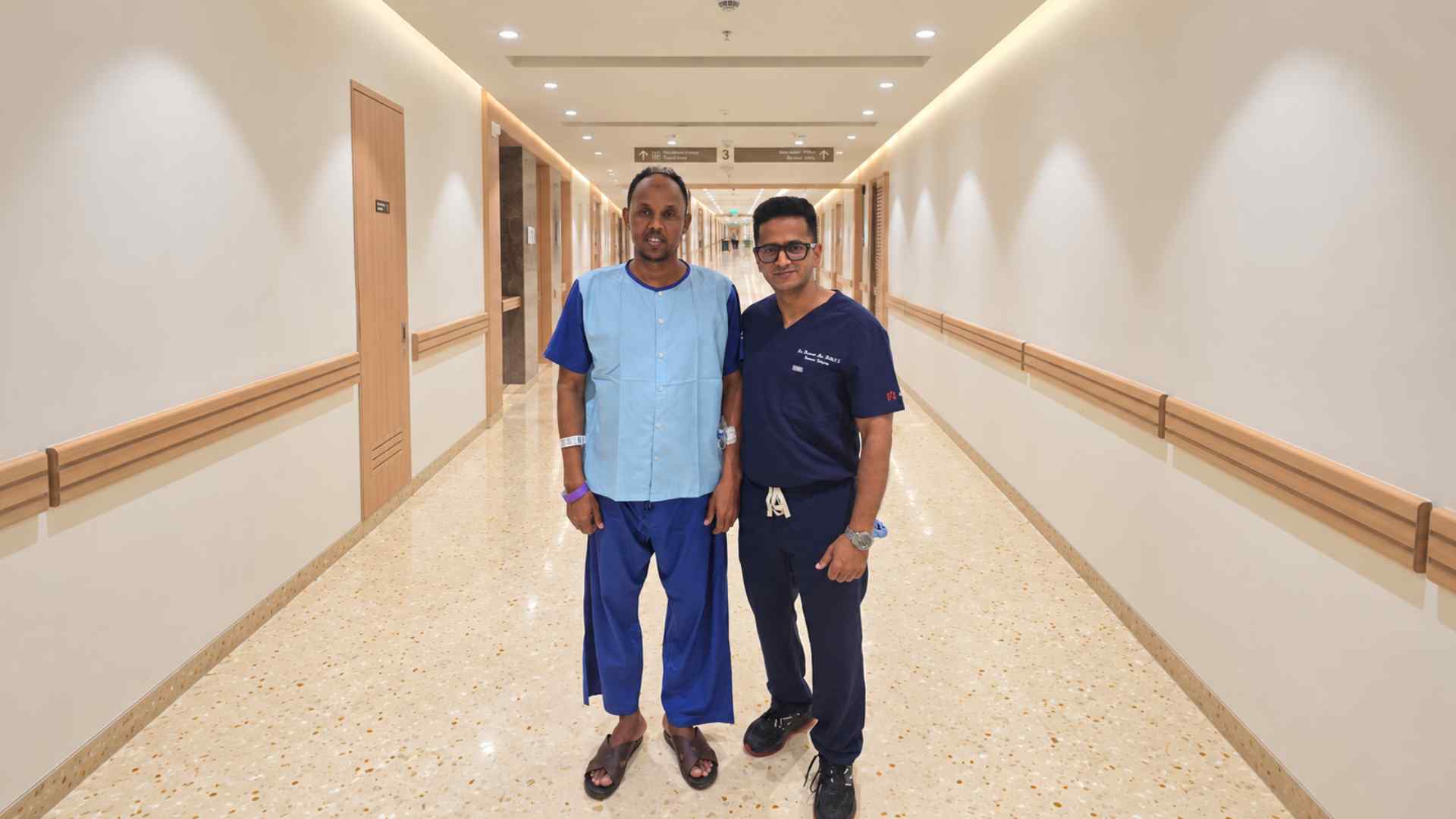
 Doctors at Max Smart Super Speciality Hospital, Saket, have successfully performed a complex lung-preserving surgery on a 38-year-old patient from Kenya diagnosed with a rare lung cancer, using a specialised procedure known as a double-sleeve left upper lobectomy.





New Delhi, October 12, 2026: Doctors at Max Smart Super Speciality Hospital, Saket, have successfully performed a complex lung-preserving surgery on a 38-year-old patient from Kenya diagnosed with a rare lung cancer, using a specialised procedure known as a double-sleeve left upper lobectomy. The seven-hour surgery enabled the team to remove the tumour along with the affected portions of the airway and a major blood vessel, while preserving the lower lobe of the left lung and avoiding the need to remove the entire lung.
Mr. Mohammed Yunis Guliye was diagnosed with adenoid cystic carcinoma, a rare type of cancer that typically originates in glandular tissues, most commonly in the salivary glands of the head and neck. His tumour was located deep within the upper lobe of the left lung and had involved both the main airway and a major blood vessel supplying the lung. He had been experiencing persistent left-sided chest pain, with occasional episodes of coughing up blood.
Despite consulting multiple doctors in Kenya, the exact nature of the tumour could not be established given its critical location. Seeking a definitive diagnosis and treatment, he subsequently approached Max Smart Super Speciality Hospital, Saket, for further evaluation.
Diagnosis revealed the complexity of the tumour and the extent of its involvement with the airway and blood vessels. Given its location, conventional surgery could have necessitated the removal of the entire left lung, a procedure that would have significantly reduced his overall lung capacity. To avoid this and preserve as much healthy, functioning lung tissue as possible, the surgical team opted for a double-sleeve lobectomy.
The procedure was performed by a team led by Dr Kamran Ali, Associate Director – Thoracic Surgery and Lung Transplant, Max Smart Super Speciality Hospital, Saket. During the surgery, the affected upper lobe was removed along with the involved sections of the airway and blood vessels. Both structures were then carefully reconstructed to restore the passage of air and blood to the remaining lower lobe of the left lung.
Speaking about the case, Dr Kamran Ali, Associate Director – Thoracic Surgery and Lung Transplant, Max Smart Super Speciality Hospital, Saket, said, “The key challenge was to remove the tumour completely while preserving as much healthy, functioning lung tissue as possible. Since the tumour involved both the main airway and a major blood vessel, the surgery required precise reconstruction of both structures after removing the affected upper lobe. This approach enabled us to preserve the entire lower lobe of the left lung, avoiding the need to remove the whole lung.”
The surgery lasted approximately seven hours, and the patient was discharged within five days of the procedure.
Dr Ali further added, “A double-sleeve lobectomy is a highly specialised procedure that combines the removal of a tumour-affected lung lobe with the reconstruction of the airway and a major blood vessel. In appropriately selected patients, it can offer an alternative to removing the entire lung. By preserving more functioning lung tissue, the procedure can help retain lung capacity while allowing surgeons to treat complex tumours that involve critical structures.”
The case highlights the importance of advanced thoracic surgical expertise and lung-preserving approaches in the management of complex lung tumours. By combining complete tumour removal with the reconstruction of critical structures, such procedures can help eligible patients avoid more extensive surgery while preserving valuable lung function.





-23-300x250.png)