Tuesday, October 06, 2026
 Innovative approach of Medanta experts offer new hope for complex, aggressive cancer cases




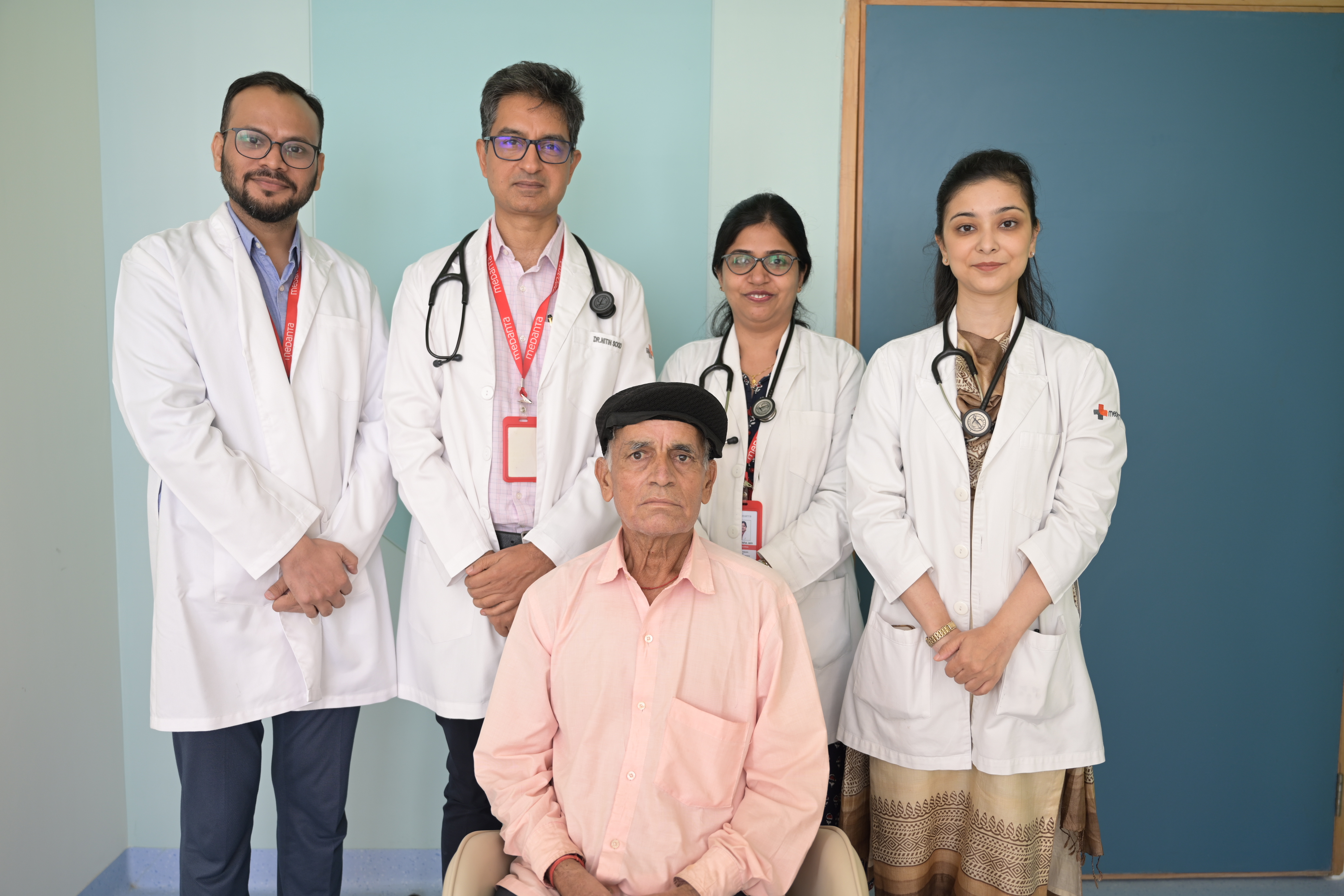
National, 2nd December 2024: Medanta, among the country’s leading multi-speciality hospitals ranked as the best private hospital in India by Newsweek, has successfully used CAR-T Cell Therapy to achieve remission in a 56-year-old man in stage-4 of a rare and fast-growing lymph node cancer, called non-GCB DLBCL (Non-Hodgkin’s Lymphoma) that is known to have a poor prognosis. This case stands out for its innovative approach to uniquely adapt the therapy to navigate the patient’s numerous complications, including development of pericardial tuberculosis and liver toxicity, all of which delayed and complicated treatment conditions. The patient, 56-year-old Mr. Sundar Lal Govala, came to Medanta Gurugram’s Division of Bone Marrow Transplant (BMT), Cancer Institute, after exhausting multiple lines of therapy at other centers.
Patient’s journey and challenges: The patient initially sought medical attention after suffering sudden onset of symptoms including severe vomiting and difficulty in eating, followed by discovering a lump in his stomach in 2022. Diagnosed with non-Hodgkin lymphoma, his treatment journey began at other centers but met with limited success. Despite undergoing chemotherapy regimens such as R-CHOP, GDP, and IR2, as well as immunotherapy agents like Brentuximab, his disease continued to progress. In 2024, he approached Medanta Gurugram’s Division of Bone Marrow Transplant (BMT), Cancer Institute, where a multidisciplinary team led by Dr. Nitin Sood (Senior Director of Medical Oncology & Bone Marrow Transplant), Dr. Manisha Jain, Dr. Bhaarat, and Dr. Tejasvini Vaid, identified the cutting edge treatment of CAR-T Cell Therapy – an advanced immunotherapy, involving modification of the patient’s own T-cells to attack cancer cells more effectively. Prior to CAR-T cell infusion, he was diagnosed with pericardial tuberculosis, the treatment for which affected his liver.
A multidisciplinary team at Medanta, including heart and liver experts, collaborated across specialities to stabilise the patient, adjusting anti-tuberculosis therapy to manage liver toxicity while preparing him for CAR-T Cell Therapy. After six weeks of careful preparation, the patient received the CAR T-cell infusion. Despite the therapy’s potential for significant side effects like cytokine release syndrome (CRS) and neurotoxicity, the procedure proceeded smoothly. By his one-month follow-up, a PET scan revealed no evidence of active disease, marking a remarkable remission for a patient previously unresponsive to multiple treatments.
Unique aspects of this case: This case underscores the adaptability of CAR T-cell therapy in treating highly refractory lymphomas. The team’s ability to successfully manage complications, including TB and liver toxicity, showcases the critical role of personalised care and a robust multidisciplinary setup. Despite the patient’s advanced-stage disease and multiple prior lines of failed therapy, the tailored approach at Medanta Gurugram demonstrated the potential for remission even in the most challenging scenarios.
Explaining the complexity of this case, Dr. Nitin Sood, Senior Director of Medical Oncology & Bone Marrow Transplant at Medanta Gurugram, “In a non-GCB DLBCL cancer, the treatment success rate is about 60-70%. In the remaining 30-40%, the next line of therapy works for about half the patients, and then the next line of advanced drugs work for about one-third of them. Mr. Govala is one of those rarest of rare cases where all the five lines of treatment did not work.”
“In India, NHL was among the top 10 cancers in terms of diagnosed new cases with about 40,000 new patients reported annually[1]. The prevalence of this aggressive subtype of lymphoma is rising, but its treatment becomes challenging due to limited access to advanced therapies, late-stage diagnosis, and poor overall performance status in patients. These factors highlight the pressing need for research, innovation, affordable treatments, and wider access to bring India closer to global standards in lymphoma care,” Dr Sood said.
Dr Naresh Trehan, Chairman and Managing Director, Medanta said, “This case highlights our dedication to personalized care, even in the most complex and challenging cases. In India, cancers are often diagnosed at later stages, and the need for advanced treatments like CAR T-cell Therapy has never been more urgent. Medanta is not only leveraging cutting-edge technologies but is also a hub for medical research, continuously refining treatment protocols to improve outcomes for our patients. Our multidisciplinary approach, combined with a focus on patient-centric care, allows us to deliver the highest standards of treatment. As an institution, we remain focused on making world-class healthcare accessible to all, ensuring that every patient, regardless of their stage of disease, receives the best possible care.”
This successful application of CAR-T Cell Therapy at Medanta Gurugram marks a significant advancement in cancer care, offering hope to patients with refractory lymphoma. It highlights the importance of personalised care, effective complication management, and the potential of CAR-T Cell Therapy. The case underscores the value of a multidisciplinary approach and provides insights for adapting this therapy to other challenging cancers with limited treatment options.






.jpeg)
.jpg)
.jpg)
.jpg)
.jpg)
.jpg)
.jpg)


.jpg)
.jpg)
.jpg)
.jpg)
.jpg)
.jpg)