 Saturday, October 10, 2026
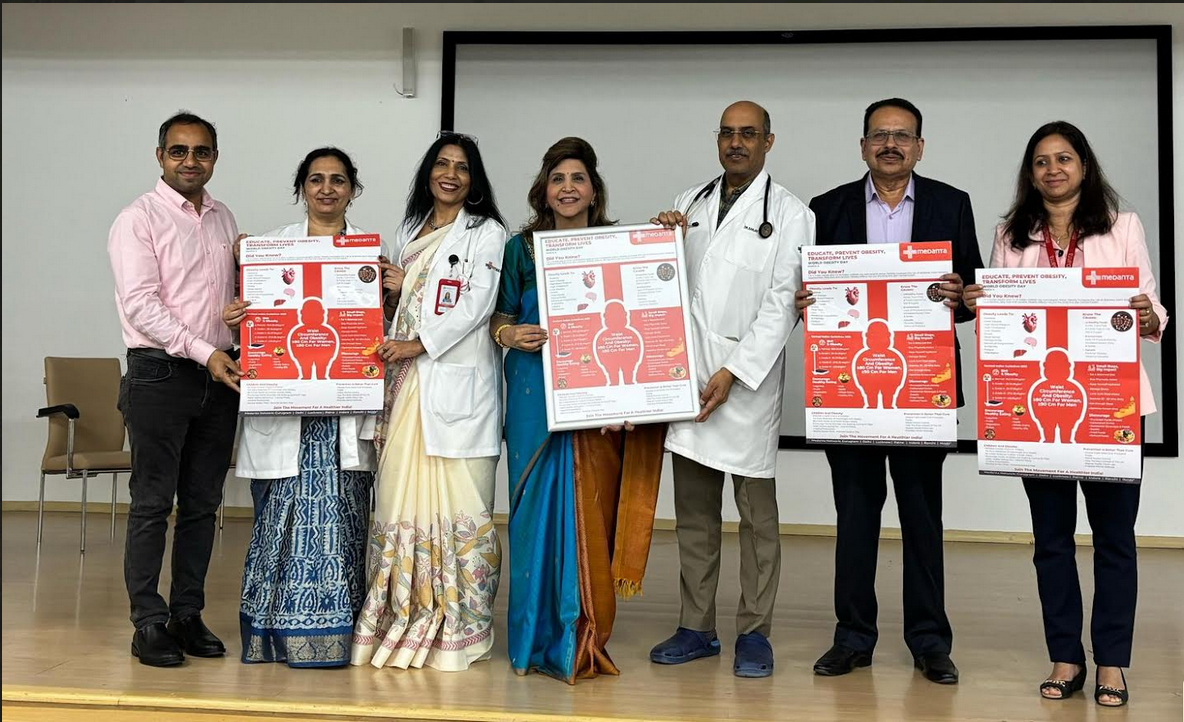
 Aligned with the National Health Mission and the 2025 Union Budget’s focus on non-communicable diseases, this initiative reinforces Medanta’s commitment to a healthier India.




Gurugram, March 5, 2025: Marking World Obesity Day, Medanta - The Medicity, India’s leading multi-speciality hospital ranked as the country’s best private hospital by Newsweek, in collaboration with the Indian Academy of Pediatrics, organized a multi-stakeholder event to raise awareness about obesity and its severe health implications. The event brought together leading medical experts from Medanta Gurugram, including Dr. Neelam Mohan, Senior Director and HOD, Gastroenterology & Liver Transplant, and National President-Elect of the Indian Academy of Pediatrics; Dr. Sanjay Mittal, Vice Chairman, Clinical & Preventive Cardiology, Cardiac Care; Dr. Parjeet Kaur, Associate Director, Endocrinology & Diabetes; and Dr. Sushila Kataria, Senior Director, Internal Medicine. The panel emphasized how obesity serves as a gateway to multiple life-threatening diseases, including cardiovascular disorders, diabetes, liver complications, and other lesser-known associations. Dr. Naresh Trehan, Chairman and Managing Director, Medanta, along with Dr. Mahavir Jain, President, IMA Haryana, and Dr. Ajay Arora, President, Indian Academy of Pediatrics, Haryana, graced the occasion and launched a poster highlighting the risk factors of obesity, the organs affected by the condition, its prevention, and management. The poster serves as a guide to educate patients about the disease, reinforcing the message of strengthening awareness for preventive healthcare and early intervention.
Obesity has gradually become a national crisis, leading to severe health implications such as diabetes, hypertension, and cardiovascular diseases, while also being linked to sleep apnea, arthritis, liver disease, and mental health disorders. In India, an estimated 350 million people are obese, with 40% of women and 12% of men affected by abdominal obesity. Alarmingly, the condition is no longer just an adult issue—it is rising rapidly among children. Childhood obesity prevalence stands at 8.4%, with one in ten Indian children expected to be obese by 2030. According to the National Family Health Survey, Haryana is among the worst-affected states, recording a 7-12% increase in obese women and a 5-11% increase in obese men. To combat obesity, experts advocate a holistic approach, emphasizing sustainable lifestyle changes as key to long-term health and well-being.
Highlighting alarming facts and recent research on childhood obesity, Dr. Neelam Mohan, Senior Director and HOD, Gastroenterology, Liver Transplant, Medanta, Gurugram and National President Elect India Academy of Pediatrics said, “Obesity is not just a cosmetic issue—it is a serious medical condition affecting multiple organs, including the liver, with long-term consequences, with non-alcoholic fatty liver disease (NAFLD) being the most common. Our recent study at Medanta on 150 obese children (three-fourths of whom were aged 12-18 years) found fatty liver in 90% of cases, with 42% showing elevated liver enzymes. A small proportion of children underwent liver biopsy, which revealed significant fibrosis—some as young as 10 years old. Although only 22% sought treatment for obesity, many presented with symptoms like abdominal pain or abnormal liver enzymes. This highlights the urgent need for early diagnosis, lifestyle intervention, and awareness, with parents playing a crucial role in shaping healthy habits early on. Aligning with our Prime Minister’s recent Mann Ki Baat, tackling obesity is crucial for ensuring a healthier future for the nation, especially in children.
Addressing the link between obesity and cardiovascular diseases, Dr. Sanjay Mittal, Vice Chairman, Clinical and Preventive Cardiology, Medanta, Gurugram, added, “Obesity is often overlooked, yet it significantly increases the risk of diabetes, hypertension, heart attacks, strokes, and other complications. The National Family Health Survey (NFHS) data shows a sharp rise in obesity in India. In men, prevalence increased 2.5 times from 9.3% (NFHS-3, 2005-06) to 22.9% (NFHS-5, 2019-21). In women, it doubled from 12.6% to 24.0%. Women are more prone to obesity than men; however, the distribution of body fat is a key factor in determining heart disease risk. For example, visceral obesity also known as toxic fat, where fat deposits around the organs closed to abdomen and also heart (epicardial fat), is especially dangerous. Additionally, the condition not only raises the incidence of heart disease but also worsens treatment outcomes, leading to higher mortality and recurrence rates after procedures like bypass surgery. While obesity is closely linked to lifestyle factors like diet and exercise, it serves as a critical marker for predicting and managing heart disease risks.
Highlighting the metabolic implications, Dr. Parjeet Kaur, Associate Director, Endocrinology & Diabetes, Medanta, Gurugram explained, “Obesity is a major driver of type 2 diabetes, increasing the risk nearly sixfold compared to those with a healthy weight. A recent study conducted using National Family Health Survey 2019–21 data found abdominal obesity prevalence at 51.77% in men and 57.91% in women, with a significant link to diabetes. Another study showed that over a decade, type 2 diabetes prevalence among younger Indians rose from 4.5% to 7.8%, primarily due to obesity. Notably, obesity is not just defined by BMI but also by waist circumference and body composition. Even individuals with a BMI over 23 and metabolic disturbances like diabetes, high cholesterol, or hypertension are considered clinically obese. Managing obesity effectively is key to preventing diabetes and cardiovascular diseases.”
The panel also discussed the lesser-known impacts of obesity on sleep and respiratory health.
Dr. Sushila Kataria, Senior Director, Internal Medicine, Medanta, Gurugram, said, "Obesity affects far more than just appearance—it impacts mobility, metabolism, and overall health. It is a pansystemic issue, contributing to conditions like anxiety, depression, sleep apnea, fatty liver, hypertension, diabetes, and PCOD. Addressing obesity is not just a personal concern but a societal and national priority for long-term well-being."
Through this multi-stakeholder approach, Medanta aims to empower communities with the right knowledge and encourage early intervention to combat the growing obesity epidemic. Aligned with the National Health Mission and the 2025 Union Budget’s focus on non-communicable diseases, this initiative reinforces Medanta’s commitment to a healthier India.






.jpeg)










.jpg)
.jpg)
.jpg)
.jpg)
.jpg)
.jpg)


.jpg)