 Thursday, October 08, 2026
 Endoscopic TLIF is a minimally invasive surgery that removes a damaged disc, relieves nerve pressure, and fuses vertebrae to stabilise the lower back.




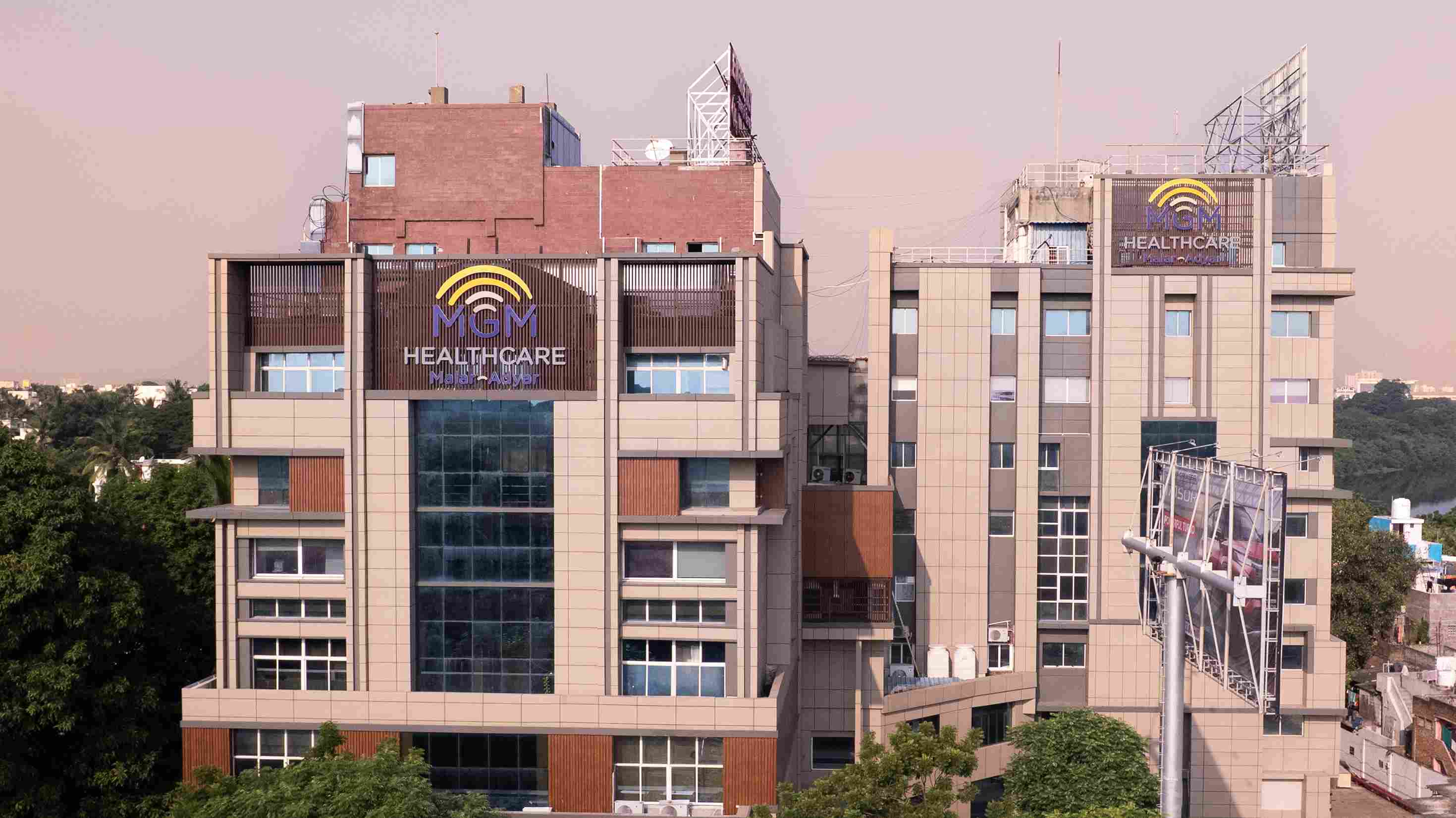
Chennai, February 17, 2026: Avoiding open surgery, MGM Healthcare Malar, Adyar has carried out a first-of-its-kind pinhole spine surgery on a 75-year-old patient who had been struggling with severe back pain and difficulty walking due to nerve compression caused by age-related spinal degeneration. The minimally invasive procedure, called Endoscopic Transforaminal Lumbar Interbody Fusion (TLIF), relieved the pressure on the nerves and stabilised the spine by fusing the affected vertebrae. The surgery was performed at two levels of the spine, making it particularly complex. The patient was able to walk within hours after the surgery and was discharged the next day.
Spinal fusion is a surgical procedure in which two or more vertebrae are permanently joined so they heal into one solid bone. It is done when a segment of the spine becomes unstable, severely degenerated, or continues to cause pain despite conservative treatment such as medication, physiotherapy, or injections. By eliminating movement at the painful segment, fusion reduces mechanical pain and averts compression of nerves.
Endoscopic TLIF is a minimally invasive spine fusion procedure that relieves nerve compression and stabilises the affected spinal segment through a much smaller incision compared to traditional open surgery. This technique is particularly effective for various lumbar spine conditions. The surgical team was led by Dr. Vignesh Pushparaj, Senior Consultant - Orthopaedic Spine Surgeon.
In his comments, Dr. Vignesh Pushparaj said the senior citizen presented with severe pain in the lower back and significant restriction of movement. Imaging showed the need for fusion at two levels (L3-L4 and L4-L5). Instead of opting for conventional open spine surgery, which in elderly patients can be associated with larger wounds, prolonged anaesthesia, greater blood loss, higher infection risk and delayed mobilisation, the team chose a minimally invasive “pinhole” approach.
“For the first time in the city, a multi-level endoscopic/percutaneous TLIF procedure was performed for spinal fusion. Comparable in approach to laparoscopic surgery in the abdomen, the technique uses small incisions and specialised instruments to access the spine with minimal muscle disruption. The patient was mobilised on the same day of surgery, was able to walk independently to the washroom, did not require a urinary catheter, and was discharged within 24 hours,” he added.
On the benefits of endoscopic fusion technique, Dr. Vignesh explained that traditional open spine surgery involves making a long incision and retracting the back muscles to access the spine, which can increase tissue trauma, blood loss and infection risk. In contrast, the endoscopic technique is performed through small portals. This significantly reduces muscle damage and surgical morbidity. This helps preserve mobility in senior citizens and lowers the risk of complications involving the spine, surrounding muscles and nerves.
On overall spinal care, the doctor advised against prolonged sitting. Continuous desk work should not exceed 90 minutes without a break. Maintaining proper posture, sitting upright, avoiding slouching, and walking with an aligned spine is essential to protect long-term spinal health.
In his comments, Mr. Venugopal Bhat – Chief Operating Officer & Group Vice President – Strategic Initiatives said, “MGM Healthcare Malar, Adyar focuses on advancing patient care through innovation and expertise. Performing a complex multi-level endoscopic spine fusion in a senior citizen reflects our commitment to minimally invasive techniques that prioritise patient safety, faster recovery and enhanced quality of life.”






.jpeg)










.jpg)
.jpg)
.jpg)
.jpg)
.jpg)
.jpg)


.jpg)