 Saturday, November 21, 2026
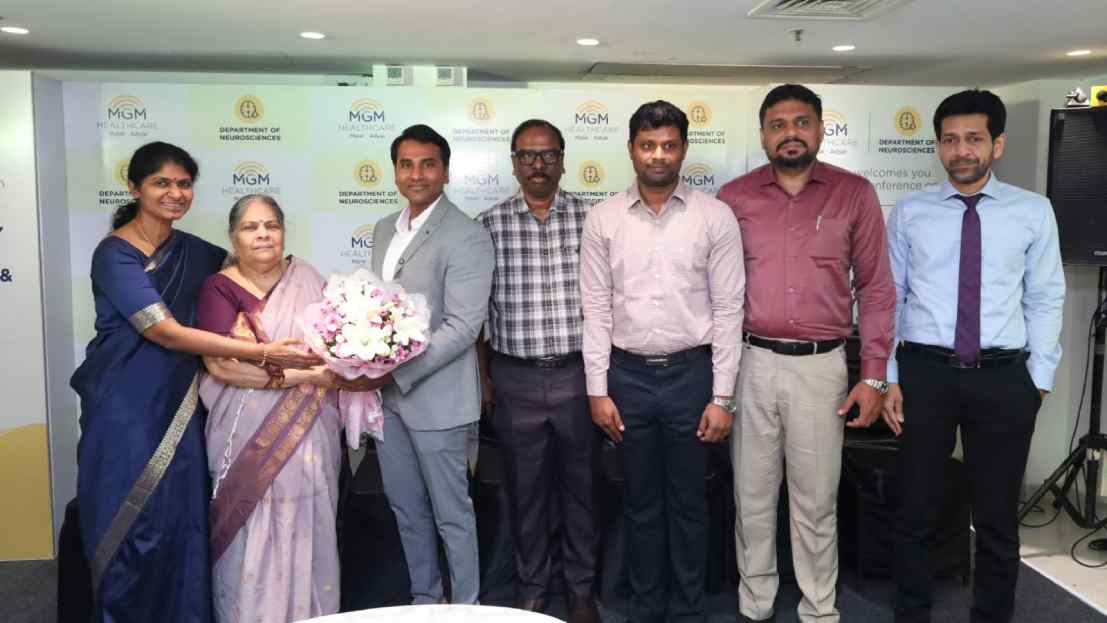
 MGM Healthcare Malar Hospital successfully treated a 68-year-old woman who suffered a rare and life-threatening combination of an acute stroke and heart attack simultaneously by performing a series of advanced minimally invasive neurovascular and cardiac interventions in a single sitting.





Chennai, June 3, 2026: MGM Healthcare Malar Hospital successfully treated a 68-year-old woman who suffered a rare and life-threatening combination of an acute stroke and heart attack simultaneously by performing a series of advanced minimally invasive neurovascular and cardiac interventions in a single sitting.
The patient, who had a history of hypertension and diabetes, developed critical blockages in an intracranial artery within the MCA (middle cerebral artery) territory and in the carotid artery, leading to a stroke. She was also found to have significant coronary artery disease that severely compromised blood flow to the heart.
The multidisciplinary team first performed an advanced intracranial stenting procedure to open the critically narrowed artery within the brain, followed by carotid angioplasty to treat the severe blockage in the neck. This was immediately followed by coronary angioplasty to restore blood flow to the heart. Remarkably, all three minimally invasive interventions were completed under local anaesthesia, resulting in a rapid recovery and discharge of the patient within four days.
The multidisciplinary team was led by Dr. Karthikeyan, Senior Consultant, Interventional Neurologist, and Dr. Manohar, Senior Consultant, Interventional Cardiologist.
In his comments, Dr. Karthikeyan said, “This was an exceptionally challenging case because the patient had critical blockages affecting both the brain and the heart at the same time. Our priority was to rapidly restore blood flow to the brain by performing intracranial stenting in the middle cerebral artery (MCA) territory, followed by carotid artery stenting. Intracranial stenting is a highly specialised neurointerventional procedure available only at a limited number of centres, as it involves navigating delicate blood vessels deep within the brain. The procedure was performed through a minimally invasive pinhole approach. What made this case even more unique was that the neurovascular intervention was seamlessly combined with coronary angioplasty in a single sitting to address the life-threatening cardiac condition. All the procedures were performed under local anaesthesia, without the need for general anaesthesia or surgical incisions, resulting in no visible scar and enabling a faster recovery for the patient.”
Mr. Venugopal Bhat, Chief Operating Officer and Group Vice President - Strategic Initiatives, said, “This case highlights the importance of rapid diagnosis, seamless multidisciplinary collaboration, and timely intervention in managing complex and life-threatening medical emergencies. The successful outcome reflects the expertise and coordinated efforts of our clinical teams, supported by advanced infrastructure and specialised neurovascular and cardiac care capabilities.”
MGM Healthcare Malar, Adyar runs a comprehensive stroke unit that provides round-the-clock support through a multidisciplinary team comprising interventional neurologists, neurosurgeons, anaesthetists, trained stroke specialists, physiotherapists, and critical care experts, ensuring that patients receive timely, evidence-based, and effective treatment.





-23-300x250.png)




















