 Saturday, November 21, 2026
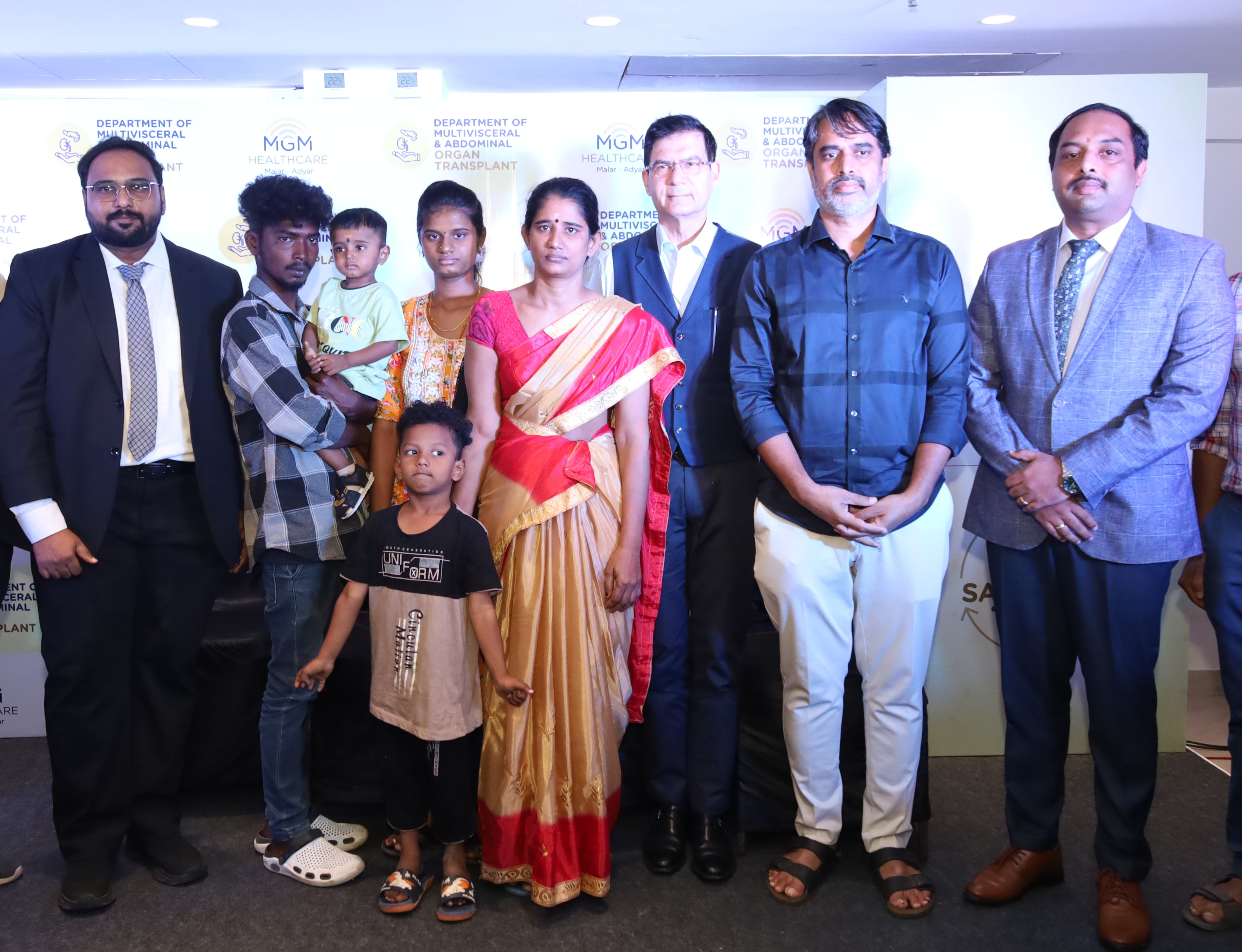
 Two-year-old with primary oxaluria, a rare genetic condition, required liver transplant as his liver couldn’t clear excess oxalates, causing kidney failure.





Chennai, January 29, 2026: MGM Healthcare Malar, Adyar has successfully performed a complex liver transplant on a two-year-old boy weighing just nine kilograms after his liver failed to produce essential enzymes to clear harmful metabolic waste substances known as oxalates, produced excessively due to a rare genetic disorder, leading to kidney stones and subsequent kidney failure. Following the surgery, the child’s kidney function has improved; while he is no longer dependent on dialysis, a kidney transplant will be required at a later stage.
The young boy was admitted to MGM Healthcare Malar, Adyar with symptoms such as severe vomiting and poor physical growth. He was diagnosed with advanced kidney failure and required peritoneal dialysis, a type of dialysis that uses the lining of the abdomen. Further investigations traced the condition to primary oxaluria, a rare genetic disorder that caused excessive production of oxalates in the body. A deficiency of key liver enzymes prevented the clearance of these oxalates, allowing them to accumulate and form kidney stones.
The boy required a kidney transplant; however, without first correcting the liver’s condition, a new kidney would not function properly and the underlying disease would persist, making a liver transplant a crucial prerequisite for treating his renal condition. The procedure was made possible by the boy’s grandmother, who served as the living donor. Live Donor Mono-Segment Liver transplant was performed and uneventful, and the child’s recovery has been smooth and rapid.
This eliminated the need for dialysis after the transplant, and he is scheduled to undergo a kidney transplant in the coming months.
The surgery was performed by a multi-visceral transplant team led by Dr Anil Vaidya MD, Chair and Director, Institute of Multi-Visceral and Abdominal Organ Transplant, MGM Malar, with support from Dr Senthil Muthuraman, Senior Consultant and Dr Venkatesh BS, Consultant, Multi Visceral Transplant. Anaesthesia was managed by Dr Dinesh Babu Senior Consultant, Anaesthesiology, and late.Dr Nivash Chandrasekaran, Senior Consultant, Dr Saravanan – Senior Consultant.Pre- and post-surgical kidney care was overseen by the nephrology team headed by Dr Srinivasa Prasad ND,Senior Consultant while the hospital’s intensive care unit played a critical role in ensuring the child’s smooth post-operative recovery.
In his comments, Dr Anil Vaidya MD said, “Performing a liver transplant on such a young and underweight child is undeniably complex. Typically, we would wait for a child to gain more weight, but given the severity of his condition, we needed to act promptly. By addressing the liver first, we ensured that the kidneys would function properly afterward. This sequential approach will allow the boy’s body to gradually clear the excess oxalates. Now, within weeks, he’s no longer dependent on dialysis and is thriving. He requires immunosuppressants to ensure the transplant’s success, and we look forward to the upcoming kidney transplant at the right time.”
In his comments, Mr. Venugopal Bhat, COO, MGM Healthcare Malar, said, “We are immensely proud to have achieved this rare and complex milestone. This case shows that renal issues from severe genetic conditions such as primary oxaluria can be successfully treated even at a very young age. The surgery was uneventful thanks to meticulous pre-operative preparation, including thorough assessment of the child’s vascular status and infection profile. Instead of performing the liver and kidney transplants together, as is done at many centres, we adopted a carefully planned sequential approach in the child’s best interest. Following the liver transplant, the child was closely monitored in our ICU for a week, with support from nephrology and other specialist teams. The success of this procedure reflects the seamless coordination and dedication of our multidisciplinary teams.”





-23-300x250.png)




















