Tuesday, November 03, 2026
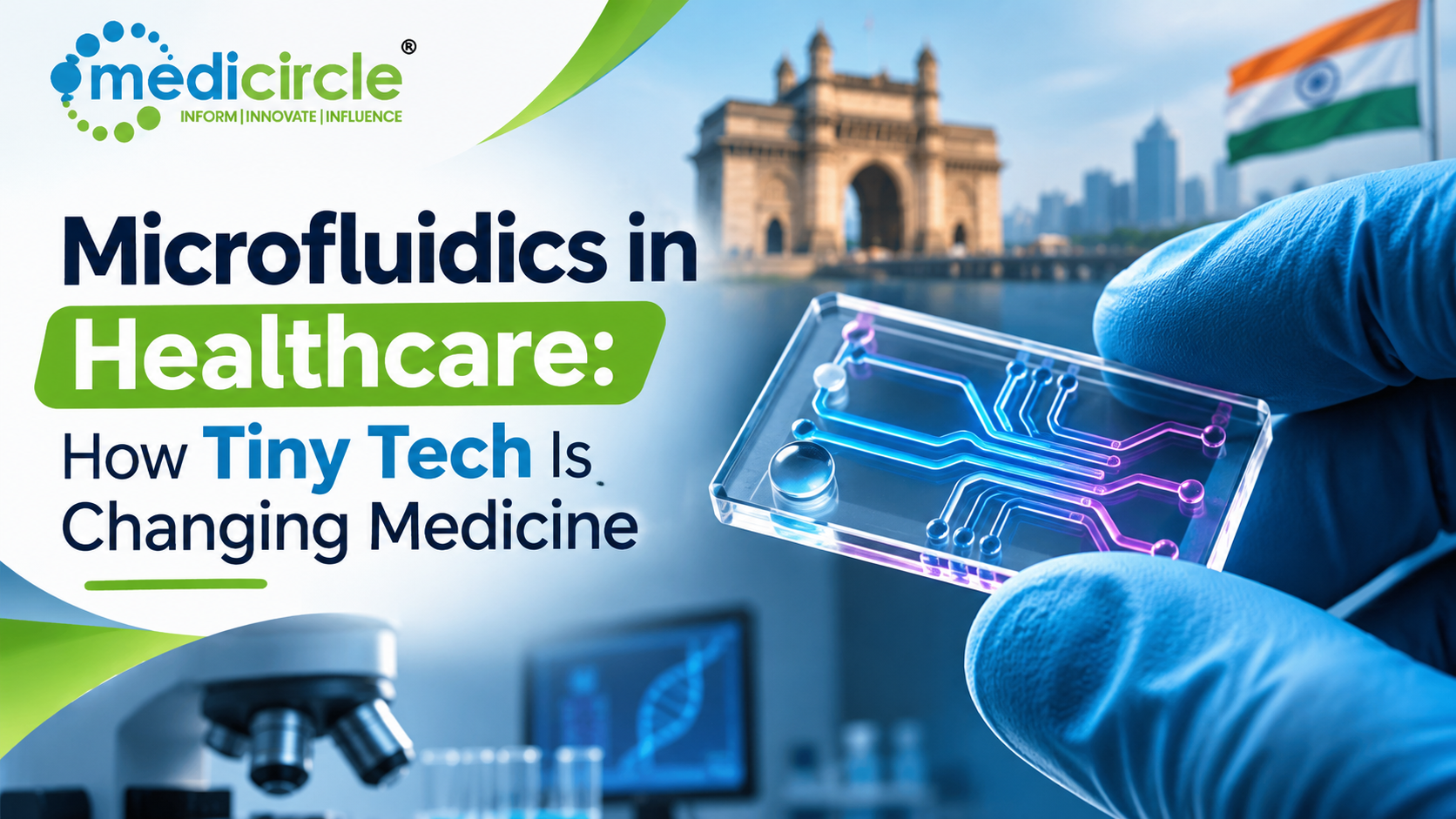
 Microfluidics miniaturizes laboratory processes onto small chips, enabling rapid diagnostics, targeted drug delivery, and organ simulation, offering significant potential to transform healthcare access and innovation in India.





Microfluidics in Healthcare: Why Tiny Technology Could Have a Huge Impact
Introduction
Healthcare has always been defined by the tools available to clinicians and researchers. For decades, those tools required large laboratories, expensive equipment, trained technicians, and considerable waiting time. Today, a new generation of technology is challenging every one of those requirements, and it fits comfortably in the palm of a hand.
Microfluidics is the science of manipulating tiny volumes of fluids, often measured in microliters or nanoliters, through miniaturized channels and chambers etched onto small chips or devices. While the concept emerged from semiconductor manufacturing in the 1990s, its applications in medicine have grown at a remarkable pace. From rapid disease detection to precision drug delivery and even cancer diagnostics, microfluidic devices are quietly redefining what is possible in modern healthcare.
For a country like India, where healthcare access remains uneven across geographies, where skilled diagnostics are concentrated in urban centres, and where infectious disease burden remains high, microfluidics is not merely a scientific curiosity. It is a potential solution to some of the most persistent challenges in Indian public health.
Understanding Microfluidics and How It Works
At its simplest, microfluidics involves the precise control of fluids at a microscopic scale. Devices built on this principle are often called lab-on-a-chip systems because they integrate multiple laboratory functions onto a single chip, usually no larger than a credit card.
Inside these chips, tiny channels guide small volumes of biological samples, such as blood, saliva, or urine, through a series of controlled steps. These steps may involve mixing, separating, heating, or analysing the sample, depending on what the device is designed to detect or measure. The entire process that might take hours in a conventional laboratory can often be completed in minutes on a microfluidic chip.
The core materials used to fabricate these chips include polydimethylsiloxane (PDMS), glass, paper, and thermoplastics. Paper-based microfluidic devices, in particular, have attracted significant interest in the context of low-resource settings because they are inexpensive to manufacture, require no external power, and are easy to use without specialized training.
Key components found in microfluidic systems include:
- Microchannels that guide fluid movement
- Micropumps and microvalves that control flow
- Detection zones where chemical or biological reactions occur
- Sensors or optical readers that interpret results
This integrated design makes the technology exceptionally well suited to point-of-care testing, which is the ability to run a diagnostic test at or near the location of the patient rather than sending samples to a distant laboratory.
Primary Applications in Healthcare and Diagnostics
The most impactful use of microfluidics in healthcare today is in diagnostics. The COVID-19 pandemic illustrated, with painful clarity, what happens when a healthcare system cannot test patients quickly and at scale. Microfluidic-based rapid antigen tests became central to pandemic management across the world, including in India, because they delivered results within 15 to 30 minutes without requiring laboratory infrastructure.
Beyond infectious disease testing, microfluidic platforms are being developed and deployed across a wide range of diagnostic applications.
Infectious Disease Detection
In a country where tuberculosis, malaria, dengue, and typhoid continue to claim lives, rapid and accurate diagnosis at the primary care level is critical. Microfluidic cartridge-based tests, such as those developed on the GeneXpert platform, already allow molecular-level tuberculosis diagnosis in peripheral settings. Newer generations of microfluidic assays aim to multiplex these tests, meaning a single chip can screen for several pathogens simultaneously from one blood draw.
Oncology and Liquid Biopsy
One of the most exciting developments in cancer medicine is the liquid biopsy, a blood test that detects tumour-derived material, including circulating tumour cells (CTCs) and cell-free DNA, without requiring a surgical tissue biopsy. Microfluidic chips designed to isolate these rare cells from blood are being researched and developed globally. Given that late-stage cancer diagnosis remains a significant problem in India due to limited screening infrastructure, liquid biopsy enabled by microfluidics could eventually transform cancer detection at an earlier and more treatable stage.
Blood Analysis and Haematology
Complete blood counts and coagulation studies traditionally require venepuncture and laboratory processing. Miniaturized microfluidic haematology devices can analyse small fingerprick samples and return results within minutes. This is particularly relevant for anaemia screening in rural India, where the burden of iron deficiency anaemia among women and children remains among the highest in the world according to the National Family Health Survey (NFHS-5) data.
Reproductive Health and Fertility Testing
Microfluidic devices are being explored for semen analysis, ovarian reserve testing, and even prenatal screening. Affordable fertility diagnostic tools built on this technology could reduce the financial and logistical barriers to fertility evaluation that many Indian couples face.
Microfluidics in Drug Delivery and Pharmaceutical Research
Microfluidics is not limited to diagnostics. In pharmaceutical science, microfluidic systems are being used to manufacture drug-loaded nanoparticles with remarkable precision. The size, composition, and surface characteristics of nanoparticles can be tightly controlled using microfluidic synthesis, which directly influences how a drug behaves inside the human body.
For cancer treatment, this means targeted nanoparticle drug delivery that concentrates chemotherapy at the tumour site while minimizing systemic toxicity. For vaccines, microfluidic mixing systems are being used in the formulation of lipid nanoparticle delivery systems, the same technology that underpinned mRNA vaccines during the COVID-19 pandemic.
Indian pharmaceutical companies and research institutions, including those working under the Department of Biotechnology and CSIR, have begun exploring microfluidic manufacturing for next-generation drug formulations. As India positions itself as a global hub for pharmaceutical manufacturing, expertise in microfluidic drug production will become an increasingly important competitive advantage.
Organ-on-a-Chip: Simulating Human Physiology
Perhaps the most scientifically transformative application of microfluidics is the organ-on-a-chip technology. These are microfluidic devices lined with living human cells that mimic the microenvironment and function of real organs. Chips have been developed to replicate the lung, liver, kidney, gut, heart, and brain.
The significance of organ-on-a-chip systems lies in their potential to transform drug testing. Currently, the drug development pipeline relies heavily on animal models that do not always predict human responses accurately. This contributes to the high failure rate of drugs in clinical trials, which is estimated at over 90 percent across all therapeutic areas. Organ-on-a-chip platforms offer a more physiologically relevant alternative that could improve the prediction of drug efficacy and toxicity in humans before clinical testing begins.
For the Indian pharmaceutical and biotech sector, this technology opens opportunities to reduce research and development costs, accelerate timelines, and improve the quality of drugs reaching patients. Indian regulatory bodies, including the Central Drugs Standard Control Organisation (CDSCO), may in the future need to develop frameworks for accepting organ-on-a-chip data as part of drug approval submissions, similar to movements already underway in the United States and Europe.
The Indian Context: Challenges and Opportunities
India presents a uniquely complex landscape for the adoption of microfluidic technology. On one hand, the country faces enormous diagnostic gaps. According to government data, a significant proportion of India's population, particularly in rural and semi-urban areas, lacks access to quality diagnostic services. Primary health centres in many states are under-equipped, and patients often travel long distances to reach a qualified laboratory.
On the other hand, India has a growing medtech sector, a cost-sensitive market that incentivizes affordable innovation, and a strong scientific talent base in engineering and biotechnology. Indian Institute of Technology (IIT) campuses across the country are producing microfluidics research, and several Indian startups are working on indigenous lab-on-a-chip solutions tailored to local disease priorities.
The Ayushman Bharat Digital Mission (ABDM) and the government's push to strengthen primary and secondary healthcare infrastructure provide a policy environment that could support point-of-care diagnostics. If microfluidic devices can be validated, approved, and priced appropriately for the Indian market, they could play a meaningful role in achieving universal health coverage goals.
Challenges that remain include:
- Regulatory pathways for novel microfluidic diagnostics under CDSCO
- Cold-chain and storage requirements for some chip-based assays
- Healthcare worker training at the last mile
- Manufacturing scale-up for cost reduction
- Integration with digital health records under ABDM
What the Future Looks Like
The global microfluidics market is projected to grow substantially over the next decade, with healthcare diagnostics representing the largest segment. For India, the next five to ten years will be critical in determining whether the country becomes a consumer or a producer of microfluidic innovation.
Several developments are worth watching. The convergence of microfluidics with artificial intelligence is creating smart diagnostic platforms that can not only run a test but also interpret the result and recommend a clinical action. Integration with smartphones is making these platforms accessible without dedicated reader hardware, which is a significant advantage in resource-limited settings.
Wearable microfluidic sensors that continuously monitor sweat, interstitial fluid, or skin biochemistry for glucose, cortisol, lactate, and other biomarkers are under active development. These could transform chronic disease management for the hundreds of millions of Indians living with diabetes, hypertension, and metabolic disorders.
Medicircle continues to track and report on breakthroughs at the intersection of medical innovation and Indian healthcare, offering clinicians, hospitals, and the public a trusted window into technologies that are shaping the future of medicine in this country and beyond.
Conclusion
Microfluidics is one of the most compelling examples of how scientific miniaturization can lead to outsized real-world impact. By compressing the power of a diagnostic laboratory or a pharmaceutical manufacturing unit onto a chip smaller than a credit card, this technology has the potential to democratize healthcare access in ways that were not conceivable two decades ago.
For India, the promise of microfluidics is especially significant. A country dealing simultaneously with a high burden of infectious disease, rising non-communicable diseases, and persistent gaps in diagnostic infrastructure stands to gain enormously from technologies that bring accurate, affordable, and rapid testing to every level of the health system. The science is ready. The market need is clear. What is required now is coordinated investment, regulatory clarity, and a commitment to making this technology work for every Indian, not just those with access to premium healthcare.
Frequently Asked Questions
Q1: What is microfluidics in simple terms?
Microfluidics is the science of handling very small amounts of liquid, often just a few drops, through tiny channels on a chip. These chips can perform tests, mix chemicals, or analyse biological samples much faster and with far less material than a traditional laboratory.
Q2: How is microfluidics used in diagnostics?
Microfluidic devices can detect infections, analyse blood, identify cancer markers, and screen for genetic conditions, all from a small sample. The results are often available within minutes, making these devices ideal for point-of-care settings like clinics, pharmacies, and rural health centres.
Q3: Are microfluidic diagnostic devices available in India?
Yes, some microfluidic-based diagnostics are already in use in India, including rapid antigen tests for COVID-19 and cartridge-based tuberculosis tests such as those used on the GeneXpert platform. Research institutions and startups are also developing indigenous microfluidic solutions for conditions prevalent in India.
Q4: What is organ-on-a-chip technology?
Organ-on-a-chip is a microfluidic device lined with living human cells that replicates the function and environment of a real organ. It is used primarily in pharmaceutical research to test how drugs affect human tissue in a more accurate way than animal models allow.
Q5: How can microfluidics improve rural healthcare in India?
Microfluidic point-of-care devices do not require large laboratories or highly trained technicians to operate. They can run accurate tests on small blood or saliva samples in minutes, making them suitable for primary health centres, community health workers, and remote settings where laboratory infrastructure is absent.
Resources
- Indian Council of Medical Research (ICMR): Guidelines and research publications on diagnostics and medical innovation in India
- World Health Organization (WHO): Global reports on point-of-care diagnostics and health technology assessment
- PubMed (National Library of Medicine): Peer-reviewed research articles on microfluidic technology and its biomedical applications
- Department of Biotechnology, Government of India: Policy documents and funding initiatives for biomedical device research and innovation
- Central Drugs Standard Control Organisation (CDSCO): Regulatory guidelines for medical devices and in-vitro diagnostics in India
Interlinking Keywords
lab-on-a-chip technology, point-of-care diagnostics India, rapid diagnostic tests, medical innovation in India, organ-on-a-chip research, liquid biopsy cancer detection, microfluidic drug delivery, Ayushman Bharat Digital Mission, CDSCO medical device regulation, diagnostics for rural India
Last reviewed by:
Dr. Manthan Tripathi, Medicircle Editorial and Medical Advisory Team on 2, November 2026.
Disclaimer
This article is intended for general awareness and educational purposes only. It does not constitute medical advice, diagnosis, or treatment recommendations. The information provided is based on publicly available research and authoritative health sources at the time of writing. Readers are advised to consult a qualified healthcare professional for any medical concerns or before making decisions related to their health. Medicircle does not endorse any specific product, device, or commercial entity mentioned in this article.





-23-300x250.png)