Sunday, October 25, 2026
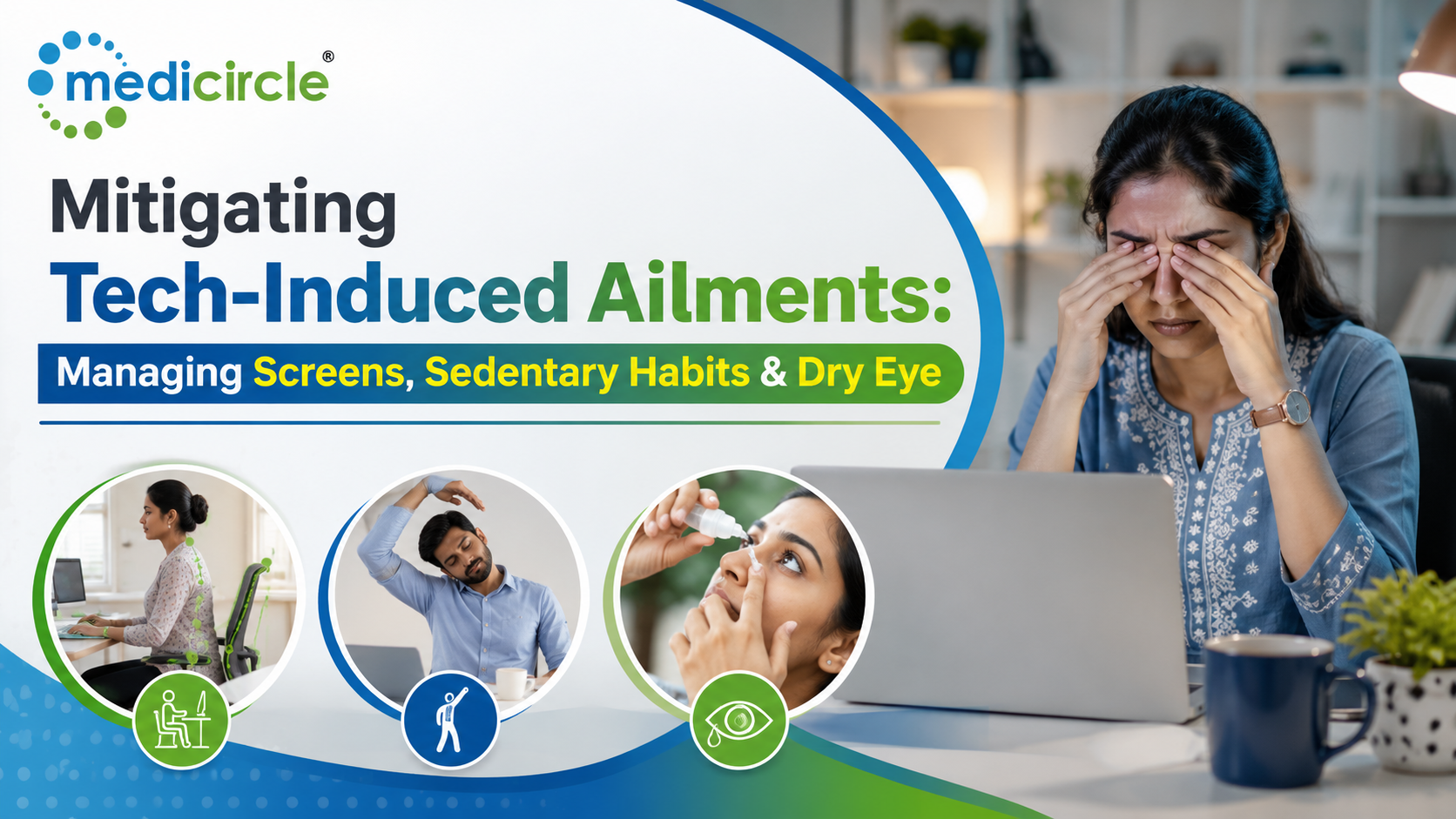
 The digital workplace has transformed productivity but also increased screen exposure, sedentary lifestyles, and workplace fatigue. As these habits impact long-term health, adopting preventive wellness strategies has become essential for modern professionals.




The modern workforce operates in a hyper-digital landscape. While the rapid expansion of remote roles and smart automation has streamlined professional workflows, it has simultaneously introduced an unprecedented public health crisis. Millions of professionals spend their days locked in a continuous loop of glowing pixels, stationary desk habits, and artificial lighting.
Clinical registries highlight that your body is paying a steep physical price for this always-online culture. Prolonged reliance on digital screens is no longer just a minor convenience; it has emerged as the primary structural driver behind a distinct cluster of metabolic and ocular disorders.
To protect long-term vitality, individuals must master the core strategies required for mitigating tech-induced ailments. Addressing this systemic strain demands an active shift away from passive technology habits. By implementing evidence-based protocols to manage screen time, break up deep sedentary patterns, and target the underlying mechanisms of dry eye syndrome, you can successfully reclaim your physical well-being.
1. The Real Cost of Extended Screen Time
The average adult logs over 6 hours and 45 minutes of daily screen time, with remote corporate workers frequently crossing the 12-hour threshold. This sustained visual exposure triggers a cascade of physiological challenges.
The human brain wasn't designed to process sharp, high-intensity blue light emissions for hours on end. Exposure to glowing monitors after sunset suppresses natural melatonin production by up to 40%, severely disrupting your baseline circadian biology. This artificial sleep delay leads to persistent morning exhaustion, elevated stress hormones, and a progressive drop in cognitive focus.
Furthermore, multitasking across digital platforms fragments attention spans. Neurological studies confirm that workers require more than 23 minutes to fully regain deep focus following a single digital interruption or notification ping, turning standard workdays into cycles of continuous mental fatigue.
2. Breaking the Sedentary Desk Cycle
Sitting continuously for 9 to 12 hours a day at a desk job functions as a silent metabolic depressant. When lower-body skeletal muscles remain completely inactive for extended windows, the production of lipoprotein lipase—an essential enzyme that breaks down fats and clears triglycerides from the bloodstream—drops sharply. This metabolic slowdown directly contributes to expanding visceral waistlines and systemic insulin resistance.
Additionally, standard workstation layouts place immense physical stress on the human framework. Leaning forward toward a monitor throws the cervical spine out of alignment, creating an ergonomic issue known as "tech-neck." For every inch your head tilts forward, you place an extra 10 pounds of mechanical pressure on your neck and upper back muscles, leading to chronic tension headaches, compressed discs, and spinal strain.
3. Resolving Dry Eye Syndrome: Restoring the Tear Film
The surge in diagnosed dry eye syndrome provides clear evidence of the physical toll extracted by digital environments. Peer-reviewed clinical research reveals a striking connection: when focusing intensely on a digital monitor, a person's natural blink rate drops by more than 50%, falling from a healthy baseline of 15 to 20 blinks per minute down to fewer than 7.
[ THE EVAPORATIVE DRY EYE MECHANISM ]
Sustained Digital Focus ──► Blink Rate Drops by 50% + Incomplete Blinks
Reduced Tear Spreading ──► Meibomian Glands Stop Expressing Essential Oils
Rapid Tear Evaporation ──► Ocular Surface Stress, Grittiness & Burning
This drastic drop in blinking is worsened by incomplete blinks, where the upper and lower eyelids fail to meet completely. Blinking functions as a natural mechanical pump that compresses the meibomian glands along the rim of your eyelids, releasing a critical oily layer that prevents your tear film from drying out.
Without this essential oil coating, the watery layer of your tears evaporates instantly, exposing the delicate ocular surface. This triggers chronic inflammation, blurred vision, a persistent gritty sensation, and evaporative dry eye syndrome.
Comparative Matrix: Traditional Biases vs. Modern Digital Wellness
The table below contrasts outdated health assumptions with the evidence-based practices needed to counter digital strain.
|
Health Metric |
Outdated Health Assumption |
Modern Digital Wellness Reality |
Long-Term Well-Being Benefit |
|---|---|---|---|
|
Ocular Care Tracking |
Eye fatigue is a minor issue resolved by taking a short break. |
Screen focus drops blink rates by 50%, causing structural gland issues. |
Protects the quality of your tear film and prevents chronic cornea inflammation. |
|
Workstation Movement |
A single 30-minute gym workout erases a full day of desk sitting. |
Continuous sitting stops fat-clearing enzymes, demanding frequent movement. |
Stabilizes insulin pathways and burns stubborn visceral fat deposits. |
|
Ergonomic Alignment |
Monitors should be placed directly at or above your natural eye level. |
Screens must sit 20–28 inches away and slightly below eye level. |
Relieves mechanical stress on the neck and prevents spinal strain. |
|
Evening Device Habits |
Blue light glasses allow you to use screens safely up until bedtime. |
Screens suppress melatonin by 40%, requiring a 90-minute digital sunset. |
Restores deep, restorative sleep cycles and lowers daily stress. |
4. Actionable Strategy: Your Digital Wellness Protocol
- Enforce the 20-20-20 Rule for Visual Relief: Set an automated desk reminder to give your eyes a necessary break. Every 20 minutes, look away from your monitor and focus on an object located at least 20 feet away for a minimum of 20 seconds. This action relaxes your eye's internal focusing muscles and resets your natural blink rhythm.
- Practice Mindful Blinking Exercises: To combat the incomplete blinks caused by screens, spend a few minutes practicing a structured blinking routine. Intentionally close your eyes fully, pause for two seconds to allow the meibomian glands to express their natural oils, and open them normally, repeating this cycle 10 times to rebuild healthy patterns.
- Incorporate Hourly Movement Snack Windows: Break up continuous sitting blocks by scheduling short movement breaks. Standing up to complete a brief 2-minute stretching routine, walking to fetch water, or executing basic bodyweight squats every hour stimulates blood circulation and reactivates essential fat-clearing enzymes.
- Optimize Your Physical Workspace Ergonomics: Position your computer monitor so that the top of the screen sits just below eye level, tilted slightly upward at a comfortable viewing distance of 20 to 28 inches. This configuration forces your eyelids to naturally sit lower, reducing the exposed surface area of your eyes and slowing down tear evaporation.
Frequently Asked Questions (FAQs)
Q1. Why does my eye doctor care about how completely I blink during screen use?Your doctor focuses on blink completeness because partial blinks fail to protect your eyes. A complete blink is a vital mechanical action that presses the meibomian glands along your eyelids to release a necessary layer of oil. If your eyelids do not seal completely during digital work, this protective oil layer remains trapped, leading to rapid tear evaporation and severe dry eye symptoms.
Q2. What is the difference between aqueous deficiency and evaporative dry eye syndrome?Aqueous deficiency occurs when your lacrimal glands fail to manufacture a sufficient volume of the watery layer of tears, often due to systemic autoimmune conditions. Evaporative dry eye syndrome is a lifestyle-driven disorder where your body produces enough water, but a lack of protective lipids causes those tears to dry up too quickly, a pattern directly linked to a low blink rate during screen time.
Q3. Can using blue light filters on my smartphone completely prevent digital eye strain?No, blue light filters are helpful tools but they do not solve the root causes of digital eye strain. While filtering out blue wavelengths after sunset helps protect your natural melatonin production and improves sleep quality, it does not fix the eye strain caused by a low blink rate, uncorrected glare, or keeping your eyes focused at a close distance for hours on end.
Q4. How does a sedentary lifestyle directly alter your body's fat-clearing chemistry?Sitting continuously for hours drops lower-body muscle contractions to a near-halt. This lack of movement turns off the cellular production of lipoprotein lipase, an essential enzyme responsible for pulling circulating fats and triglycerides out of your blood to convert them into active energy. Over time, this metabolic slowdown leads to increased visceral fat storage and lipid imbalances.
Q5. What exactly does a "digital sunset" routine involve for wellness optimization?A digital sunset is a structured routine that begins roughly 60 to 90 minutes before your planned bedtime. It requires turning off all active, glowing digital devices—including smartphones, tablets, and work laptops—and replacing that time with screen-free activities like reading a physical book, gentle stretching, or light journaling to allow your brain's melatonin levels to rise naturally.
Q6. Is the visual damage caused by prolonged screen time permanent?No, using screens does not cause permanent structural damage to an adult's retina. However, chronic screen overuse can lock your eyes into a persistent state of digital eye strain, characterized by fluctuating vision, regular tension headaches, burning eyes, and severe tear film instability that will continue to degrade your daily productivity until your screen habits are corrected.
Q7. How can I measure my personal level of dry eye severity at home?While a formal diagnosis requires specialized clinical tracking (such as a Schirmer's test or advanced lipiscan imaging), you can monitor your symptoms using the validated Ocular Surface Disease Index (OSDI) protocol. Track how frequently you experience grittiness, blurriness, or light sensitivity during the week, rating your comfort from morning to evening on a simple personal scorecard to measure your progress.
Q8. Why do my eyes water excessively when they are supposedly dry?This frustrating symptom is known as reflex tearing. When your eyes develop evaporative dry eye syndrome, the rapid loss of moisture exposes sensitive corneal nerves to friction and air. These exposed nerves send an emergency signal to your brain warning of severe irritation, prompting your lacrimal glands to dump a large volume of watery tears onto your eyes. However, because these emergency tears lack the necessary oil layer, they run off your face without providing real relief.
Q9. What are the best over-the-counter options for treating screen-induced dry eyes?For screen-induced dry eye relief, look for over-the-counter preservative-free artificial tears. Avoid generic redness-relief drops that rely on vasoconstrictors to narrow your blood vessels; while they temporarily clear up red lines, they limit healthy oxygen flow and can cause a rebound worsening of your symptoms. Preservative-free drops can be used safely multiple times a day without irritating the eye surface.
Q10. How long does it take to see positive health shifts after adopting digital wellness habits?Your vascular, muscular, and ocular systems respond remarkably fast to positive lifestyle adjustments. If you consistently apply the 20-20-20 rule, complete daily blinking exercises, and break up long desk sessions with short movement breaks, you can observe a significant drop in eye grittiness, fewer tension headaches, and improved physical energy within 4 to 6 days





-23-300x250.png)

.jpeg)


.jpg)
.jpg)
.jpg)
.jpg)
.jpg)
.jpg)
.jpg)
.jpg)
.jpg)