 Thursday, October 08, 2026
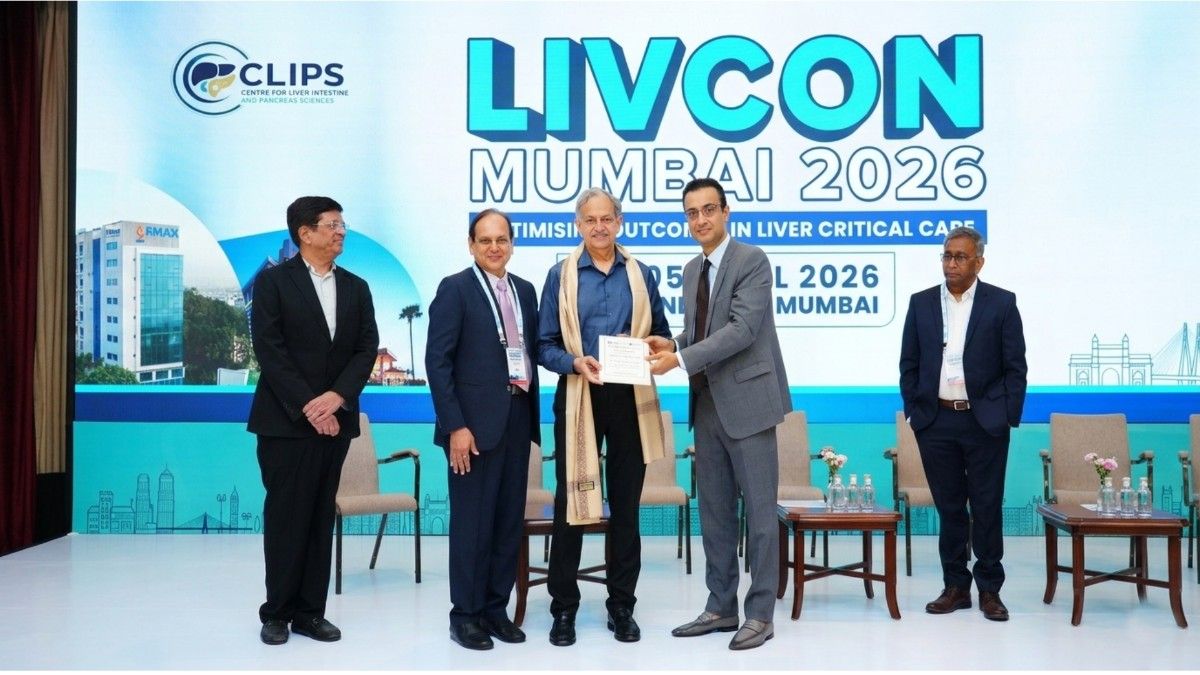
 Reinforcing its leadership in advanced liver care, the Centre for Liver, Intestine and Pancreas Sciences at Nanavati Max Super Speciality Hospital successfully hosted LIVCON Mumbai 2026, a premier three-day conference on ‘Optimising Outcomes in Liver Critical Care’, from April 3 to 5.




Mumbai, April 7, 2026: Reinforcing its leadership in advanced liver care, the Centre for Liver, Intestine and Pancreas Sciences at Nanavati Max Super Speciality Hospital successfully hosted LIVCON Mumbai 2026, a premier three-day conference on ‘Optimising Outcomes in Liver Critical Care’, from April 3 to 5.
The conference brought together over 600 delegates, including leading national experts, eminent faculty, and clinicians from across disciplines, making it one of the most significant academic gatherings in the field of liver critical care in India. LIVCON 2026 served as a high-impact platform for knowledge exchange, spotlighting the latest advancements in liver failure management, transplant pathways, and critical care interventions.
The conference was held under the patronage of Mr Abhay Soi, Chairman and Managing Director, Max Healthcare, and led by a distinguished scientific committee from Nanavati Max Hospital comprising Dr Samir R. Shah, Chairman – Hepatology & Liver Intensive Care; Dr Abdul S. Ansari, Senior Director – Critical Care; and Dr Gaurav Chaubal, Director – Liver and Multi-Organ Transplant.
The scientific programme highlighted a multidisciplinary and protocol-driven approach to managing complex liver conditions. Key sessions addressed critical areas such as brain-related complications due to liver disease, kidney dysfunction, infection management in liver ICUs, bleeding and transfusion practices, and acute-on-chronic liver failure. Experts also deliberated on real-world challenges in transplant decision-making from intensive care settings, alongside emerging areas such as endohepatology.
Adding strong practical value, the conference featured hands-on workshops and live demonstrations, including training on Continuous Renal Replacement Therapy (CRRT) and Plasma Exchange (PLEX)—both vital life-support therapies for critically ill liver patients. A live robotic surgery workshop offered participants insights into next-generation minimally invasive techniques in hepatobiliary and liver transplant procedures.
Speaking about the conference, Dr Samir R. Shah said, “LIVCON Mumbai 2026 reflects our commitment to building a high-impact academic platform that addresses the real-world complexities of liver critical care. The strong participation highlights the growing need for collaborative, multidisciplinary, and protocol-driven approaches to improve patient outcomes.”
Dr Gaurav Chaubal added, “What sets LIVCON apart is its focus on bridging science with clinical practice. By combining expert-led discussions with hands-on learning and live surgical exposure, we are enabling clinicians to translate knowledge into better patient care.”
With robust participation, high-impact scientific discussions, and a strong emphasis on practical learning, LIVCON Mumbai 2026 concluded on a successful note, further strengthening Nanavati Max Hospital’s position as a national centre of excellence in liver critical care and transplant medicine.
About Nanavati Max Super Speciality Hospital:
The iconic healthcare institution of Mumbai, Dr. Balabhai Nanavati Hospital, blessed by Mahatma Gandhi and inaugurated in 1950 by India’s first Prime Minister Jawaharlal Nehru, is now reintroduced as Nanavati Max Super Speciality Hospital. Nanavati Max Super Speciality Hospital has been at the forefront of healthcare for 72 years. Today, the 350-bed facility housing 55 speciality departments offers a plethora of services in practically every field of modern medicine. Our well-equipped hospital rooms, state-of-the-art departments and technologically advanced systems are all backed by the expertise of over 350 consultants, 100 resident doctors, 475 nursing staff and 1500 employees. The Hospital also has region’s largest medical post-graduation program aimed to create well-trained, ethical, skilled, resourceful leaders dedicated to the passion of healing that will empower the future medical fraternity.






.jpeg)










.jpg)
.jpg)
.jpg)
.jpg)
.jpg)
.jpg)


.jpg)