 Thursday, October 08, 2026
 Atlanto Axial dislocation (AAD) is a rare neck condition where the top two vertebrae (C1-C2) become misaligned, compressing the spinal cord and affecting limb movement.




Thanjavur, January 9, 2026: The neurosurgery team at Meenakshi Hospital, Thanjavur has successfully completed a highly complex operation on a four-year-old child, relieving spinal cord compression by correcting severe upper neck bone misalignment that had resulted in the paralysis of both arms and both legs. While pediatric spinal surgery itself involves many challenges, the presence of a very rare genetic skeletal disorder in this child added an extra layer of complexity.
Now, three months after the operation, the paralysed child is steadily regaining limb movement and has started walking with assistance.
The child suffered a misalignment of the upper neck bones, a condition known as Atlanto Axial dislocation, following a minor fall. This misalignment resulted in cervical cord injury, damage to the spinal cord in the neck region, affecting movement and sensation in the arms and legs. A detailed and comprehensive evaluation at the hospital later revealed the child’s rare congenital disorder - spondyloepiphyseal dysplasia congenita, that affects overall physical growth and bone development.
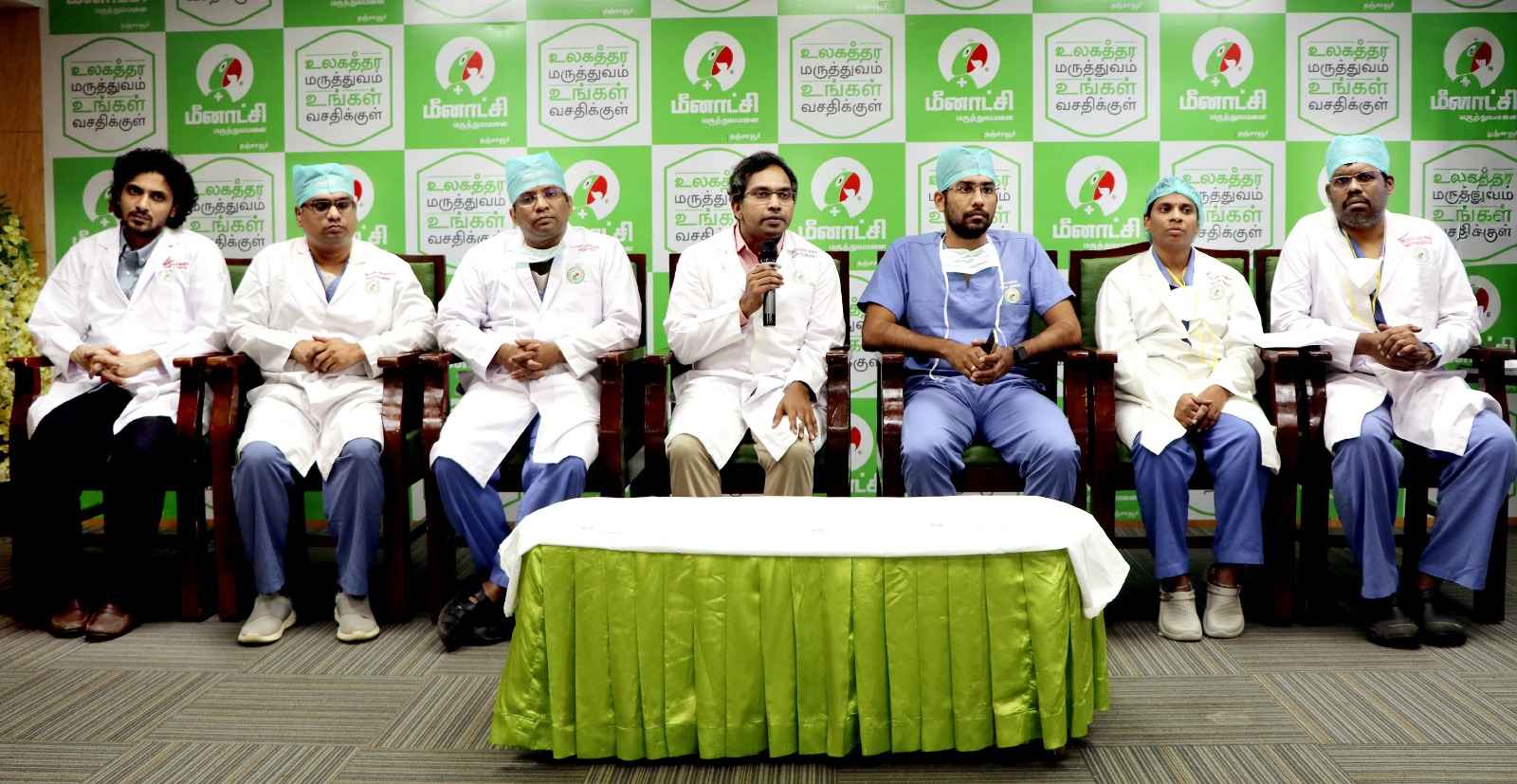
The complex surgery, Occipito Cervical Transfacetal screw fixation, was carried out by Dr. Arun Kumar and Dr. Kaveeze, neurosurgeons, with support from Dr. Arimanikam and Dr Vinodha Devi, neuro anesthetists. Post-surgery care was managed by the critical care specialists, Dr. Shobana Devi and Dr. Siva Kumar. Dr. Abdul Rahman, Pediatrician, also played an important role in the treatment and recovery of the child.
In his comments, Dr. Arun Kumar, HOD - Department of Neurosurgery, Meenakshi Hospital Thanjavur said, “We are happy that we could make the child walk again. Spinal surgery is challenging in any child and becomes far more complex in those affected by this genetic condition. Thankfully, with the support of a multispecialty team of anesthesiologists, pediatricians, and critical care experts, along with advanced neuroimaging and nerve monitoring technology, we were able to complete the surgery safely and successfully.”
He explained that the child was brought to the hospital in a quadriplegic condition, with complete loss of movement in all four limbs. His overall physical growth and bone development was also compromised. The team carried out all relevant scans, including CT and MRI, along with detailed evaluations, to understand the full extent of his condition. The tests showed Atlanto Axial dislocation (AAD) and confirmed that he was affected by spondyloepiphyseal dysplasia congenita.
AAD meant that the top two neck bones - one that supports the skull and the other that allows head movement, were misaligned. The genetic condition, extremely rare and occurring in only one in 100,000 live births, affected his normal growth and weakened his bones. The team performed the surgical procedure in which screws were placed in the bones of the skull and upper spine to stabilise them. The operation was carried out using intraoperative neuro monitoring, a special technique to ensure the spinal cord and nerves remained safe throughout.
Dr. V. Praveen, Deputy Medical Superintendent, Meenakshi Hospital Thanjavur was also present during the press meet.






.jpeg)










.jpg)
.jpg)
.jpg)
.jpg)
.jpg)
.jpg)


.jpg)