 Wednesday, October 28, 2026
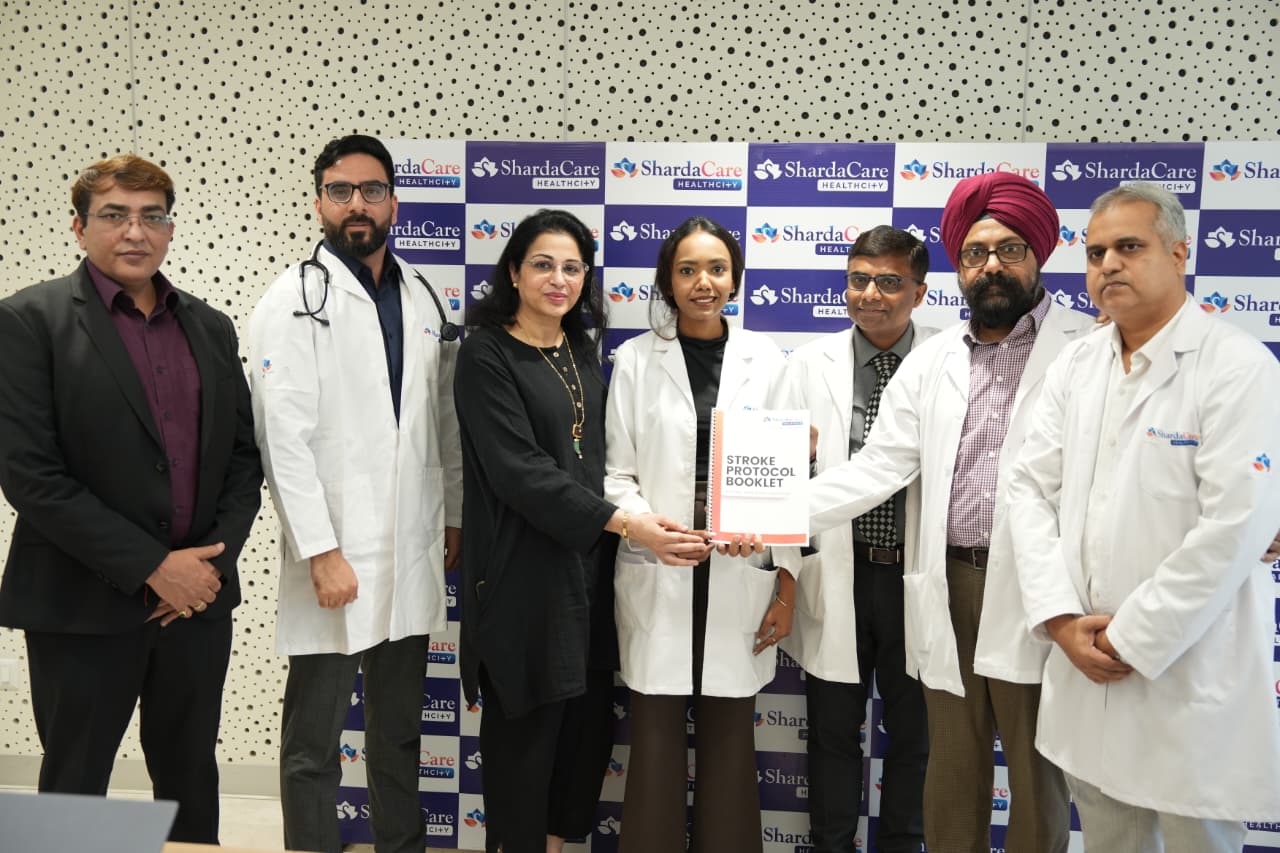
 The clinic will be supported by Comprehensive Stroke Rehabilitation Programme. Stroke protocols launched for patient handling and support.





Greater Noida, October 30, 2025: On World Stroke Day, ShardaCare Healthcity, a leading multispecialty hospital in North India, launched a dedicated Stroke Clinic and Comprehensive Stroke Rehabilitation Programme to enhance recovery and improve long-term outcomes for stroke survivors. The initiative aims to provide integrated, multidisciplinary care for patients involving neurologists, psychologists, physiotherapists, and rehabilitation specialists to ensure holistic treatment and faster recovery. The programme is being spearheaded by Dr. Atampreet Singh, Senior Director & Head, Neurology, ShardaCare Healthcity. The hospital also organized an awareness seminar where more than 25+ doctors across the city were invited to strengthen understanding around stroke — its diagnosis, prevention, management, and post-treatment care.
India records a brain stroke every 20 seconds — amounting to over 18 lakh new cases each year — making it one of the leading causes of death and long-term disability in the country. Yet, public awareness about prevention and timely treatment remains low. Alongside, despite advancements in stroke rehabilitation, there exists a notable gap in patient awareness, with many individuals and their caregivers lacking sufficient knowledge about post-stroke rehabilitation options and the importance of their involvement in the recovery journey. Considering this, the Stroke Rehabilitation Programme will run alongside the dedicated Stroke Clinic, which will operate from Monday to Friday, 2 PM to 5 PM, available 24x7 to ensure focused and coordinated care.
Highlighting the growing burden of stroke, Dr. Atampreet Singh, Senior Director & Head – Neurology, ShardaCare Healthcity, said, “A brain stroke can strike anyone — regardless of age, gender, education, or economic background. In stroke, time is the golden period — treatment within four and a half hours can significantly improve outcomes. Every second, millions of neurons are lost, so reaching a hospital quickly is critical. The disease strikes suddenly and can often be identified by the B.E.F.A.S.T. signs: Balance loss, Eye or vision trouble, Facial drooping, Arm weakness, Speech difficulty, and Time to act fast. Over the past 15–20 years, we have seen a sharp rise in strokes among younger individuals due to sedentary lifestyles, obesity, poor eating habits, smoking, and alcohol use. Better diagnostics and greater awareness have also led to earlier detection. In India, ischemic stroke is the most common type, yet only about 1% of eligible patients receive IV thrombolysis — a clot-busting injection effective within the 4.5-hour window. Recognising symptoms is crucial for timely intervention, especially in cases of intracerebral haemorrhage — the deadliest form of stroke caused by brain bleeding. Hypertension remains a key risk factor, particularly for haemorrhagic strokes.”
Speaking about progress in stroke care, Dr. Singh added, “Fortunately, technological advancements are transforming stroke diagnosis and care. New MRI and AI-based techniques have reduced scan time from 7–10 minutes to just 3–4 minutes, allowing clearer and faster assessment of brain damage. Mechanical thrombectomy — a procedure in which the clot is removed through the artery using a clot-retrieval device — has revolutionised outcomes in strokes involving major brain arteries. These innovations, coupled with timely diagnosis, are helping patients achieve better recovery and quality of life.”
Highlighting the role of rehabilitation and the advances around it, Dr Dharam Pandey, Director, Department of Physiotherapy and Rehabilitation Sciences, ShardaCare Healthcity said, “Stroke management doesn’t end with emergency treatment — it continues through structured rehabilitation and holistic recovery. At ShardaCare Healthcity, our Comprehensive Stroke Rehabilitation Programme integrates conventional therapy with next-generation innovations such as robotics-assisted rehabilitation, inertial strengthening systems, and virtual reality-based gamified training to enhance patient engagement and motor recovery. Our sensor-based exercise systems and 3D motion analysis technology provide real-time feedback, enabling therapists to create precise, individualized therapy plans. Additionally, Functional Electrical Stimulation (FES) and EMG biofeedback support neuromuscular re-education, dysphasia rehabilitation, and cognitive restoration. Together, these technologies make stroke rehabilitation more measurable, interactive, and outcome-driven — helping patients regain strength, function, and independence more effectively.”
Commenting on the initiative, Mr. Rishabh Gupta, Managing Director, ShardaCare Healthcity, added: “At ShardaCare Healthcity, we view stroke recovery as a journey that extends beyond emergency care. Our new Stroke Clinic and Comprehensive Rehabilitation Programme embody our commitment to advanced, patient-centric, and technology-enabled recovery. The Physiotherapy and Rehabilitation Department is equipped with state-of-the-art neurorehabilitation systems and staffed by a specialized multidisciplinary team — including neurophysiotherapists, occupational therapists, speech and language therapists, and orthotists — all working under the guidance of expert neurological rehabilitation specialists. This integrated, under-one-roof model ensures personalized, intensive, and goal-driven rehabilitation, empowering stroke survivors to reclaim mobility, confidence, and quality of life.”





-23-300x250.png)

.jpeg)


.jpg)
.jpg)
.jpg)
.jpg)
.jpg)
.jpg)
.jpg)
.jpg)
.jpg)

