 Thursday, October 08, 2026
 “One nation , one digital platform” and “one class one channel” will ensure reach of quality education to farthest corners of the country





Union Finance & Corporate Affairs Minister Smt. Nirmala Sitharaman has announced several initiatives to boost education sector,on 17th May in New Delhi. The Minister said that investing in the human capital is equivalent to an investment in productivity and prosperity of the nation. The present pandemic situation has presented new challenges and several opportunities for our education system.
The Minister highlighted that the education sector has taken this opportunity to plan several interventions, particularly in the area of adopting innovative curriculum and pedagogies, concentrating energies on the gap areas, being more inclusive and integrating technology at every stage, to usher in a new era of focussed investment in the human capital.
Finance Minister further said that the government is committed to ensuring learning for all, with equity, so as to cover all students at all levels of education and in all geographical locations, even in the remotest parts of the country.
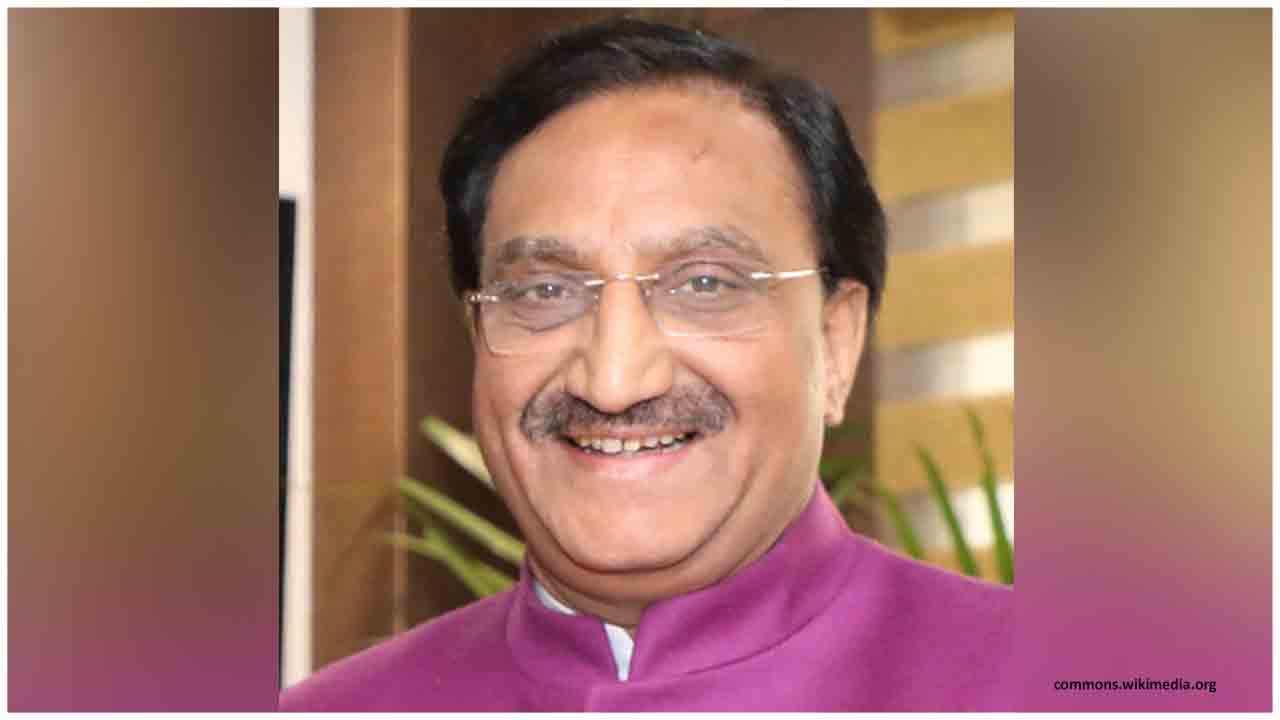
Union Human Resource Development Minister ‘Shri Ramesh Pokhriyal Nishank’ expressed his gratitude to Prime Minister Shri Narendra Modi for giving priority to education sector. He also thanked Union Finance Minister for the initiatives and hoped that they will transform the education system and bring out holistic development of students of the country.
Shri Pokhriyal said that the “One nation , one digital platform” and “one class one channel” will ensure that quality education material will reach the students present in farthest areas of the country. He said that the initiatives will boost the access and equity in education and improve the gross enrolment ratio in the times to come. He also said that due consideration is being given to the Divyang children also and the measures will usher in a new paradigm in the creation of New India.
Union Finance Minister announced the immediate set of initiatives in this direction includes:
A comprehensive initiative called PM e-VIDYA will be launched which unifies all efforts related to digital/online/on-air education. This will enable multi-mode access to education, and includes: DIKSHA (one nation-one digital platform) which will now become the nation’s digital infrastructure for providing quality e-content in school education for all the states/UTs; TV (one class-one channel) where one dedicated channel per grade for each of the classes 1 to 12 will provide access to quality educational material: SWAYAM online courses in MOOCS format for school and higher education; IITPAL for IITJEE/NEET preparation; Air through Community radio and CBSE Shiksha Vani podcast; and study material for the differently abled developed on Digitally Accessible Information System (DAISY) and in sign language on NIOS website/ YouTube. This will benefit nearly 25 crore school going children across the country.
In this time of global pandemic, it is vital that we provide psychosocial support to students, teachers and families for mental health and emotional wellbeing. The Manodarpan initiative is being launched to provide such support through a website, a toll-free helpline, national directory of counselors, interactive chat platform, etc. This initiative will benefit all school going children in the country, along with their parents, teachers and the community of stakeholders in school education.
Government is expanding e-learning in higher education – by liberalizing open, distance and online education regulatory framework. Top 100 universities will start online courses. Also, online component in conventional Universities and ODL programmes will also be raised from present 20% to 40%. This will provide enhanced learning opportunities to nearly 7 crore students across different colleges and Universities.
There is a need to promote critical thinking, creative and communication skills, along with experiential and joyful learning for the students focussing on learning outcomes. The curriculum must be rooted in the Indian ethos and integrated with global skill requirements. Therefore, it has been decided to prepare a new National Curriculum and Pedagogical Framework for school education, teacher education and early childhood stage to prepare students and future teachers as per global benchmarks.
A National Foundational Literacy and Numeracy Mission will be launched, for ensuring that every child in the country necessarily attains foundational literacy and numeracy in Grade 3. For this, teacher capacity building, a robust curricular framework, engaging learning material – both online and offline, learning outcomes and their measurement indices, assessment techniques, tracking of learning progress, etc. will be designed to take it forward in a systematic fashion. This mission will cover the learning needs of nearly 4 crore children in the age group of 3 to 11 years.






.jpeg)










.jpg)
.jpg)
.jpg)
.jpg)
.jpg)
.jpg)


.jpg)