 Saturday, November 21, 2026
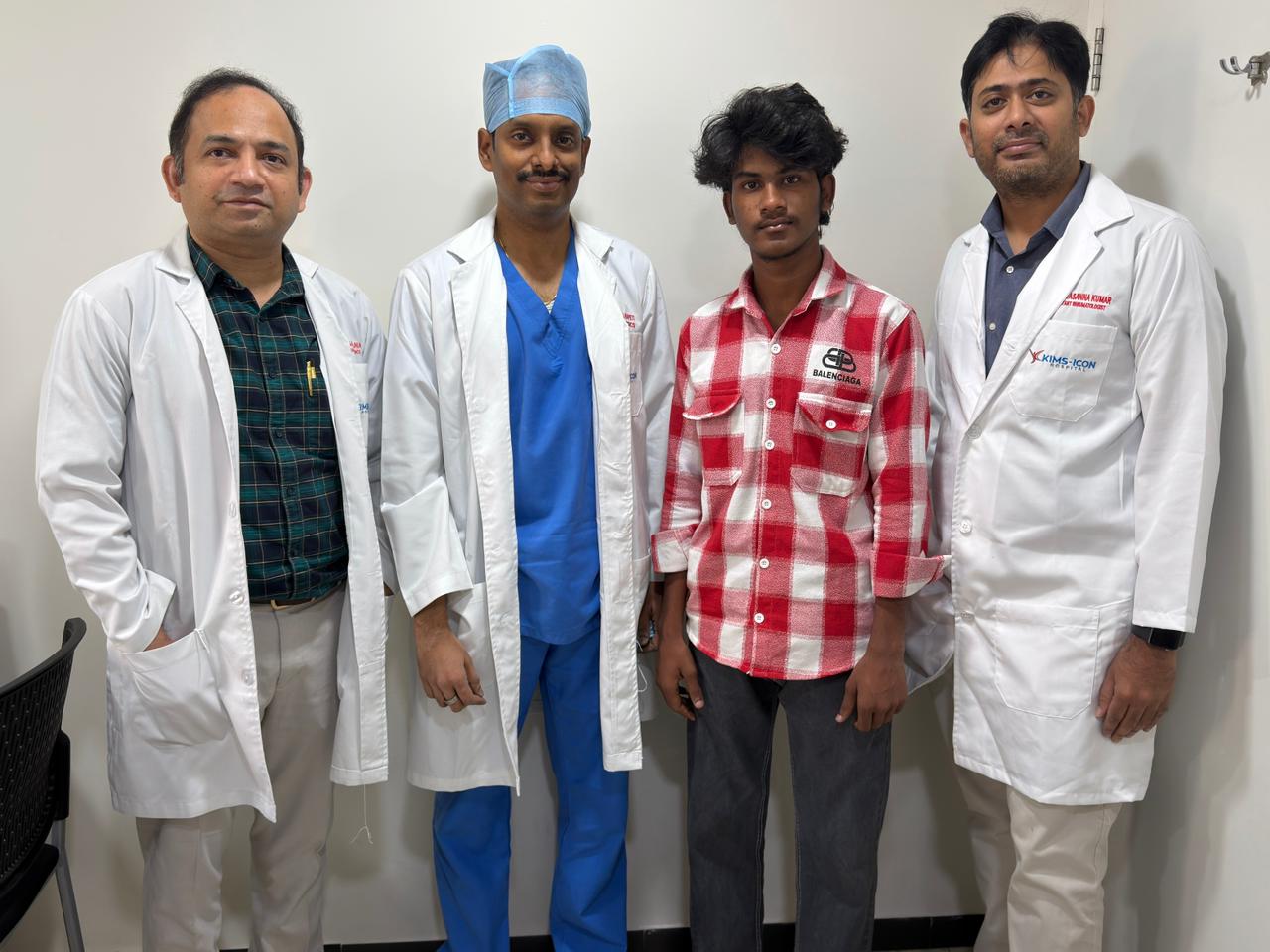
 Successfully Treated at KIMS ICON.





Visakhapatnam, February 14, 2026: Doctors at KIMS ICON Hospital, Visakhapatnam, have successfully treated a rare and complex kidney injury in a 17-year-old boy that came to light following a road traffic accident.
The patient, identified as Palle Ravichandra Kumar from the Anakapalli region, was brought to the hospital with complaints of abdominal pain after the accident. Detailed evaluation and advanced imaging revealed a Pelvi-Ureteric Junction (PUJ) avulsion — a complete disruption between the renal pelvis and the ureter.
Adding to the rarity of the case, the injury was found to have occurred in a duplex kidney, a congenital condition in which a single kidney has two separate urinary drainage systems. Such injuries caused by blunt trauma are extremely uncommon, and their occurrence in a duplex kidney is considered exceptionally rare, doctors said.
Explaining the case, Dr. Sandeep Maheshwar Reddy Kallam, Consultant Urologist, Laparoscopic Uro-Oncologist and Andrologist at KIMS ICON Hospital, said that no other abdominal organs were injured, making the diagnosis even more unusual.
Considering the complexity of the injury and the altered anatomy of the kidney, the medical team decided to perform immediate surgical intervention. Dr. Sandeep Maheshwar Reddy Kallam, along with Dr. Murali Krishna and Dr. Siva Sai Bharadwaj, carried out a delicate reconstructive surgery aimed at restoring urinary flow while preserving kidney function.
“The presence of a duplex kidney demanded extreme precision during the procedure,” the doctors noted.
The patient responded well to treatment, recovered steadily, and has since been discharged in stable condition. The doctors attributed the successful outcome to timely diagnosis, the use of advanced imaging techniques, and prompt surgical management.





-23-300x250.png)




















