 Wednesday, October 28, 2026
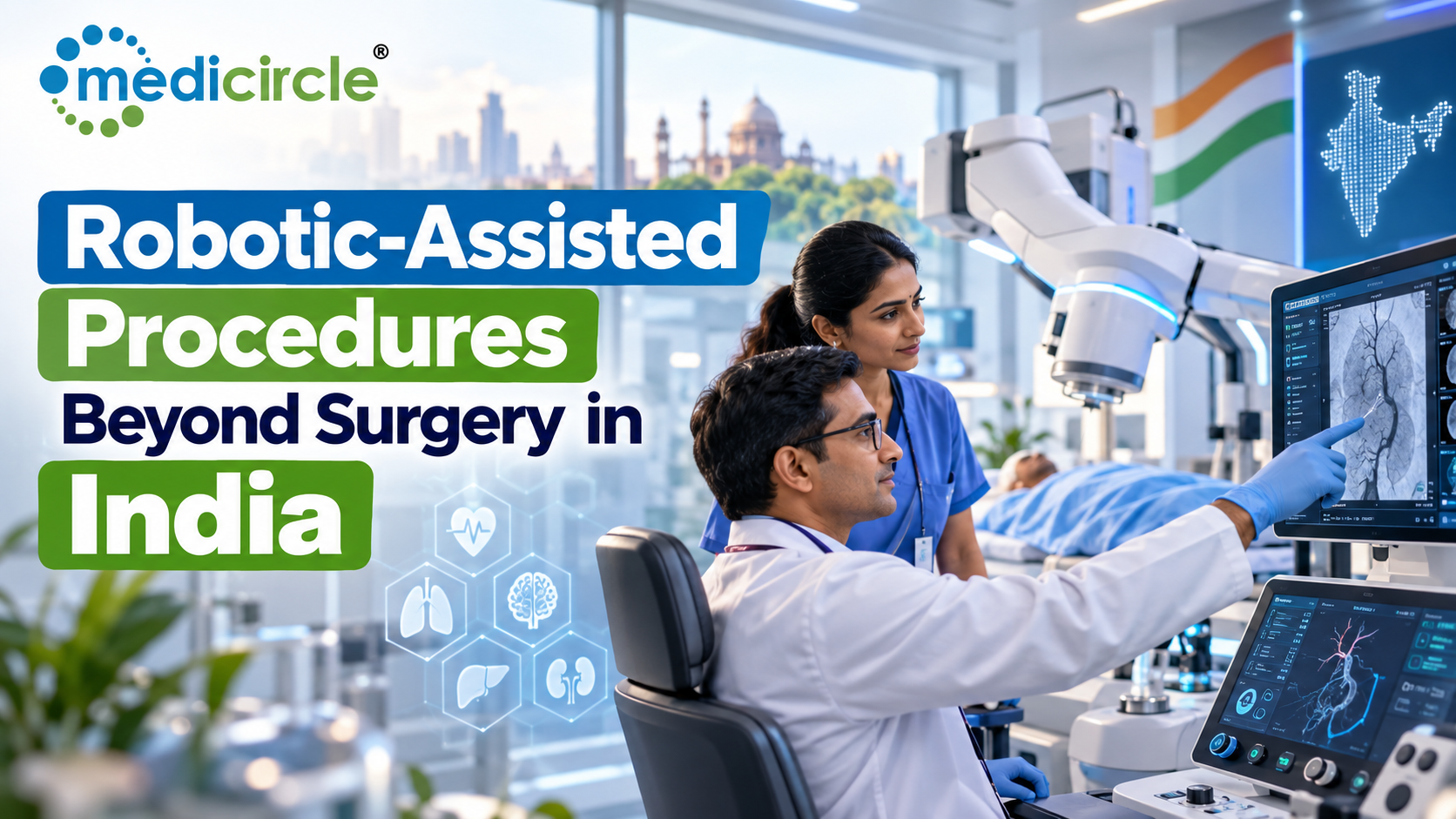
 Robotic automation in healthcare is expanding beyond surgery into diagnostics, rehabilitation, pharmacy, mental health, and elder care, presenting India with transformative opportunities and significant equity challenges to address.





Introduction
The popular image of a robot in healthcare is the gleaming surgical arm hovering over an operating table, guided by a surgeon seated at a console. While robotic surgery has genuinely transformed procedures across urology, orthopedics, and oncology, it represents only one chapter in a much larger and rapidly unfolding story. Across hospitals, laboratories, rehabilitation centers, pharmacies, and elder care facilities, automation is quietly expanding into territories that were once considered exclusively human domains.
For India, a country navigating one of the world's most complex healthcare challenges, this expansion carries particular significance. With a doctor-to-patient ratio that the World Health Organization has flagged as inadequate and a population that exceeds 1.4 billion, India needs scalable, efficient, and precise healthcare solutions. Robotic automation, when deployed thoughtfully and equitably, offers exactly that potential. Understanding where this technology is headed next is not merely an academic exercise. It is a question with direct implications for patients, clinicians, hospital administrators, and health policymakers across the country.
The Operating Room Was Only the Beginning
Robotic surgical systems such as the da Vinci platform arrived in India's premier hospitals in the early 2000s, and their adoption has accelerated meaningfully over the past decade. Apollo Hospitals, Fortis Healthcare, Manipal Hospitals, and several AIIMS campuses have integrated robotic surgical assistance into their workflows, particularly for minimally invasive procedures.
However, the real momentum in robotic healthcare automation today is happening outside the operating theatre. Engineers, clinicians, and healthtech companies are recognizing that the same principles driving surgical robotics, namely precision, repeatability, data integration, and reduced human fatigue, apply equally well to other healthcare contexts. This realization is driving a wave of innovation that is reshaping what automation means for healthcare delivery at large.
Robotic Diagnostics: Precision Before the First Incision
One of the most significant areas of growth is diagnostic robotics. Traditional diagnostics rely heavily on technician expertise, which introduces variability and the risk of human error, particularly in high-volume settings. Automated laboratory systems, sometimes called robotic diagnostic platforms, are now handling sample processing, centrifugation, reagent dispensing, and even slide preparation with remarkable accuracy.
In the pathology space, AI-integrated robotic microscopy systems can analyze tissue samples, flag anomalies, and generate preliminary reports that pathologists then review and validate. This does not replace the pathologist's judgment, but it dramatically reduces turnaround time and increases throughput. For India's large diagnostic chains, including SRL Diagnostics, Dr. Lal PathLabs, and Metropolis Healthcare, integrating such automation is becoming a strategic priority.
Robotic endoscopy is another frontier gaining traction globally and beginning to attract attention in India. Systems capable of navigating the gastrointestinal tract with greater precision than conventional endoscopes are in advanced stages of clinical evaluation. The ability to reach difficult anatomical locations with improved maneuverability holds promise for early cancer detection, which remains a challenge in India due to late-stage presentation driven by limited screening access.
Rehabilitation Robotics: Restoring Function, Restoring Lives
India carries an enormous burden of disability related to stroke, traumatic brain injury, spinal cord injuries, and musculoskeletal conditions. According to data from the Indian Council of Medical Research, stroke is among the leading causes of long-term disability in the country. Recovery from such events traditionally depends on intensive, repetitive physiotherapy sessions guided by human therapists. This model is constrained by therapist availability, geographic reach, and the sheer number of patients who need care.
Rehabilitation robotics directly addresses this gap. Exoskeleton devices, robotic gait trainers, and assisted movement platforms allow patients to engage in high-repetition motor training with consistent force and motion feedback. These systems can be programmed to gradually increase challenge levels as the patient improves, creating personalized rehabilitation pathways that are both data-driven and objective.
In India, institutions such as the National Institute of Mental Health and Neuro Sciences in Bengaluru and several corporate rehabilitation centers in Mumbai and Hyderabad are piloting robotic rehabilitation tools. The potential for these systems to function in community health centers or even patient homes, with remote supervision from therapists, aligns well with India's telemedicine growth trajectory under the National Digital Health Mission and ABDM framework.
Pharmacy Automation: Getting the Right Medicine to the Right Patient
Medication errors are a recognized patient safety concern in healthcare systems worldwide. In India, where hospital pharmacies handle enormous volumes of prescriptions daily and staffing pressures are significant, the risk of dispensing errors is real and consequential. Robotic pharmacy dispensing systems are designed to address this directly.
These systems use barcode verification, weight sensors, and robotic picking arms to dispense medications with a level of accuracy that manual processes struggle to match consistently. Integration with electronic health records allows the system to cross-check prescriptions against patient allergy profiles, existing medications, and dosage protocols before dispensing occurs.
Large hospital chains in India are already implementing automated dispensing cabinets and pharmacy management systems that incorporate robotic elements. As electronic health record adoption grows, particularly under the Ayushman Bharat Digital Mission's health account framework, the integration of pharmacy automation with patient-level data is expected to become far more seamless and widespread.
Robotics in Mental Health and Cognitive Support
Perhaps the most unexpected frontier of robotic automation in healthcare is its application in mental health and cognitive support. Social robots and AI-powered companion systems are being used in clinical trials and early deployments to support patients with autism spectrum disorders, dementia, and anxiety-related conditions.
These robots are not therapists. They do not diagnose, prescribe, or replace clinical care. What they offer is consistent, non-judgmental interaction, reminders, emotional engagement exercises, and companionship, particularly for elderly individuals who experience social isolation, which is a known risk factor for cognitive decline.
In India, where mental health infrastructure remains significantly underdeveloped relative to the population's needs and where stigma continues to deter people from seeking care, socially assistive robots represent an interesting supplementary tool. The Ministry of Health and Family Welfare's National Mental Health Programme has recognized the need to scale mental health services, and technology-assisted interventions could play a meaningful support role in that effort.
Elder Care Robotics: Addressing India's Aging Population Challenge
India's demographic profile is shifting. By 2050, projections suggest that the country's elderly population could exceed 300 million. The traditional model of family-based elder care is under pressure from urbanization, nuclear family structures, and the migration of working-age adults to cities for employment. This creates a growing need for scalable elder care solutions, and robotics is increasingly part of that conversation.
Robotic systems designed for elder care perform a range of functions. Mobility assistance robots help individuals who have difficulty standing or walking safely. Monitoring robots track vital signs, detect falls, and alert caregivers or family members when something is wrong. Medication reminder systems ensure adherence to complex drug regimens. Social companion robots reduce loneliness and provide cognitive stimulation.
Several Indian startups are beginning to explore this space, though the sector remains nascent compared to markets in Japan and South Korea, where elder care robotics is far more advanced. Investment in this area, combined with supportive government policy under schemes like the National Programme for Health Care of the Elderly, could accelerate meaningful deployment in Indian contexts.
Challenges to Wider Adoption in India
Acknowledging the promise of robotic automation in healthcare does not mean ignoring the genuine barriers that exist, particularly in the Indian context. Cost remains the most significant constraint. Advanced robotic systems carry high acquisition, maintenance, and training costs that limit their feasibility to well-funded private hospitals and a handful of public institutions.
Regulatory clarity is another important consideration. The Central Drugs Standard Control Organisation and other regulatory bodies are working to develop frameworks for medical devices, including robotic systems, but the pace of regulation sometimes lags behind technological development. Healthcare providers need clear, reliable regulatory guidance to invest confidently in these technologies.
The human capital dimension cannot be overlooked either. Deploying robotic systems effectively requires trained clinical engineers, biomedical technicians, and clinicians who understand how to work with and alongside automated systems. Building this workforce takes time, investment, and coordinated effort between educational institutions, hospitals, and government bodies.
Geographic equity is perhaps the most pressing concern. The concentration of robotic healthcare technology in Tier 1 cities creates a risk that innovation benefits accrue disproportionately to urban populations already enjoying better healthcare access, while rural and Tier 2 and Tier 3 city populations remain underserved. Addressing this requires deliberate policy intervention, subsidized access models, and the development of more affordable robotic solutions suited to resource-constrained settings.
The Road Ahead for Indian Healthcare Automation
The trajectory of robotic automation in Indian healthcare is unmistakably upward. The question is not whether automation will expand beyond surgery, but how quickly, how equitably, and how intelligently that expansion will occur. India's healthtech ecosystem is vibrant, its engineering talent pool is substantial, and its government has demonstrated a genuine commitment to digital health transformation through programs like ABDM and PM-JAY under Ayushman Bharat.
Platforms like Medicircle play an important role in this ecosystem by bringing credible, expert-led conversations about medical innovation to wider audiences. As robotic automation moves from pilot projects to mainstream healthcare delivery, informed public discourse, backed by reliable medical communication, helps build the trust and awareness that adoption requires.
The future of healthcare automation in India will be shaped not just by technology, but by the quality of conversations the healthcare community has about it. That future is being written now, in laboratories, rehabilitation wards, hospital pharmacies, and elder care homes across the country.
Frequently Asked Questions
Q1: Are robotic-assisted procedures only used in surgery?
No. Robotics is now widely used in diagnostics, rehabilitation, pharmacy dispensing, mental health support, elder care, and laboratory automation, extending well beyond the operating room.
Q2: How is robotics being used in Indian hospitals today?
Indian hospitals in cities like Mumbai, Delhi, Chennai, and Bengaluru are deploying robotic systems for surgical assistance, pathology lab automation, physiotherapy support, and pharmacy management.
Q3: What is the future of rehabilitation robotics in India?
Rehabilitation robotics in India is expected to grow significantly, particularly for post-stroke and orthopedic recovery, aided by government focus on digital health under ABDM and Ayushman Bharat.
Q4: Can robotic automation reduce medical errors in Indian healthcare?
Yes. Robotic pharmacy dispensing, automated diagnostics, and AI-assisted pathology significantly reduce human error, improve dosage accuracy, and enhance diagnostic consistency.
Q5: Is robotic healthcare technology affordable for Tier 2 and Tier 3 cities in India?
Currently, most advanced robotic healthcare systems are concentrated in Tier 1 cities. However, falling technology costs, startup innovation, and government digital health initiatives are gradually making these solutions more accessible to smaller cities.
Resources
- Indian Council of Medical Research (ICMR): Guidelines, burden of disease data, and clinical research publications relevant to healthcare innovation in India.
- World Health Organization (WHO) India Country Office: Reports on health system strengthening, digital health, and emerging medical technologies in the South-East Asia region.
- Ministry of Health and Family Welfare, Government of India: Policy documents, national health programmes, and regulatory updates including ABDM and PM-JAY scheme information.
- Ayushman Bharat Digital Mission (ABDM): Official framework and updates on India's national digital health ecosystem, including health ID and health records interoperability.
- National Institute of Mental Health and Neuro Sciences (NIMHANS): Research and clinical updates on neurological rehabilitation, stroke recovery, and neurotechnology applications in India.
Interlinking Keywords
Robotic surgery India, medical automation healthcare, rehabilitation robotics India, pharmacy automation hospital, AI diagnostics India, elder care technology India, ABDM digital health, healthtech innovation India, assistive robotics, automated pathology lab
Last medically reviewed by:
Dr. Manthan Tripathi, Medicircle Editorial and Medical Advisory Team on 16, September 2026
Disclaimer
This article is intended for informational and educational purposes only. It does not constitute medical advice, clinical guidance, or a substitute for consultation with a qualified healthcare professional. Readers are advised to consult their treating physician or a relevant medical specialist before making any healthcare decisions. Medicircle does not endorse any specific robotic product, device, or healthcare technology mentioned in this article. All information is based on publicly available data and is accurate to the best of the author's knowledge at the time of publication.





-23-300x250.png)

.jpeg)






.jpg)
.jpg)
.jpg)
.jpg)
.jpg)
.jpg)
.jpg)
.jpg)
.jpg)

