 Monday, October 05, 2026
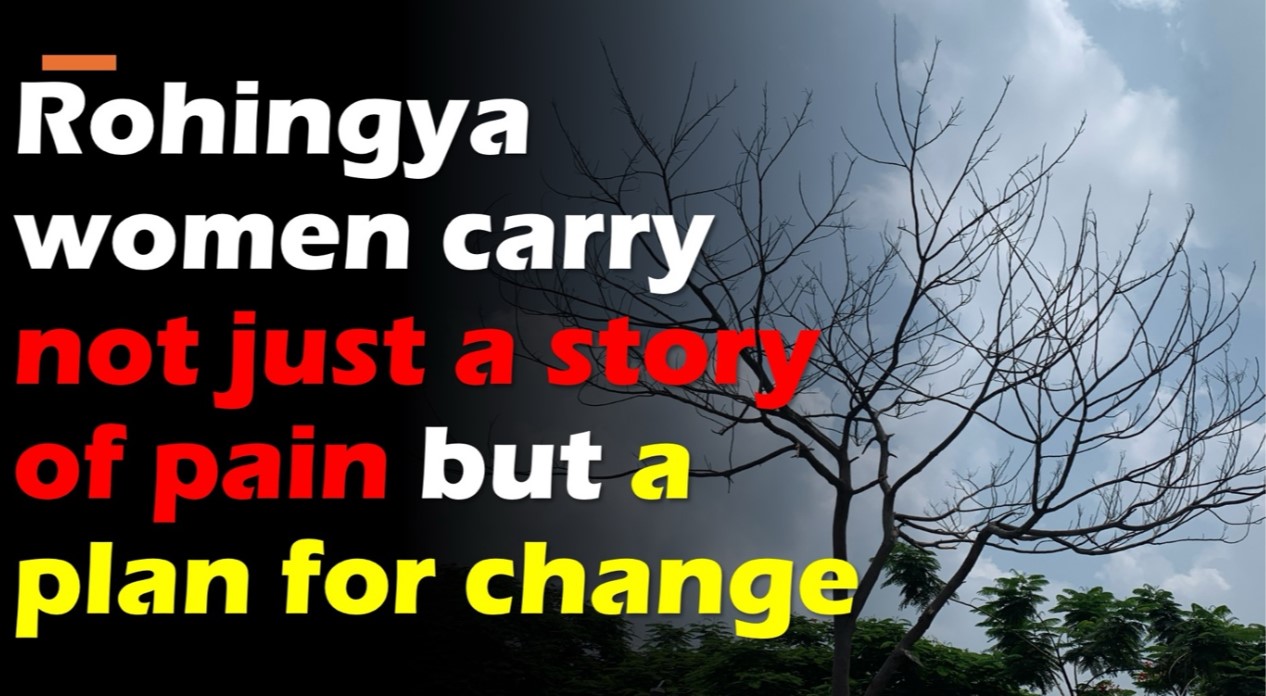
 Most refugee girls grow up without any structured knowledge of their bodies, reproductive health or mental wellbeing.




👉 Order now at BestCheapPills and discover exclusive discounts for registeredcustomers!
"In the Rohingya refugee communities, especially with whom I work, the progress on Sustainable Development Goal (SDG)-3 (health and wellbeing) and SDG-5 (gender equality) has been deeply uneven and fragile - there have been small but significant steps forward," said Noor Fatima, Specialist in Education Policy and Equity, Rohingya Maìyafuìnor Collaborative Network.
"We now see more young people speaking up on awareness sessions, giving us the chance to finally share our lived experiences. But the truth is, this progress is slow and far from equal. It often does not reach the most vulnerable especially young Rohingya women and girls. For many of us, health and wellbeing are not just delayed rights but they are denied rights," added Noor.
"Most refugee girls grow up without any structured knowledge of their bodies, reproductive health or mental wellbeing. Menstruation is still treated as something shameful. Mental health is ignored and our conversation about gender-based violence are almost non-existent. It is not because we do not care, rather it is just because the system around us never cared about us," she said in SHE & Rights (Sexual Health with Equity & Rights) session hosted by Global Center for Health Diplomacy and Inclusion (CeHDI), Y+ Global (Global network of young people living with HIV), Y-PEER Asia Pacific, Asia Indigenous Youth Platform (AIYP), Youth Lead Voices, International Conference on Family Planning (ICFP) 2025, Family Planning News Network (FPNN), International Planned Parenthood Federation (IPPF), Asian-Pacific Resource and Research Centre for Women (ARROW), Women’s Global Network for Reproductive Rights (WGNRR), Asia Pacific Media Alliance for Health and Development (APCAT Media) and CNS.
When daily survival is a struggle then wellbeing becomes a distant dream
"Even when healthcare services existed nearby, the fear of being turned away, the lack of documents, or the language barriers deter many from seeking help. Pregnant women often go through their entire pregnancy without ever seeing a doctor. Young people suffer silently from preventable illness, and unpreventable illnesses just keep increasing. When you live in an environment where daily survival is the focus, wellbeing becomes a distant dream. When we talk about SDG-5 (gender equality), we must remember it is not only about having equal opportunities but also protection, education and leadership for women and girls. Yet Rohingya refugee women are still not treated as people worthy of full protection or participation," explains Noor.
Despite challenges there are sparks of change
Despite all these challenges, there are sparks of change which are often led by young people themselves. "Through the Rohingya Women's Collaborative Network, we have created safe spaces where girls can openly discuss without fear or shame. We started trauma healing circles and peer-to-peer support network, so no young woman must carry her pain alone. We launched digital literacy programs in 2020 helping girls connect to online education, health resources and advocacy opportunities. We are also working on training young Rohingya women as community health advocates who share knowledge on hygiene, nutrition, mental health, administration, education and health in their own neighbourhoods. These are not just programs - these are act of survival, resilience and hope and they are women-led and Rohingya-women led – run mostly by those who survived all these struggles and sustained," shared Noor Fatima.
We are not just victims of conflicts but as leaders of change
"As a Rohingya woman, I want the world to see us not only as victim of conflicts but as the leaders of change. We carry these stories and the solution and the strategies, but we need you to trust us, resource us and work with us as equals. For too long, youth engagement has been treated like a checkbox. We are invited to panels to share our stories but not to shape the policies. We are praised for alliance but denied the resources to impact change. Youth are not waiting for someone to give us a voice. We already have voices. What we need is that the world should listen to us. And when I say youth, I do not just mean those with passports and citizenships. I also mean refugee youth, stateless youth and displaced youths like us – the ones who have lived experience of broken system and who understand the urgency of fixing them because our life depends on it," rightly said Noor.
Move from symbolic inclusions to meaningful empowerments
"We have to make direct investment in youth-led initiatives. It is not enough to fund big agencies and hope that the benefits would trickle down to us. We need funding that goes directly to the hands of young leaders who are already doing the work - often unpaid in unsafe conditions and with limited tools. Through the Rohingya Women's Collaborative Network, we have created the programs which we are talking about now. These programmes are powerful, but they survive mostly entirely on volunteering labour. Imagine how much more we could have done if we had stable resources, safe spaces and the trust to scale our solutions," said Noor Fatima.
"We need to upgrade youth engagement from participation to influencing policies. Governments, UN agencies and others must consult youth regularly not just as token gestures. Refugee and marginalised youth should be involved at every stage from designing health and gender programmes, to monitoring budgets and evaluating impact," she said.
"We need accessible education pathways. Many refugees like me dream of becoming doctors, therapist, legal advocates or gender specialists - the professionals our community desperately needs but without legal document, scholarship, these dreams are blocked, and we need alternative pathways for that," she added.
Change the narrative
"The world must stop looking at refugee youth only through the eyes and the lens of vulnerability. We are not just survivors - we are also strategists, innovators, and leaders. Every woman I work with in the network carries not just a story of pain, but a plan for change. But too often those plans die in our notebook because the world does not trust us to implement them. So, here is my challenge. If you truly believe in SDGs and youth empowerment, and in health and gender equality, then stop standing above us - stand beside us and share the decision-making table, fund our leadership and protect our spaces," concluded Noor.
Shobha Shukla – CNS (Citizen News Service)
(Shobha Shukla is a feminist, health and development justice advocate, and an award-winning founding Managing Editor and Executive Director of CNS (Citizen News Service). She was also the Lead Discussant for SDG-3 at United Nations inter-governmental High Level Political Forum (HLPF 2025). She is a former senior Physics faculty of prestigious Loreto Convent College; current President of Asia Pacific Regional Media Alliance for Health and Development (APCAT Media); Chairperson of Global AMR Media Alliance (GAMA received AMR One Health Emerging Leaders and Outstanding Talents Award 2024); and coordinator of SHE & Rights (Sexual Health with Equity & Rights). Follow her on Twitter/X @shobha1shukla or read her writings here www.bit.ly/ShobhaShukla)






.jpeg)
.jpg)
.jpg)
.jpg)
.jpg)
.jpg)
.jpg)
.jpeg)
.jpeg)
.png)