 Wednesday, November 18, 2026
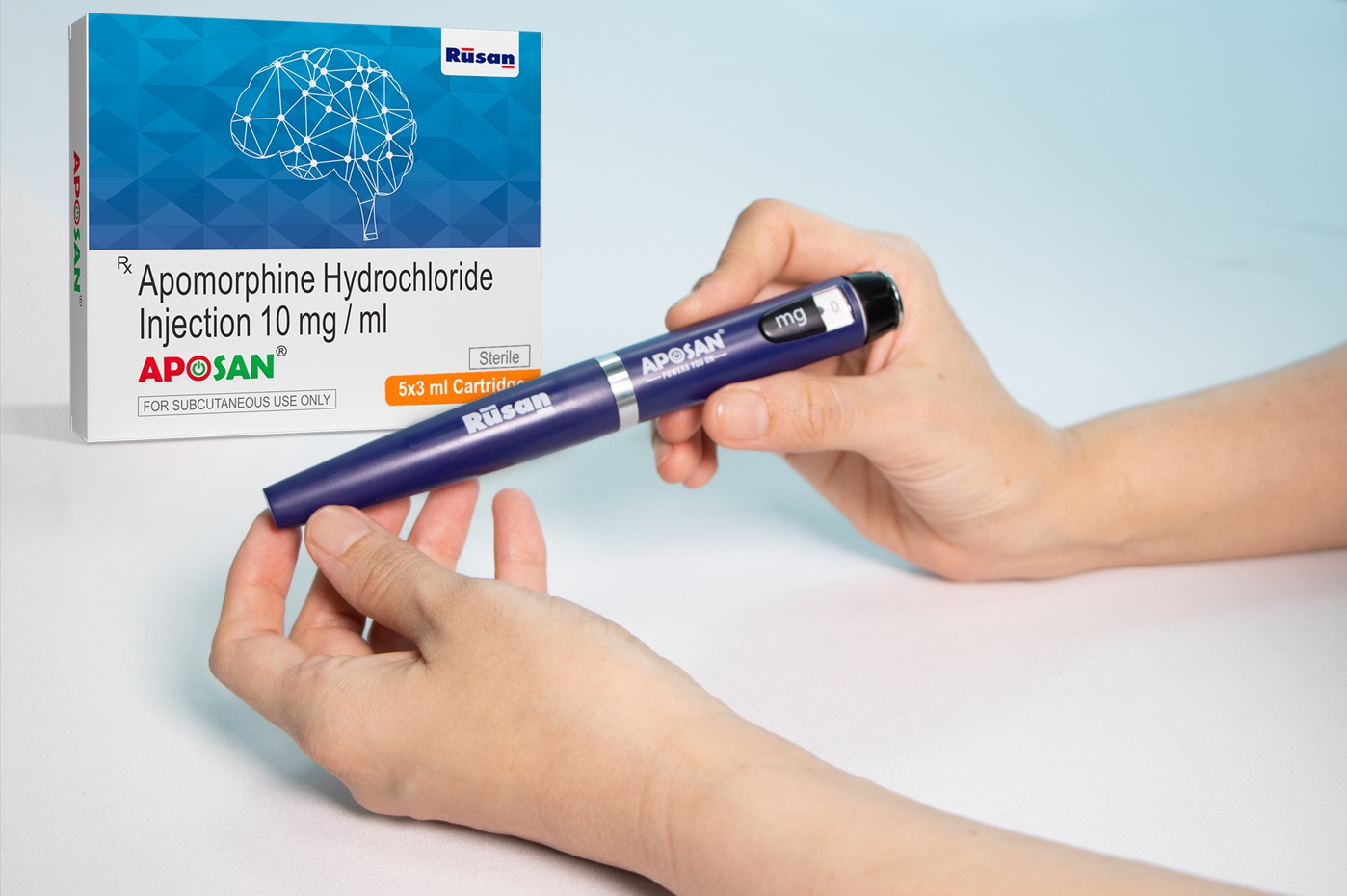
 First time in India: Rusan announces the launch of the Indigenously Developed APOSAN® 3ml Pen for the Management of OFF Episodes in Patients with Parkinson’s Disease.





Mumbai, India | 31st March, 2026: Rusan Healthcare Pvt. Ltd., the marketing and distribution arm of Rusan Pharma Limited, an integrated global pharmaceutical company, has announced the launch of the multi-dose delivery pen device - APOSAN® 3ml Pen (Apomorphine Hydrochloride solution for injection in cartridge)(10 mg/ml)(3 ml pre-filled cartridges) for treatment of motor fluctuations commonly known as ‘ON-OFF’ episodes in patients suffering from Parkinson’s disease (PD).
In 2018, Rusan was the first company in India to launch APOSAN® Apomorphine Hydrochloride solution for injection (10 mg/ml) (2ml and 5ml ampoules). Since APOSAN®’s launch in India, Rusan has observed remarkable clinical impact and consistently positive patient experiences, underscoring Apomorphine’s value as a transformative option in Parkinson’s management.
The company now offers the complete range of Apomorphine Hydrochloride in different fill volumes, namely - 2ml injection, 3ml in pre-filled cartridge with a ‘Multi-dose PEN device’, and 5ml for continuous ‘Infusion PUMPS’ to meet distinct clinical scenarios in PD management, such as rapid rescue from OFF episodes using PEN devices and sustained symptom control using infusion PUMPS.
PD is estimated to affect nearly 10 to 11.7 million people globally, with India accounting for a significant and growing share of the patient population. However, the clinical perception is shifting: Early‑Onset Parkinson’s Disease (EOPD), defined as diagnosis after the age of 20 years and before 50 years, now represents a growing share of the global burden, with incidence and prevalence tripling between 1990 and 2021, as reported in the Journal of Neurology, Neurosurgery & Psychiatry 2026. This clearly indicates that Parkinson’s is not confined to older adults, and the changing age profile emphasises the importance of increased awareness, early diagnosis, and coverage, to ensure that Parkinson’s care remains accessible across India.
The APOSAN® 3ml PEN offers a multi-dose, dial-a-dose mechanism with an enhanced dose-visibility window, thereby enabling accurate and consistent dose administration. The APOSAN® 3ml PEN reduces handling complexity and supports safer, more reliable self-administration, reducing the risk of dosing errors. The APOSAN® 3ml PEN device’s lightweight, portable design enables convenient, dependable subcutaneous administration at home, empowering patients to manage their therapy promptly.
Commenting on the launch, Ms Malavika Kaura Saxena, Chief Marketing Officer, Rusan Healthcare, stated, “The APOSAN® 3ml PEN is a major step forward, offering a portable, multi‑use system for reliable apomorphine delivery. Complementing this innovation, the APOSAN® HOPE Program provides structured onboarding, guided support, and patient‑centric services that make advanced rescue therapy easier to adopt and sustain. By simplifying training, coordination, and day‑to‑day therapy management, the APOSAN® HOPE Program helps patients and families use the therapy with confidence and continuity.”
Also, commenting on the launch, Dr. Kunal Saxena, Managing Director, Rusan Pharma Limited, stated, “The launch of APOSAN® 3ml Pen reflects Rusan’s focused commitment to advancing Parkinson’s care through accessible and scalable treatment solutions. A defining strength of the brand is Rusan’s fully integrated manufacturing model. By producing the API internally at its USFDA & EU GMP accredited facility, the company upholds rigorous quality governance, reduces reliance on external suppliers, and secures a consistent, high-integrity supply chain for this critical therapeutic product. Through innovations like APOSAN® 3ml PEN, we aim to empower patients and caregivers while continuing to expand access to advanced Parkinson’s care across India.”





-23-300x250.png)





















