 Thursday, October 08, 2026
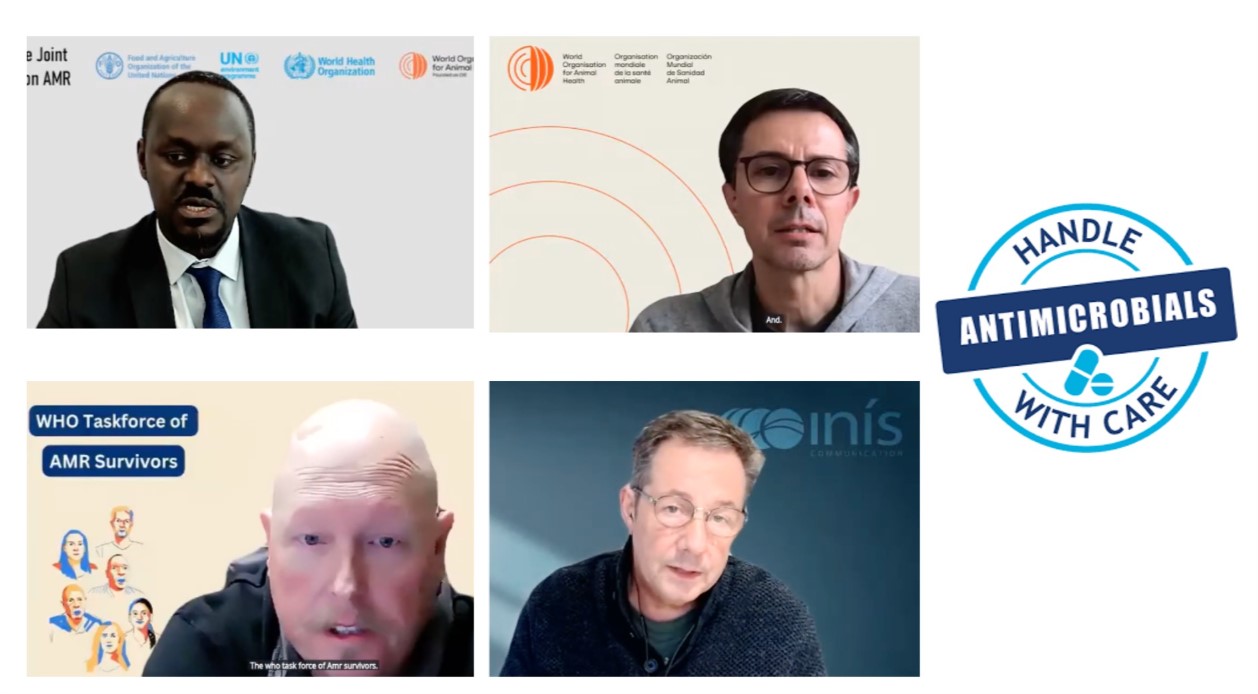
 The misuse and overuse of antimicrobial drugs in human health, animal health and livestock, food and agriculture are fuelling AMR.




Let us go back in time 97 years ago and dare to imagine the plight of those who suffered with bacterial infections before the discovery of world's first antibiotic in 1928 (penicillin). Without lifesaving medicines, curable or treatable infections could become deadly - once again. Today, a lot of medicines are failing to treat infections because disease-causing bacteria, virus, fungi and/or parasites are becoming drug-resistant - largely because of human-made misuse and overuse of medicines. Choice is ours: Do we want to slip back in time when there were not enough medicines around, or would we stop misuse and overuse of medicines and use them responsibly?
Would we protect our present and secure our future?
Recent data released by the WHO last month sets the alarm bells ringing on drug-resistance (or antimicrobial resistance or AMR). "Latest AMR surveillance report paints a sobering picture. AMR remains firmly among the top global health threats undermining the foundation of modern medicine. First, the scale of resistance is growing. Roughly one in six bacterial infections worldwide is caused by pathogens resistant to antibiotics. Second, the threat to critical care is real and resistance is particularly severe in gram-negative bacteria - the very pathogens most associated with hospital-acquired infections and high fatality rates. And third, AMR burden is profoundly inequitable. So low- and middle-income countries where health systems are often weaker face the highest resistance levels," said Dr Tim France, molecular biologist turned global health thought leader.
Silver lining: Data is used as a policy compass
"AMR surveillance coverage and data quality have expanded dramatically. The GLASS (Global AMR and use Surveillance System of the WHO) network now includes 104 countries covering more than 70% of the global population compared to 2016 - a four-fold increase. Political commitment is stronger than ever. AMR global surveillance data is itself now being used as a policy compass, not just as a warning system," added Dr France, who founded and leads Inis Communication. "MRSA rates have declined steadily in several regions by over 7% annually in Europe, and 6% in Southeast Asia. So focused interventions really do work." Tim was speaking at the 5th Annual Global Media Forum on Antimicrobial Resistance (ahead of World AMR Awareness Week or WAAW 2025).
Inappropriate use of medicines is not just in human health but also in animal health, food and agriculture
The misuse and overuse of antimicrobial drugs in human health, animal health and livestock, food and agriculture are fuelling AMR. Additionally, environmental pollution - such as untreated hospital and community wastewater, pharmaceutical effluents, and agricultural run-off - plays a growing role in enabling resistant pathogens to emerge and persist across sectors. The consequences of AMR are far-reaching, affecting human and animal health, food safety and security, and placing additional strains on healthcare systems and economies.
Addressing AMR requires urgent, coordinated action and sustained commitment from governments and diverse sectors across the One Health spectrum, said Dr Jean-Pierre Nyemazi, Director of the Quadripartite Joint Secretariat on AMR. The Quadripartite Joint Secretariat has brought 4 global agencies on human health (WHO), food and agriculture (FAO), environment (UNEP) and animal health (WOAH) together to address AMR using the One Health approach.
“Today, 1 out of every 6 bacterial infections confirmed in the laboratory is resistant to antibiotics,” said Dr Javier Yugueros-Marcos, Head of the Antimicrobial Resistance & Veterinary Products Department, World Organization for Animal Health (WOAH).
AMR is already linked to nearly 5 million deaths each year, including 1.14 million deaths directly caused by bacterial AMR. “That is 2 lives lost every minute. Since 2016, countries have worked hard to prevent AMR. Over 90% of the countries (178 countries) have national AMR action plans. But only 22% are fully implementing the national AMR action plans with monitoring and financing in place. So, that is why world leaders stepped up last year in 2024 with another bold commitment enshrined in the Political Declaration adopted in the UNGA 2024 High Level Meeting: 60% of countries must have fully funded national AMR action plans and implement them,” said Dr Nyemazi.
“For us to reach that goal, governments also committed to mobilise at least US$ 100 million by 2030, including through AMR Multi-Partner Trust Fund (AMR MPTF) and other mechanisms. This is a powerful signal that the world understands the urgency and shared responsibility. However, technical solutions alone won't win this fight. We need a shared responsibility,” said Dr Nyemazi.
"AMR is invisible but I am not"
"AMR is invisible, but the WHO was smart enough to recognise the value of stories of those with lived experiences of AMR," said Rob Purdie, AMR survivor and Member of WHO Task Force of AMR Survivors.
Around the time of new year 2012, Rob started having a headache and a terrible pain. Rob made several trips to healthcare facilities in the USA and was attended by several doctors and treated for a range of conditions (which later were found to be incorrectly diagnosed). He wrongly got treated for them- from sinus infections to cluster headaches etc.
Right diagnosis was Coccidioidomycosis - a form of meningitis caused by Valley fever, a disease caused by a fungus endemic in the soil of south-west USA.
"My fungal disease of meningitis, primarily presents as a pneumonia - and because of that it is one of the reasons that multiple prescriptions of antibiotics on an average are prescribed to patients of Coccidioidomycosis," said Rob.
Rob had to endure years of struggle and battle AMR.
"Fungal AMR is very intertwined with agricultural use of pesticides. So rather than emerging out of overprescription of antibiotics - which happens obviously on the bacterial side, it has more to do with the use of pesticides to control fungus in agriculture. That is an important example why One Health approach is so critical to address AMR," said Rob.
It is high time we stop misuse and overuse of antimicrobial medicines in all sectors - be it human health, animal health and livestock, or food and agriculture, and stop polluting our environment. Let us hope this year's WAAW 2025 serves as another wake up call to accelerate science-based approaches to prevent AMR with One Health approach.






.jpeg)










.jpg)
.jpg)
.jpg)
.jpg)
.jpg)
.jpg)


.jpg)