Friday, October 23, 2026
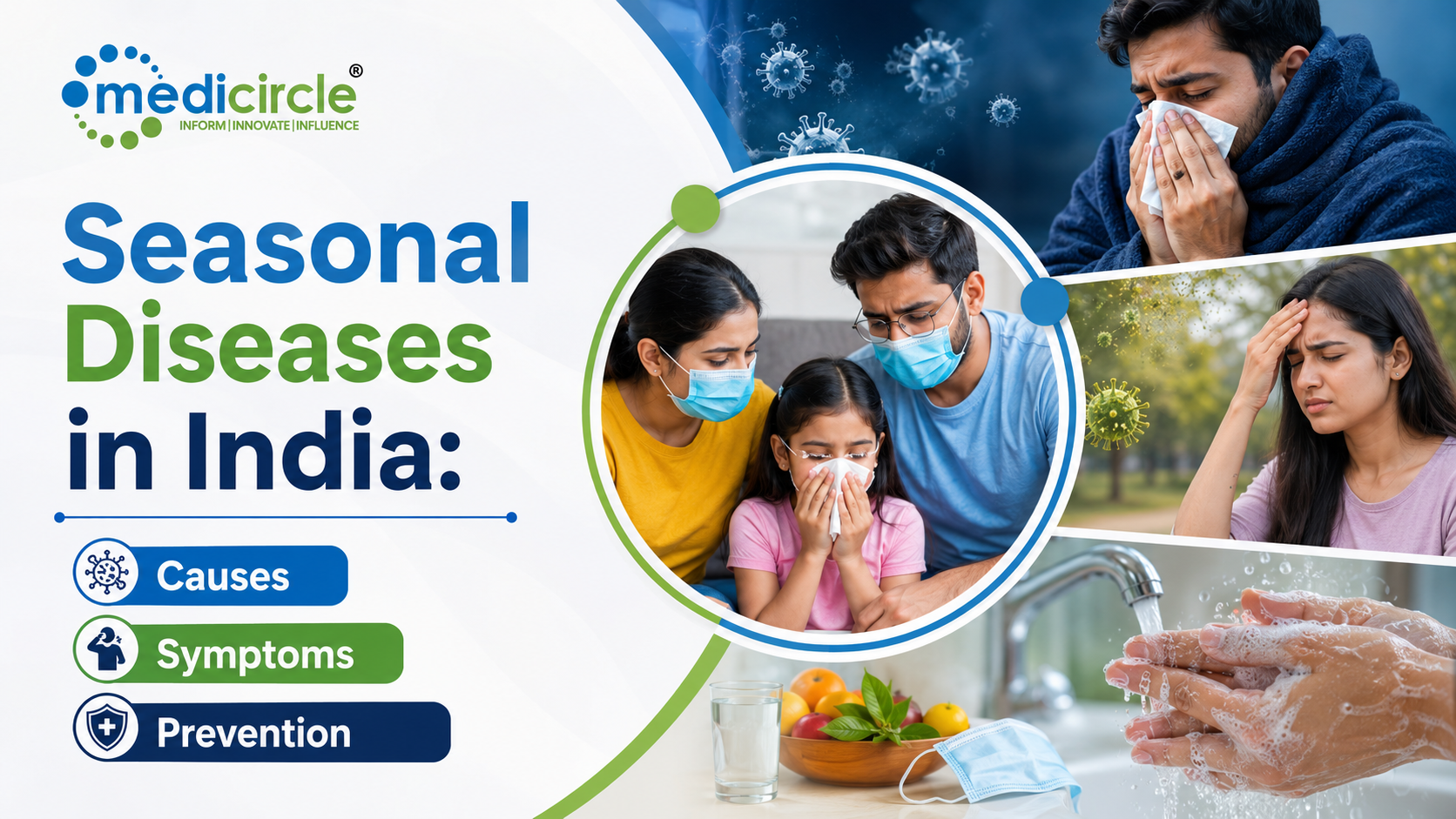
 Seasonal diseases in India follow predictable patterns tied to monsoon, winter, and summer, from dengue and typhoid to flu and heatstroke, with prevention and early diagnosis remaining key to protection.





Introduction
India's climate does not simply change with the calendar. It rewrites the country's disease landscape, season after season, in patterns that repeat with striking regularity every year. Monsoon rains bring stagnant water and mosquito breeding grounds. Winter cold dries out airways and clears the way for respiratory infections. Summer heat pushes the body toward dehydration and turns food spoilage into a genuine health hazard. For a population of over 1.4 billion people spread across widely varying climates, from the humid coastlines to the dry northern plains, understanding this seasonal rhythm of illness is not an academic exercise. It is a practical necessity for every household.
Recent public health data shows why this understanding matters more than ever. Government surveillance figures indicate India had already reported thousands of dengue cases within the first two months of 2026 alone, a pattern that several physicians and epidemiologists now describe as concerning because dengue transmission in India has historically stayed low between January and May, a seasonal gap that appears to be narrowing in recent years. This guide walks through the seasonal disease landscape of India, month by month and condition by condition, so that families, caregivers, and health-conscious readers can recognise early warning signs and respond with confidence rather than panic.
Understanding Why India's Seasons Drive Disease Patterns
India experiences three broad climatic phases each year, and each one creates a distinct microbial environment. The monsoon, spanning roughly June to September, floods low-lying areas, overwhelms drainage systems, and creates thousands of small pools of standing water in coolers, tyres, plant pots, and construction sites. These become breeding grounds for the Aedes and Anopheles mosquitoes responsible for dengue, chikungunya, and malaria. At the same time, sewage frequently mixes with drinking water sources, setting the stage for cholera, typhoid, and hepatitis A.
Winter, from October through February, shifts the burden toward the respiratory system. Cold, dry air irritates the mucosal lining of the nose and throat, weakening the body's natural defences against viral entry. Crowded indoor spaces during colder months, common in both Tier 1 metros and Tier 2 towns, allow influenza and pneumonia to spread more easily among family members and coworkers.
Summer, from March to May, brings a different set of risks entirely. Extreme heat strains the cardiovascular system and increases the risk of dehydration, while warm ambient temperatures accelerate bacterial growth in food left unrefrigerated, a genuine concern given how common outdoor eating and unregulated food vending remain across Indian cities and towns.
Government-run surveillance systems, including the Integrated Disease Surveillance Programme and the National Vector-Borne Disease Control Programme under the Ministry of Health and Family Welfare, track these fluctuations closely and issue seasonal advisories accordingly, forming the backbone of India's early warning infrastructure for infectious disease.
Primary Causes and Risk Factors Across Seasons
The underlying causes of India's seasonal disease burden are closely tied to infrastructure, climate, and behaviour working together.
During the monsoon, poor drainage and inconsistent municipal water treatment in many urban and semi-urban areas allow contaminated water to reach households. Research analysing dengue and malaria trends across India between 2003 and 2022 found that dengue and malaria account for close to three-quarters of the country's total vector-borne disease burden, with dengue hotspots expanding significantly across central, western, and northern regions of the country over that period. A separate hospital-based study from Delhi found that co-infections are far from rare during monsoon months, noting that nearly 43 percent of malaria-positive patients also tested positive for at least one other infection such as dengue, chikungunya, or typhoid, which complicates both diagnosis and recovery.
Winter risk factors centre on indoor crowding, inadequate ventilation, and the drop in humidity that helps airborne viruses linger longer. People managing chronic respiratory conditions, older adults, and young children face amplified risk during this period, since cold air alone can trigger flare-ups even without a new infection.
Summer risk factors are largely behavioural and logistical. Inconsistent cold chain storage for perishable food, high outdoor temperatures during peak afternoon hours, and reduced water intake among outdoor workers and daily commuters in Tier 1 and Tier 2 cities all contribute to a spike in heat-related illness and food-borne infection.
One trend deserves particular attention. A recent investigative report cited health experts observing that rising temperatures, erratic rainfall, and rapid urbanisation are helping dengue-carrying mosquitoes survive longer and spread across a wider window of the year, gradually shifting a once tightly seasonal disease toward something closer to a year-round concern. This is a meaningful shift in how Indian households should think about vector-borne illness, moving away from the assumption that mosquito-borne risk disappears once the rains end.
Recognising the Symptoms of Common Seasonal Diseases
Because so many seasonal illnesses begin with a fever, distinguishing between them early can genuinely change treatment outcomes.
Dengue typically announces itself suddenly, with fever climbing quickly, often alongside a severe headache concentrated behind the eyes, intense joint and muscle pain, and sometimes a skin rash appearing between the second and fifth day of illness. Malaria, by contrast, tends to follow a cyclical pattern, with shaking chills, a fever spike, and then heavy sweating repeating every couple of days as the parasite completes its life cycle in the bloodstream. Chikungunya is marked by joint pain severe enough to limit movement, often persisting well beyond the fever itself.
Typhoid builds more gradually than these vector-borne illnesses. Fever tends to climb steadily over about a week, accompanied by abdominal discomfort, headache, and a general sense of exhaustion that does not lift with rest. Cholera and gastroenteritis, both linked to contaminated food or water, present more abruptly with watery diarrhoea, vomiting, and rapid fluid loss that can become dangerous within hours if not managed.
Winter's respiratory illnesses have their own signature. Influenza tends to bring a sudden onset of fever, body aches, and fatigue severe enough to keep a person bedridden, distinguishing it from the milder, more gradual onset of an ordinary cold. Pneumonia frequently follows as a complication, particularly in older adults, and should be suspected if breathing becomes laboured or chest discomfort develops alongside a lingering cough.
Heatstroke, the defining summer emergency, presents with confusion, hot and dry skin, a rapid pulse, and in severe cases, loss of consciousness. This differs meaningfully from simple dehydration, which causes thirst, dry mouth, and fatigue but without the disorientation that marks a true heat emergency.
Diagnosis and Medical Evaluation
Because so many seasonal illnesses share overlapping early symptoms, particularly fever, body ache, and fatigue, self-diagnosis based on symptoms alone is unreliable and can delay appropriate treatment. Laboratory confirmation remains the only dependable way to distinguish between dengue, malaria, typhoid, and viral fever.
For suspected dengue, an NS1 antigen test performed within the first five days of fever can detect the virus directly, while IgM and IgG antibody testing becomes more useful from around the fifth day onward. A complete blood count helps track platelet levels throughout the illness, since platelet counts falling below 50,000 typically call for closer medical observation, and levels below 20,000 usually require urgent intervention. Malaria is confirmed through a rapid antigen test alongside microscopic examination of a blood smear, while typhoid diagnosis relies on blood culture testing. Physicians usually recommend testing again if an initial result is negative but symptoms persist, since early-stage infections can sometimes be missed on a first test.
For winter respiratory illness, clinical evaluation combined with a chest examination is often sufficient, though a chest X-ray may be recommended if pneumonia is suspected, particularly in elderly patients or those with underlying lung conditions.
Anyone managing a chronic illness, undergoing treatment such as chemotherapy, or caring for a young child, a pregnant woman, or an elderly family member should seek medical evaluation earlier rather than later, since these groups face a higher risk of rapid deterioration from what might otherwise be a routine seasonal infection.
Treatment Options and Management Strategies
Treatment approaches differ meaningfully depending on the specific illness, which is precisely why an accurate diagnosis matters so much.
Dengue has no specific antiviral treatment. Management is entirely supportive, focused on adequate fluid intake, fever control using medication specifically approved by a treating doctor, and close monitoring of platelet counts, particularly during the third to fifth day of illness when levels tend to drop most sharply. Anti-inflammatory painkillers should be avoided entirely during suspected dengue, since they can increase bleeding risk.
Malaria requires a full course of prescription antimalarial medication, selected based on the specific Plasmodium species identified through blood testing. Using leftover medication from a previous illness is strongly discouraged, since incorrect dosing or an unsuitable drug can allow the infection to persist or worsen.
Typhoid treatment centres on a complete course of prescribed antibiotics. One of the most common reasons typhoid recurs or develops drug resistance is patients stopping antibiotics early simply because they start to feel better, even though the underlying infection has not been fully cleared.
Viral fevers, including the common cold and most cases of gastroenteritis, do not respond to antibiotics and are managed through rest, fluids, and doctor-guided fever control. Bacterial infections such as cholera and leptospirosis genuinely require antibiotics, but only once confirmed by a physician.
Heatstroke calls for immediate cooling measures, rehydration, and prompt medical attention, since delayed treatment can result in organ damage. Mild dehydration, by contrast, usually responds well to oral rehydration solutions and increased fluid intake at home.
Prevention and Proactive Health Measures
Prevention across India's seasons rests on a few consistent habits, adapted to the specific risks of each period of the year.
During monsoon months, emptying stagnant water from coolers, buckets, flowerpots, and any open containers around the home on a weekly basis remains one of the single most effective ways to reduce mosquito breeding. Drinking only boiled or properly filtered water, avoiding street food during peak humidity, and using mosquito repellents consistently, including during daylight hours when dengue-carrying mosquitoes are most active, all meaningfully reduce risk. Vaccination against typhoid and hepatitis A, both recommended by public health authorities for endemic regions covering most of India, offers additional protection before the season begins.
Through winter, staying warm without over-relying on poorly ventilated heating, maintaining good indoor air circulation, and considering an annual influenza vaccine, particularly for elderly family members or those with chronic respiratory conditions, can meaningfully reduce the season's disease burden. Avoiding crowded indoor spaces during active flu outbreaks in the local community adds a further layer of protection.
Summer prevention depends heavily on hydration habits and food safety. Drinking water consistently through the day rather than waiting until thirst sets in, refrigerating food promptly, and avoiding food from outdoor vendors during the hottest hours of the afternoon all reduce risk substantially. For anyone spending extended time outdoors between late morning and mid-afternoon, protective clothing and scheduled breaks in shade are worth building into daily routine.
India's growing digital health infrastructure is also playing a quiet but important role in this picture. Programmes under the Ayushman Bharat Digital Mission, along with disease surveillance data gathered through the Integrated Disease Surveillance Programme, are helping public health authorities track and respond to seasonal outbreaks more efficiently through real-time monitoring and predictive population health management. For patients, hospitals, and public health bodies alike, credible awareness content remains a critical complement to these systems, helping people recognise symptoms early and seek care before a manageable illness becomes a medical emergency. This is precisely the kind of health communication gap that platforms bridging expert medical knowledge with public understanding are positioned to help close.
Conclusion
Seasonal disease in India is not random. It follows recognisable patterns tied closely to monsoon rainfall, winter cold, and summer heat, each creating conditions favourable to a distinct set of pathogens. What has changed in recent years is the predictability of these patterns, with vector-borne illnesses such as dengue increasingly appearing outside their traditional season. For families across the country, the most reliable protection remains a combination of consistent hygiene habits, timely vaccination, early recognition of warning symptoms, and prompt medical consultation rather than self-diagnosis. Staying informed about how each season shifts disease risk is not about living in worry. It is about giving yourself and your family the best possible chance of staying well through every part of the year.
Frequently Asked Questions
Q1: What are the most common seasonal diseases in India?
The most common seasonal diseases in India include dengue, malaria, chikungunya, typhoid, cholera, and hepatitis A during the monsoon, influenza and pneumonia during winter, and heatstroke, food poisoning, and chickenpox during summer.
Q2: Which season has the highest disease burden in India?
The monsoon season, from June to September, has traditionally carried the highest infectious disease burden in India, though recent data suggests vector-borne illnesses like dengue are increasingly being reported outside this window as well.
Q3: How can I tell the difference between dengue and malaria?
Dengue typically causes a sudden, continuous high fever with severe joint pain and sometimes a rash, while malaria follows a cyclical pattern of chills, fever spikes, and sweating. A blood test is the only reliable way to confirm either condition.
Q4: When should a fever during seasonal changes be checked by a doctor?
A doctor should be consulted if fever lasts more than two to three days, crosses 102 degrees Fahrenheit, or is accompanied by severe body pain, breathing difficulty, bleeding, persistent vomiting, or dehydration, especially in children, elderly individuals, or pregnant women.
Q5: What vaccinations help prevent seasonal diseases in India?
Typhoid, hepatitis A, and seasonal influenza vaccines are commonly recommended before the monsoon and winter seasons respectively, and can meaningfully reduce the risk of some of India's most common seasonal illnesses.





-23-300x250.png)

.jpeg)
.jpg)
.jpg)
.jpg)
.jpg)
.jpg)
.jpg)
.jpg)
.jpg)
.jpg)