Wednesday, October 07, 2026
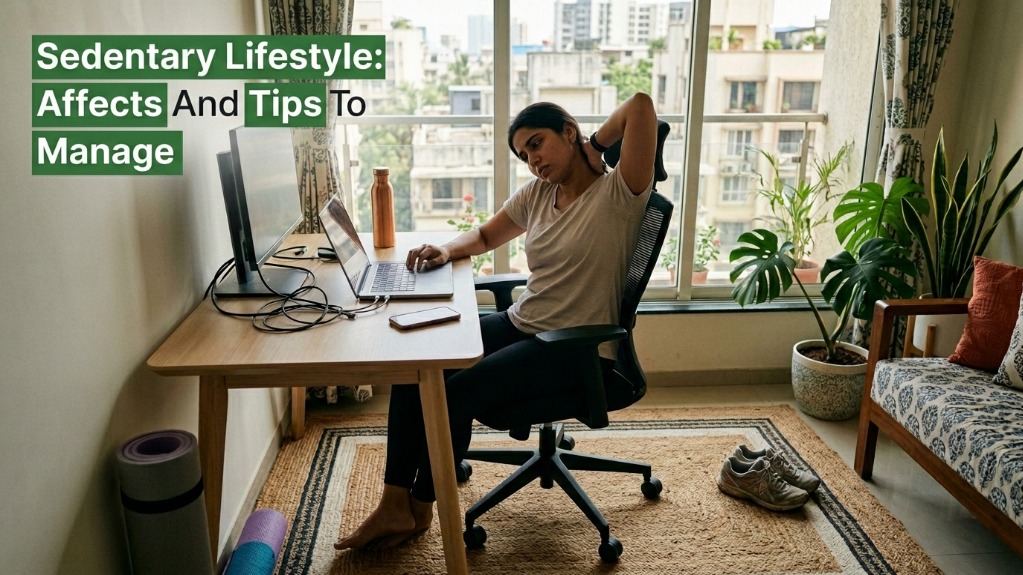
 This article on sedentary lifestyle highlights how modern routines contribute to inactivity and the bad effects of sedentary lifestyle on daily health. Whether it is long sitting hours, reduced movement, or an active sedentary lifestyle, the impact builds over time. By focusing on simple habits and consistent movement, you can reduce the risks associated with a sedentary lifestyle and improve overall well-being.




Sedentary Lifestyle: Affects And Tips To Manage
You wake up, check your phone, sit through work, scroll in between, and unwind on the couch. It feels normal. But this routine reflects a deeper issue—a sedentary lifestyle that is quietly becoming one of the most common health concerns worldwide.
In today’s digital age, a non active lifestyle can affect health more than most people realize. From office workers in the US and UK to remote professionals in India and Australia, long sitting hours and minimal physical movement are now part of everyday life. This article on sedentary lifestyle explores how this pattern develops, its real impact on the body, and how you can gradually shift toward a healthier routine.
What Is a Sedentary Lifestyle?
A sedentary lifestyle refers to a daily routine that involves little to no physical activity. It includes long hours of sitting, minimal movement, and low energy expenditure throughout the day.
People often assume that occasional workouts balance everything out. But even if you exercise for an hour, spending the rest of the day inactive still falls under a sedentary lifestyle.
This is where the concept of an active sedentary lifestyle comes in—someone may work out regularly but still sit for extended hours. While better than being completely inactive, it still carries risks if not balanced properly.
Why a Non Active Lifestyle Can Affect Health
The human body is designed to move. When movement reduces, several internal processes begin to slow down or function less efficiently.
How Inactivity Impacts the Body
- Long sitting hours reduce circulation, which can lead to stiffness, fatigue, and discomfort. Over time, this affects how energy is distributed throughout the body.
- A non active lifestyle can affect health by slowing metabolism, making it harder for the body to process food efficiently and maintain energy balance.
- Muscles, especially in the back and core, weaken gradually, leading to posture issues and physical strain.
- Mental clarity can also decline, as reduced movement affects blood flow and overall alertness.
These effects are not immediate but build up over time, making them easy to ignore until they start interfering with daily life.
Bad Effects of Sedentary Lifestyle on Daily Living
The bad effects of sedentary lifestyle go beyond physical discomfort. They impact how you feel, think, and function throughout the day.
Common Effects You May Notice
- Constant tiredness despite getting enough sleep, often due to lack of movement
- Increased stiffness in the neck, shoulders, and lower back
- Reduced focus and productivity, especially during long work hours
- Gradual weight gain due to low energy expenditure
- A sense of sluggishness or low motivation
In countries like Canada and the UK, where desk jobs and indoor routines dominate, these effects are widely reported among working adults.
Active Sedentary Lifestyle: Is It Enough?
Many people believe that going to the gym or doing a short workout cancels out long sitting hours. This leads to what is called an active sedentary lifestyle.
While it is better than being completely inactive, it is not a complete solution.
Spending 8–10 hours sitting and then exercising for 30–60 minutes still means your body remains inactive for most of the day. The goal should not just be exercise, but consistent movement throughout daily routines.
How Modern Lifestyle Encourages Sedentary Behavior
Across the US, Australia, and urban India, lifestyle patterns are increasingly built around convenience and screen-based work.
- Remote jobs reduce daily commuting and natural movement
- Food delivery and online services limit physical activity
- Entertainment is mostly screen-based, reducing outdoor engagement
- Long working hours leave little time for movement
This environment makes it easy to fall into a sedentary lifestyle without even realizing it.
Who Is Most Affected by Sedentary Lifestyle?
While anyone can be affected, working professionals are currently the most impacted group. Long desk hours, digital dependency, and high work pressure create a routine where movement becomes secondary.
Students and teenagers are also increasingly affected due to screen-based learning and gaming habits. Meanwhile, older adults may experience the effects more strongly due to reduced mobility and slower physical recovery.
However, the highest number of people experiencing the bad effects of sedentary lifestyle today are adults between 25–45, especially in urban environments.
How to Avoid Sedentary Lifestyle in Daily Routine
To avoid sedentary lifestyle, you do not need drastic changes. Small, consistent actions can make a meaningful difference.
Practical Ways to Stay Active Throughout the Day
- Take short movement breaks every 30–60 minutes instead of sitting continuously. Even standing or stretching can help reset your body.
- Incorporate walking into your routine, whether it is during calls, after meals, or as part of your daily commute.
- Use stairs instead of elevators whenever possible to naturally increase movement.
- Create a workspace that encourages posture changes, such as alternating between sitting and standing.
These habits are especially useful in fast-paced work cultures like the US and Australia, where long hours are common.
Simple Tips to Manage a Sedentary Lifestyle Effectively
Managing a sedentary lifestyle is about awareness and consistency rather than intensity.
How to Manage Sedentary Lifestyle Effectively
- Plan your day with movement in mind, not just tasks. This helps balance productivity with physical activity.
- Set reminders to move, especially if your work requires long focus periods.
- Combine social time with physical activity, such as walking meetings or outdoor conversations.
- Stay mindful of how long you remain inactive and adjust gradually instead of forcing sudden changes.
These strategies make it easier to shift from a non active lifestyle to a more balanced routine.
Challenges in Breaking a Sedentary Lifestyle
Changing habits is not always easy, especially when routines are deeply set.
- Work demands often require long hours of sitting
- Fatigue reduces motivation to stay active
- Lack of awareness about how much time is spent inactive
- Comfort and convenience make inactivity feel easier
Recognizing these challenges is the first step toward overcoming them.
Benefits of Reducing Sedentary Behavior
Moving away from a sedentary lifestyle offers noticeable advantages.
- Improved energy levels throughout the day
- Better posture and reduced physical discomfort
- Enhanced focus and productivity
- A more active and balanced daily routine
Even small improvements in movement can lead to long-term benefits.
Conclusion: Why It’s Important to Avoid Sedentary Lifestyle
A sedentary lifestyle may feel normal, but it gradually affects both physical and mental well-being. Understanding how a non active lifestyle can affect health helps you make more conscious choices in your daily routine.
You do not need extreme changes to improve your lifestyle. By taking small steps to avoid sedentary lifestyle, you can create a more balanced, active, and sustainable way of living.
Frequently Asked Questions (FAQs)
1. What is a sedentary lifestyle and why is it becoming common today?
A sedentary lifestyle refers to a routine with very little physical movement, where most of the day is spent sitting or being inactive. It has become common due to desk jobs, remote work, and screen-based habits. In many urban environments, people unknowingly follow a non active lifestyle, which gradually affects overall health and daily energy levels.
2. How does a non active lifestyle affect health over time?
A non active lifestyle can affect health by slowing metabolism, reducing circulation, and weakening muscles. Over time, it may lead to fatigue, posture issues, and low productivity. The health affect of inactivity is often gradual, which is why many people ignore early signs until discomfort becomes noticeable.
3. What are the bad effects of sedentary lifestyle on daily life?
The bad effects of sedentary lifestyle include constant tiredness, reduced focus, and physical stiffness. Many people also experience lower motivation and decreased efficiency at work. These effects build slowly, making it important to recognize early symptoms and take action.
4. Is an active sedentary lifestyle better than being completely inactive?
An active sedentary lifestyle—where you exercise but sit for long hours—offers some benefits but is not enough. While workouts help, long periods of inactivity still impact the body. The key is to combine exercise with regular movement throughout the day for better balance.
5. How can I avoid sedentary lifestyle while working long hours?
To avoid sedentary lifestyle, you can include small habits like taking short breaks, standing periodically, and walking during calls. These simple actions help reduce long sitting hours and improve overall movement without disrupting your work routine.
6. What is the best way to manage sedentary lifestyle effectively?
The best way to manage sedentary lifestyle effectively is by building consistent movement into your day. This includes planning short activity breaks, maintaining posture, and staying aware of how long you remain inactive. Small, regular changes are more sustainable than sudden intense efforts.
7. Can sedentary lifestyle affect mental focus and productivity?
Yes, a sedentary lifestyle can impact mental clarity and productivity. Reduced movement affects blood flow and energy levels, leading to slower thinking and reduced concentration. Staying active helps maintain better focus throughout the day.
8. How much movement is needed to prevent a sedentary lifestyle?
You do not need intense exercise to prevent a sedentary lifestyle. Regular light movement, such as walking, stretching, or standing breaks, can make a significant difference. The goal is to reduce long uninterrupted sitting periods rather than focusing only on workouts.
9. What are simple tips to prevent sedentary lifestyle at home?
To prevent sedentary lifestyle at home, you can create a routine that includes movement between tasks, use standing setups occasionally, and avoid prolonged screen time without breaks. These small adjustments help maintain a healthier balance in daily life.
10. Why is awareness important in managing sedentary lifestyle?
Awareness helps you recognize how much time you spend inactive. Without it, a sedentary lifestyle becomes normal and harder to change. Understanding its effects and taking small steps toward prevention can improve both physical comfort and daily performance.






.jpeg)




.jpg)
.jpg)
.jpg)
.jpg)
.jpg)
.jpg)


.jpg)
.jpg)
.jpg)
.jpg)
.jpg)
.jpg)