 Saturday, October 10, 2026
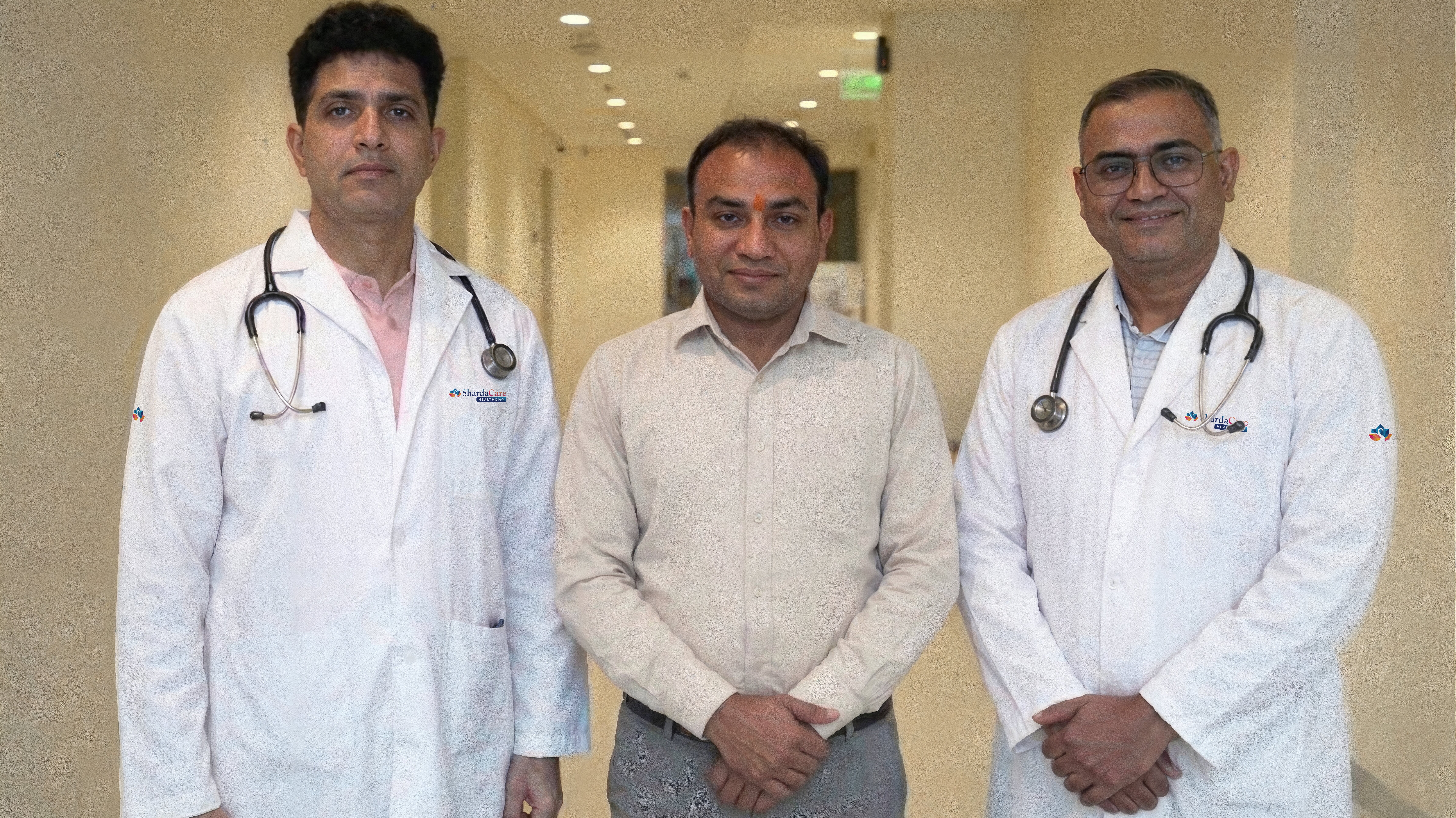
 In a significant milestone toward making advanced healthcare accessible to all, Sharda Hospital has successfully performed the first kidney transplant under the Ayushman Bharat scheme in Greater Noida. This achievement offers renewed hope to patients who are often unable to afford complex, life-saving procedures.




Greater Noida, 08/04/2026: In a significant milestone toward making advanced healthcare accessible to all, Sharda Hospital has successfully performed the first kidney transplant under the Ayushman Bharat scheme in Greater Noida. This achievement offers renewed hope to patients who are often unable to afford complex, life-saving procedures.
The recipient, a 32-year-old young male diagnosed with chronic kidney disease (CKD), had limited treatment options due to financial constraints. His condition initially developed during treatment for hypertension and progressively worsened despite regular hemodialysis, a procedure that removes waste and excess fluids when kidney function declines.
Despite undergoing dialysis through a surgically created fistula, the patient continued to experience persistent symptoms, including severe headaches. Further investigations revealed significantly elevated blood pressure and abnormal renal parameters, confirming advanced-stage CKD. With mounting health concerns and financial limitations, the patient sought support under the Ayushman Bharat scheme.
Addressing this critical need, Sharda Hospital stepped forward to bridge the gap, becoming the first in the region to successfully conduct a kidney transplant under the government initiative.
A comprehensive pre-transplant evaluation, including HLA testing, identified the patient’s father as a suitable donor. The transplant was successfully performed by the hospital’s multidisciplinary team, ensuring optimal clinical outcomes. Notably, the entire cost of the procedure—including surgery, hospitalization, and post-operative care—was fully covered under Ayushman Bharat, eliminating financial burden on the patient and his family.
Following the surgery, the patient has shown excellent recovery. His kidney function and overall physical and mental health have returned to normal levels. He is now socially and economically stable, has secured employment, and looks forward to building a fulfilling personal life.
This case highlights the critical role of timely kidney transplantation in managing end-stage renal disease and serves as a powerful example of how appropriate medical intervention, combined with financial support, can transform lives.
Dr. Bheem Raj Gupta, Director & Unit Head of Nephrology, Sharda Hospital, stated:
“While dialysis is a vital life-support system, a successful kidney transplant remains the 'gold standard' for treating end-stage renal disease, offering patients a significantly better quality of life and long-term survival. In such cases, regular dialysis impose a lot of limitations to daily life of patient and the quality of life gets compromised. By performing this transplant under the Ayushman Bharat scheme, we have not only transplanted a well functioning kidney but also restored a young man’s ability to lead a productive, dialysis-free life. We are committed to ensuring that such high-end clinical interventions are no longer a privilege of the few, but a reality for every deserving patient.”
Dr. Shilpi Tiwari, Senior Consultant, Urology, Sharda Hospital, said:
“This case is not just a clinical milestone but a testament to what accessible healthcare can achieve. We are witnessing a concerning rise in kidney disease among younger individuals. Studies suggest that nearly 17% of the population is affected by chronic kidney disease, with increasing cases among those under 40, largely driven by uncontrolled hypertension, diabetes, sedentary lifestyles, and poor dietary habits.
One of the major challenges is late diagnosis, often when patients already require dialysis or transplantation. While kidney transplants are life-saving, they are frequently inaccessible due to high costs. Through Ayushman Bharat, we were able to provide this young patient with timely, life-saving treatment without financial stress.”
Dr. Kousar Shah, Group CEO, Sharda Hospital & ShardaCare-Healthcity, added:
“At Sharda Hospital, we believe that quality healthcare should be accessible to every individual, regardless of their financial background. Successfully performing a kidney transplant under Ayushman Bharat demonstrates how public healthcare initiatives, when effectively implemented, can bridge critical gaps in access to advanced treatment. We remain committed to supporting the Government of India’s vision of inclusive and equitable healthcare.”
About Sharda Hospital
Established in 2006, Sharda Hospital is a state-of-the-art multi-super-specialty hospital located in Greater Noida, NCR. Spread across 9 acres, the hospital has over 1,200 beds and is equipped with advanced medical infrastructure and cutting-edge technology.
Accredited by NABH and NABL, Sharda Hospital offers a comprehensive range of services spanning tertiary care, super-specialties, general specialties, advanced diagnostics, and radiology. It is associated with the School of Medical Sciences and Research and has been actively serving patients under the PMJAY (Ayushman Bharat) scheme.
With a team of highly qualified medical professionals, the hospital is dedicated to delivering clinical excellence with compassion while also contributing to medical education and research in India.






.jpeg)










.jpg)
.jpg)
.jpg)
.jpg)
.jpg)
.jpg)


.jpg)