 Saturday, October 10, 2026
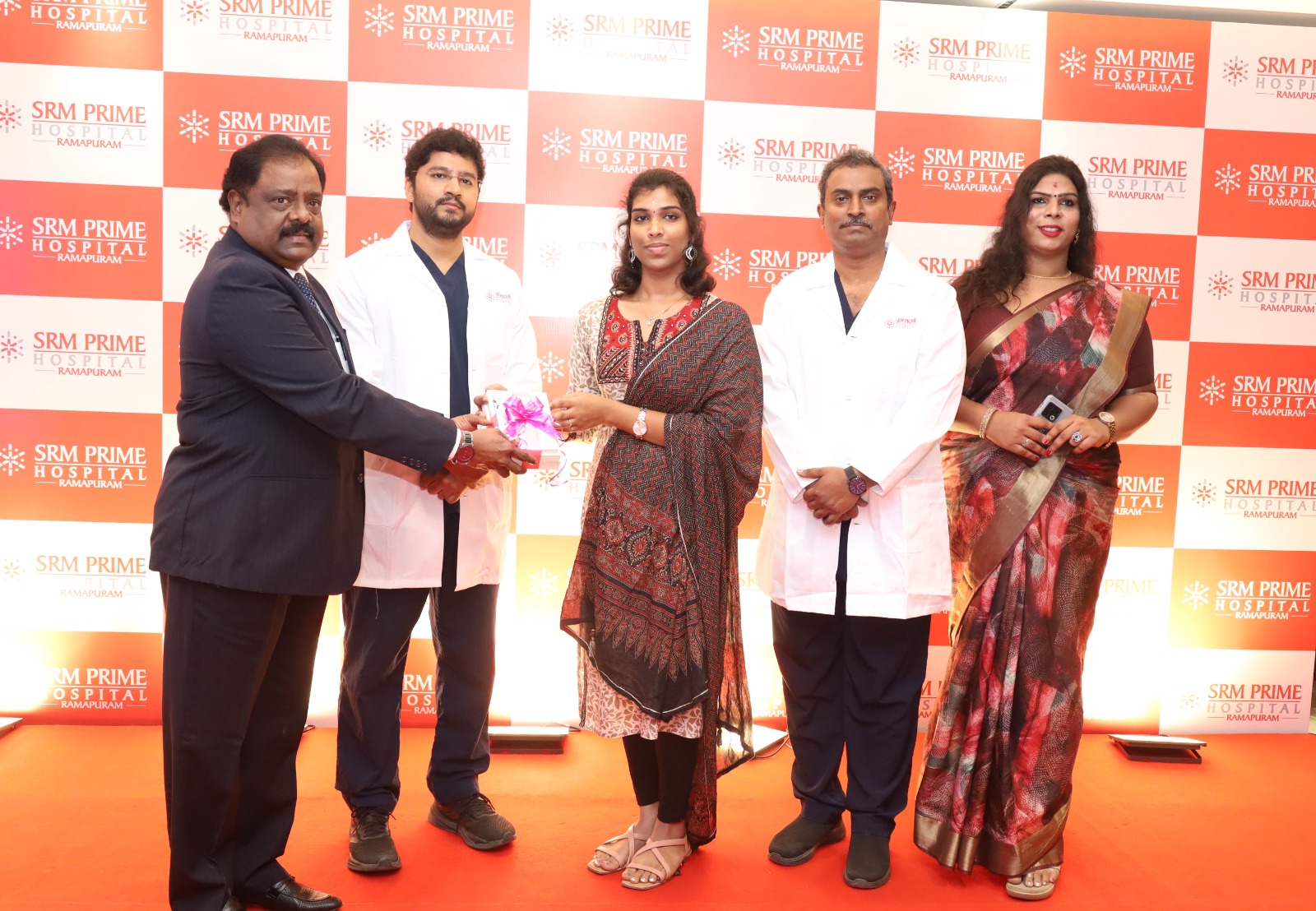
 First time in Tamil Nadu, endoscopic closure using a bovine pericardial patch and clip to sealed the tract communicating large intestine with newly constructed vagina after gender affirming surgery.




Chennai, November 25, 2025: In a first for Tamil Nadu, SRM Prime Hospital has successfully used a bovine pericardial patch to close a neovaginal fistula - an abnormal connection between the rectum and neovagina - that was causing the passage of flatus and faecal matter through the neovagina of a 22-year-old transgender youth who had recently undergone male-to-female gender-affirming surgery elsewhere. The minimally invasive, endoscopic day-care procedure helped avert the need for major open-abdominal surgery for the patient from a poor economic background.
This procedure was performed by Dr. Arulprakash S., Clinical Lead and Senior Consultant, and Dr. Tarun J. George, Senior Consultant, Medical Gastroenterology and Hepatology, under the guidance of Dr. C. Paul Dilip Kumar, Director–Medical Services, SRM Prime Hospital.
In his comments, Dr. Arulprakash said, “The patient had undergone gender-affirming surgery at a hospital in another city a few months ago. Soon after the procedure, she developed a recto-neovaginal fistula, an abnormal connection between the rectum, the last part of the large intestine, and the neovagina created during surgery. As a result, flatus and faecal matter began passing through the neovagina. Such fistulas in transgender patients are rare complications of gender-affirming surgery, occurring in only about 1% of cases. An endoscopic procedure was attempted at the same hospital; a clip was used. But the relief was only temporary, and the condition recurred after the clip placement. This was a rare and challenging clinical situation.”
He added: “At that stage, an open abdominal surgery was considered the only option, which would have meant higher costs and a prolonged hospital stay. However, when she came to us, we opted for an endoscopic closure of the fistula using a novel bovine pericardial patch - the first such procedure in the state. Using bovine pericardial patch to support and close the fistula was a novel idea. Here the patched served as a cellular scaffold to bridge tissues in surgeries. Although a few similar attempts to close recto-neovaginal fistulas with this bioprosthesis have been made in other parts of the country, these cases have not been formally documented or published so far. The procedure required two endoscopists working simultaneously - one visualising the fistula from each side and the other helping position the patch while the clip was placed. Such advanced endoscopic capability is not available in many hospitals. With this approach, we were able to completely avoid a major surgery and still offer the patient a safe, day-care procedure. She is recovering well and is very satisfied with the outcome.”
Providing more details about the procedure, Dr. Tarun J. George said, “We performed a contrast CT scan to confirm the location and size of the fistula opening and evaluated various endoscopic management options before deciding on this approach. We first used argon plasma coagulation over the fistula opening - a method that uses gentle heat delivered through gas to prepare the area without direct contact. This was done to roughen the lining of surface that was to be closed. We then placed the bovine pericardial patch inside the tract and finally deployed a large 14 mm over-the-scope clip to seal the opening and anchor the patch securely, successfully closing the fistula. This minimally invasive procedure helped the patient avoid a major, complex surgery, along with a prolonged hospital stay and higher treatment costs. She was discharged the same day and walked out of the hospital. She only requires one week of rest at home, five days of antibiotics, and stool softeners for about three months.”





.jpeg)










.jpg)
.jpg)
.jpg)
.jpg)
.jpg)
.jpg)


.jpg)