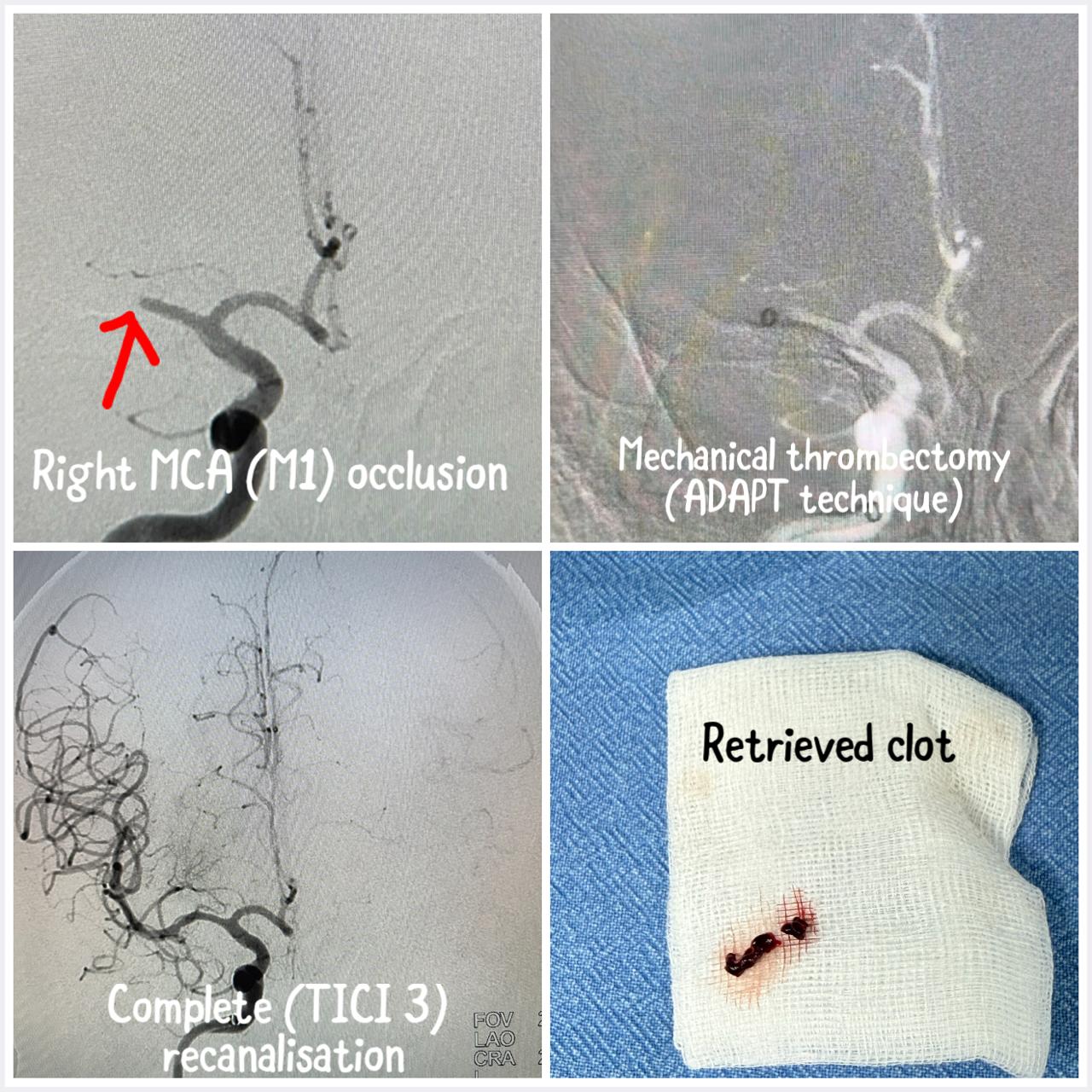
Stroke Mechanical Thrombectomy Completed in Just 9 Minutes!

▴ Blockage in a major brain blood vessel of a 60-year-old man
Mechanical thrombectomy performed by KIMS Icon Hospital doctors.

Visakhapatnam, November 22, 2025: Doctors at KIMS Icon Hospital, Visakhapatnam, set a remarkable record by successfully treating a stroke patient in just 9 minutes. The hospital’s Head of Neuro and Vascular Interventional Radiology, Dr. Venkatesh Pothula, shared the details.


“A 60-year-old man from the city suddenly developed paralysis and was rushed to the hospital. A brain scan revealed that a major blood vessel was blocked due to a clot. Our stroke team immediately began treatment. To remove the clot, we performed a mechanical thrombectomy. In record time within just 9 minutes normal blood flow to the brain was restored. The patient made a full recovery within hours after the procedure. Restoring blood flow quickly greatly increases the chances of recovery,” explained Dr. Pothula.


“Mechanical thrombectomy is a race against time. Every minute of delay during a stroke leads to the death of nearly 2 million brain cells. Completing the procedure so quickly highlights the hospital’s advanced technology, the expertise of our neuro-intervention team, and our rapid-response systems.”


Stroke is one of the leading causes of death and disability worldwide. Symptoms may include paralysis on one side, facial drooping, slurred speech, or blurred vision. If any of these signs appear, one must rush to the hospital without a moment’s delay. Treatments like thrombolysis or mechanical thrombectomy can save lives and significantly reduce disability,” Dr. Venkatesh Pothula added.


Tags : #

About the Author


Team Medicircle

Related Stories

Loading Please wait...

-Advertisements-


Trending Now

Smart Operating Rooms: The Future of Hospital OTNovember 21, 2026
Smartphone Diagnostics: Phones as Medical Screening ToolsNovember 21, 2026
AI-Enabled Endoscopy: Can It Detect More Than the Human Eye?November 20, 2026
Hospital-at-Home in India: Can Technology Deliver Safe Care?November 20, 2026
Digital Identity Fraud in Healthcare: What India Must KnowNovember 18, 2026
Wearables in Clinical Care: When Should Doctors Trust the Data?November 18, 2026
Cybersecurity for Medical Startups: What Founders MissNovember 18, 2026
Remote Patient Monitoring: The Next Phase of Virtual CareNovember 18, 2026
Digital Health Wallets: Future of Medical Records in IndiaNovember 17, 2026
How Hospitals Can Prepare for a Transparent Healthcare MarketNovember 17, 2026
Childhood Nutrition: Understanding Micronutrient Gaps Beyond CaloriesNovember 16, 2026
Anaemia in Adolescent Girls: Connecting Prevention, Testing and Nutrition SupportNovember 16, 2026
Health Information Exchanges in India: Are Medical Records Finally Going Portable?November 16, 2026
Hospital Accreditation in 2026: What Is Changing Beyond the Checklist?November 16, 2026
Digital Insurance Platforms and India's Health Coverage FutureNovember 14, 2026
ABDM 2.0: India's Digital Health Ecosystem FutureNovember 14, 2026
Vaccine Cold-Chain Management: Protecting Immunisation Quality From Storage to DeliveryNovember 14, 2026
Foodborne Illness Surveillance: How Public Health Systems Track RisksNovember 14, 2026
Interoperability in Indian Healthcare: Why Patient Data Still StrugglesNovember 13, 2026