Tuesday, October 06, 2026
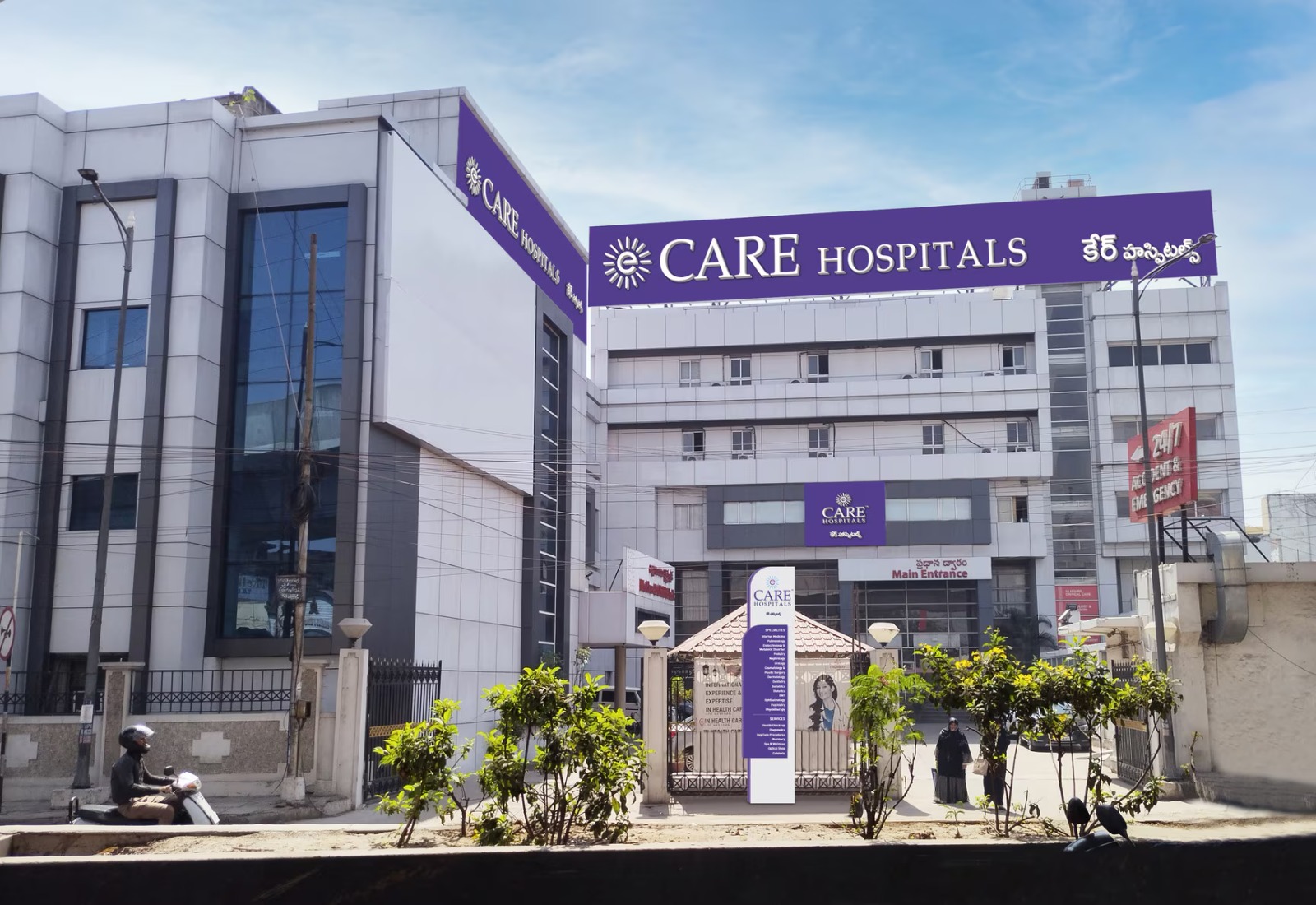
 Surgeons at CARE Hospitals, Malakpet, successfully performed a high-risk Aortic Valve Replacement (AVR) with Coronary Artery Bypass Grafting (CABG) on a 69-year-old male patient, Mr. Yellaiah from Nalgonda, who was critically ill with multiple cardiac and systemic complications.




Hyderabad, October 25, 2025: Surgeons at CARE Hospitals, Malakpet, successfully performed a high-risk Aortic Valve Replacement (AVR) with Coronary Artery Bypass Grafting (CABG) on a 69-year-old male patient, Mr. Yellaiah from Nalgonda, who was critically ill with multiple cardiac and systemic complications. The complex surgery was performed under challenging conditions and resulted in a remarkable recovery, underscoring CARE Hospitals’ excellence in advanced cardiac care and multidisciplinary teamwork.
Mr. Yellaiah was admitted to CARE Hospitals with high-grade fever for over 10 days, severe shortness of breath, and borderline vitals. Detailed evaluation revealed a Bicuspid Aortic Valve with severe stenosis, global hypokinesia of the left ventricle with an ejection fraction of 20%, and vegetations over the aortic leaflet, indicating Infective Endocarditis. He was diagnosed as a case of Infective Endocarditis with Low Flow, Low Gradient (LF-LG) Senile Aortic Stenosis, along with Coronary Artery Disease (CAD). Initially, the medical team stabilized him with antibiotics, ionotropic support, and other supportive medications. However, despite aggressive management, his condition continued to worsen, resulting in liver congestion, acute kidney injury (AKI), and thrombocytopenia. Considering the high risk and progressive deterioration, the cardiac surgical team decided to proceed with AVR using a bioprosthetic valve combined with CABG.
After explaining the risks and possible outcomes to the family, the surgery was performed successfully. The perioperative phase required meticulous management, including ionotropic and ventilatory support and transfusions of blood and single donor platelets (SDPs). Postoperatively, the patient’s fever subsided, and both hepatic and renal functions gradually returned to normal. He was discharged in stable condition on the tenth postoperative day.
Speaking on the complex surgery, Dr. Sudheer Gandrakota, Senior Cardiothoracic & Vascular Surgeon, CARE Hospitals, Malakpet, said, “Performing AVR with CABG in such a critically ill patient with active infection and multi-organ dysfunction is extremely challenging. This successful recovery reflects the combined efforts of our surgical, anesthetic, and critical care teams, who worked tirelessly to ensure the best possible outcome for the patient.”
Expressing his appreciation for the team’s efforts, Mr. Praveen Kumar Edla, HCOO, CARE Hospitals, Malakpet, said, “This case exemplifies the advanced clinical capabilities and teamwork that define CARE Hospitals. Our doctors and clinical teams consistently go beyond conventional limits to save lives in even the most critical situations. We are proud to offer such high-end cardiac care at our Malakpet unit, ensuring that patients receive timely, expert intervention supported by world-class infrastructure and compassionate care.”
The successful recovery of this high-risk patient once again reinforces CARE Hospitals’ dedication to providing world-class cardiac care through a patient-centric approach, advanced technology, and the combined expertise of its multidisciplinary teams.





.jpeg)
.jpg)
.jpg)
.jpg)
.jpg)
.jpg)
.jpg)


.jpg)
.jpg)
.jpg)
.jpg)
.jpg)
.jpg)