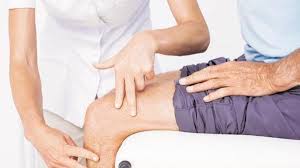
The ceiling price of orthopaedic knee implants to be monitored such that the price increase of knee implants does not increase beyond 10% in a given year.


Deprecated: strlen(): Passing null to parameter #1 ($string) of type string is deprecated in /home/medicircle/public_html/script_newsdetails.php on line 75
▴
Accordingly, the cost of knee implants was reduced significantly, upto 69%, resulting in a notional saving of Rs.1500 crore per annum to the consumers.


The NPPA notified the ceiling price of orthopaedic knee implants on 16th August, 2017 by invoking extraordinary powers, in public interest, under Para 19 of Drugs Prices Control Order (DPCO) 2013, for a period of one year. Subsequently, vide notification dated 13th August, 2018, the applicability of ceiling prices fixed for orthopaedic knee implants was extended for another one year,  up to 15th August, 2019.

Accordingly, the cost of knee implants was reduced significantly, upto 69%, resulting in a notional saving of Rs.1500 crore per annum to the consumers.

The NPPA, in its meeting held on 8th Aug, 2019, reviewed the matter. It was noted that there has been an increased access due to knee implants becoming affordable. As per the data submitted by manufacturers and importers, an increase of 30% in the sales of knee implants has been reported during the period of July, 2018 to June, 2019.

The knee implant is a non-scheduled medical device / drug for which DPCO, 2013 allows an annual increase upto 10% of MRP. However, this was not permitted in 2018.

Though the industry has requested for a 20% (10% for the year 2018 and 10% for the year 2019) increase in the price of knee implants, it was decided to further monitor the price increase of knee implants as per para 20 of the DPCO, 2013 that restricts price increase beyond 10% in a given year. This shall be subject to a review after one year.


 

Tags : #ceiling #price #orthopaedic #kneeimplants #medicircle

Related Stories

Loading Please wait...

-Advertisements-


Trending Now

The Value of Risk Communication in Public HealthOctober 08, 2026
What Makes a Reliable Health Screening Programme?October 08, 2026
How Language Access Can Improve Patient Communication in Indian HealthcareOctober 07, 2026
Why Health Literacy Matters in Preventive HealthcareOctober 07, 2026
Improving Follow-Up After Diagnostic Testing: Where Systems Commonly Break DownOctober 07, 2026
How Community Health Workers Support Preventive Care DeliveryOctober 07, 2026
AI in India's Emergency Departments: Reducing Diagnostic DelaysOctober 06, 2026
AI and Patient Consent in India: Who Is Responsible?October 06, 2026
Wearable Technology in Pregnancy: Benefits and LimitsOctober 06, 2026
Remote Monitoring for High-Risk Pregnancies in IndiaOctober 06, 2026
Fortis Escorts Faridabad Launches ‘Sehat Express’ Mobile Bus for Accessible Doorstep Cancer Screening in association with Faridabad Industries Association Charitable Society and Rotary Club FaridabadOctober 05, 2026
Advanced Thrombectomy Saves 60-Year-Old Woman After Severe Heart Attack at KIMS SaveeraOctober 05, 2026
Constipation, Bloating and Long Sitting Hours: Doctors at RG Hospitals Delhi Warn Urban Professionals Not to Ignore Gut ProblemsOctober 05, 2026
Fermenta – Centre of Excellence for Food Fortification Inaugurated at NIFTEM-T, ThanjavurOctober 05, 2026
Alzheimer’s Dementia: Recognising the Signs, Diagnosing Earlier and Changing the Future of Brain HealthOctober 05, 2026
Man Matters Hairfall Case Study 2026: 7 Lakh+ Consultations Reveal How Hair Loss Changes With AgeOctober 05, 2026
Medication Reconciliation: A System-Level Step for Safer Transitions of CareOctober 05, 2026
The Role of Clinical Pharmacists in Safer Medication UseOctober 05, 2026
Nanavati Max Hospital Hosts Max Cancer Congress 2026, Bringing Together Oncology Experts to Explore the Future of Cancer Care October 01, 2026