 Thursday, November 19, 2026
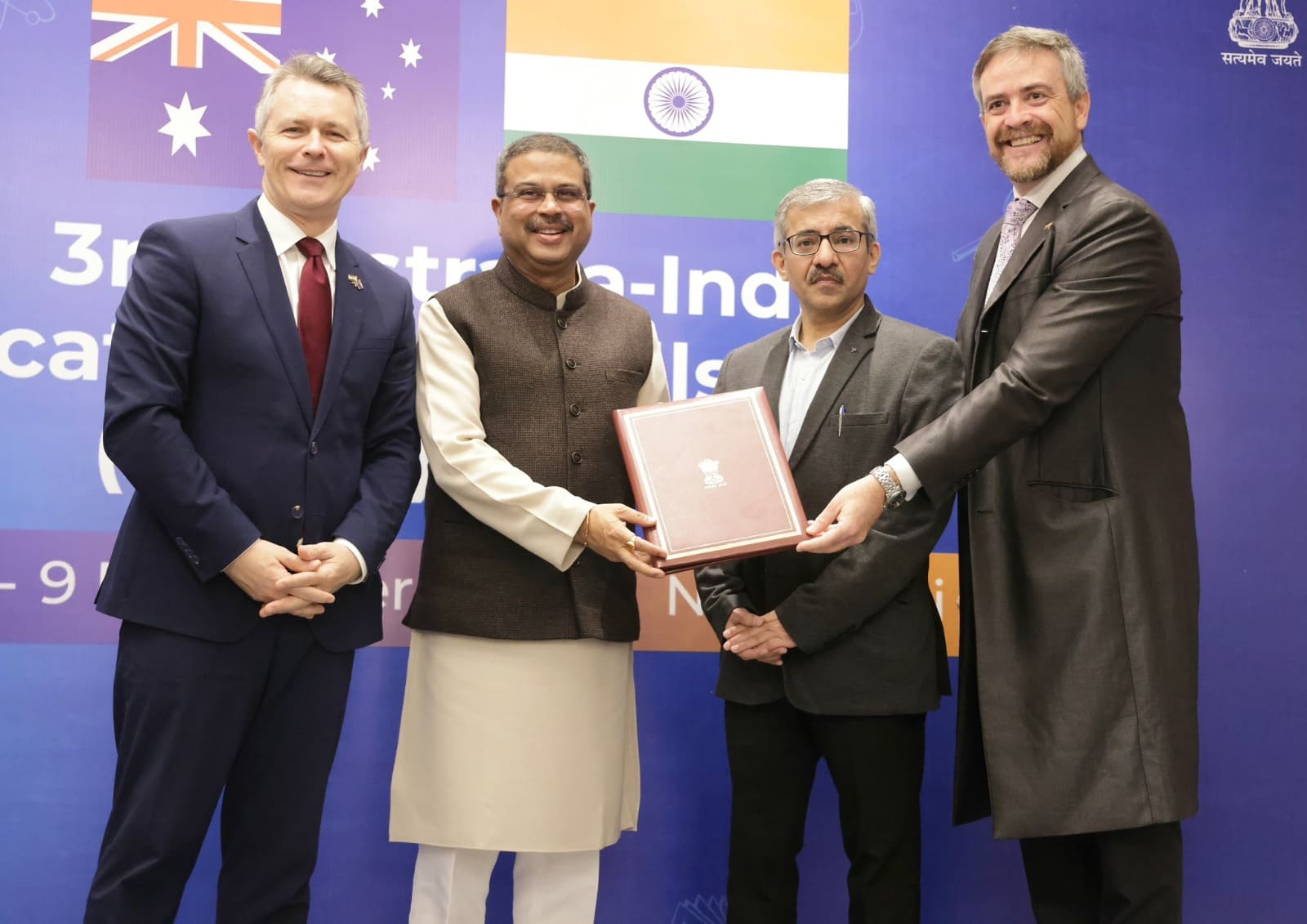
 The new UNSW campus in Bengaluru will enable Indian students to obtain a degree from a global top 20 university on home soil.





New Delhi, December 8th, 2025: UNSW Sydney received approval to open a campus in India today. The country’s University Grants Commission (UGC) issued the University a ‘Letter of Intent’ during a ceremony in New Delhi, hosted by the Indian Education Minister, Shri Dharmendra Pradhan and attended by Australia’s federal Minister for Education, the Hon. Jason Clare.
UNSW Bengaluru will open in August 2026, enabling Indian students to earn a degree from a global top 20 university without leaving the country. Courses being offered will mirror existing UNSW undergraduate degrees in business, media, computer and data science and a postgraduate degree in cybersecurity. Rigorous quality assurance will be implemented through joint governance structures and overseen by UNSW’s Academic Board.
Australia’s Minister for Education, the Hon. Jason Clare, said, “Education is one of Australia’s biggest exports. And it is not a one-way street. It’s not just about students coming here. It’s also Australian universities coming to them. This is a great example of that. UNSW coming to India will create the highest ranked university in the country. It will open up new opportunities for young people in India and bring our two countries even closer together.”
India’s Minister of Education Dharmendra Pradhan welcomed the announcement of UNSW’s new campus and said:
“I am very happy to welcome UNSW to India; to watch the emergence of new connections between Indian and Australian students, academics and industry, to help realise India’s vision to be a global destination for education, knowledge creation and innovation from which all of society can benefit.”
UNSW Sydney Vice Chancellor and President, Professor Attila Brungs, said the Bengaluru campus is a key step in delivering UNSW’s 2035 Strategy, Progress for All, which includes a commitment to global impact in key regions through transnational education, research excellence, student success and societal benefit.
“Education is such a powerful force for social progress. That is why I am so proud to be establishing a campus in India. UNSW Bengaluru will create opportunities in India for access to world-class education and open pathways for talented students who might wish to remain closer to home, and empower them as the next generation of changemakers,” Prof. Brungs said. “It will enable Indian students for the first time to study at a global top 20 university campus in India.”
“UNSW’s international presence thrives best where there are shared values and collaboration. We are delighted to be working closely with the Government of India to support its National Education Policy 2020 priorities around internationalisation, research excellence and improved graduate outcomes.”
“Indian students and scholars have enriched UNSW’s classrooms, laboratories and partnerships in Australia for more than 70 years. It is a privilege for UNSW to now come to them, supporting them in their own country,” Prof. Brungs said.
The Bengaluru Campus is a continuation of UNSW’s longstanding engagement with leading Indian institutions and government departments, including the Indian Institute of Management Bangalore, The National Law School of India and the Indian Institute of Science. Ministry of Road, Transport & Highways; Ministry of Steel; and Karnataka Renewable Energy Development Ltd.
By bringing UNSW to Bengaluru – the heart of India’s innovation ecosystem – the campus will accelerate the development of high-skilled talent and cutting-edge research, which are both central to India’s knowledge-economy goals.
UNSW was recently recognised as the most entrepreneurial university in the Asia–Pacific and is also consistently ranked the ‘most employable’ university in Australia, underscoring the exceptional career outcomes and employer demand for its graduates.





-23-300x250.png)





















