 Saturday, November 21, 2026
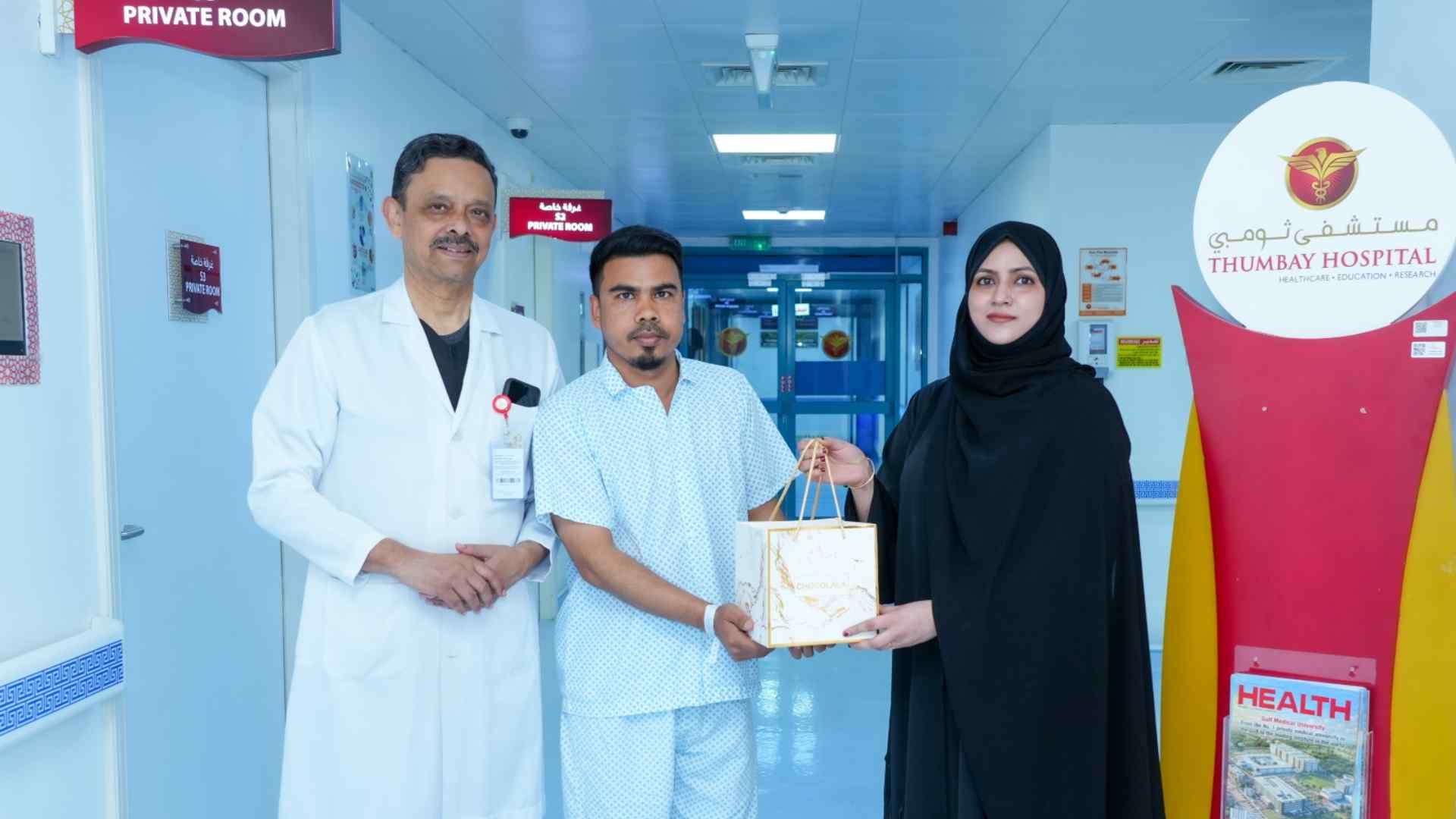
 Patient walks out of recovery pain-free after a 14-month battle with severe sciatica, marking a new chapter in minimally invasive spine surgery for the region.





Fujairah, UAE — Thumbay Hospital Fujairah has successfully completed the first reported Awake Percutaneous Transforaminal Endoscopic Discectomy and Lumbar Interbody Fusion in the Northern Emirates, using an advanced expandable titanium cage. The image-guided, minimally invasive procedure was performed on a 40-year-old patient through a 16 mm incision, while the patient remained fully conscious throughout the surgery.
The patient had been living with severe sciatica caused by an L4-L5 disc herniation for the past 14 months, with persistent pain and no meaningful relief from conservative treatment. Within minutes of the procedure ending, he was pain-free and mobilising on his own in the post-operative recovery area.
Here is what makes this case different. The entire surgery was carried out while the patient was awake. This allowed the surgical team to assess his neurological responses in real time, reduce the physiological stress that comes with general anaesthesia, and considerably shorten his recovery. The 16 mm scar, paired with same-day mobility, reflects how far minimally invasive spine surgery has come.
Awake neurosurgical techniques are reshaping what complex spine work looks like by offering shorter hospital stays,lower complication risks, and a faster return to normal life. For patients across the Northern Emirates, it means access to advanced spine care without the long recovery and uncertainty that traditionally came with open fusion surgery.
The procedure was led by Dr. Hillol Kanti Pal, Consultant Neurosurgeon at Thumbay Hospital Fujairah, supported by the anaesthesia team of Dr. Azharuddin and Dr. Ravindra. Their combined expertise made a highly technical surgery feel smooth, safe, and comfortable for the patient.
“What stood out in this case was not just the technology, but the patient himself. He stayed awake throughout the procedure, talking with us as we worked, telling us how his leg felt in real time. That kind of feedback is invaluable in spine surgery. He walked out of recovery free of the pain he had carried for over a year. For any spine surgeon, that is the outcome you work towards.”
— Dr. Hillol Kanti Pal, Consultant Neurosurgeon, Thumbay Hospital Fujairah
“Our mission has always been simple. Bring world-class healthcare closer to the people who need it, so families across the Northern Emirates do not have to travel for advanced treatment. This procedure is proof that we are doing exactly that. We will keep investing in the techniques, talent, and technology that change what is possible for patients in this region.”
— Mr. Akbar Moideen Thumbay, Vice President, Healthcare Division, Thumbay Group
A new chapter for spine care in Fujairah
This landmark achievement opens a new chapter in advanced minimally invasive spine surgery at Thumbay Hospital Fujairah. It reinforces the hospital's wider commitment to bringing cutting-edge medical solutions to the Northern Emirates, so patients in Fujairah and beyond have access to the same standard of care offered in leading global centres.
Patients suffering from chronic back pain, sciatica, or disc-related conditions are encouraged to consult a qualified spine specialist to explore whether minimally invasive options are right for them.





-23-300x250.png)




















