 Wednesday, November 18, 2026
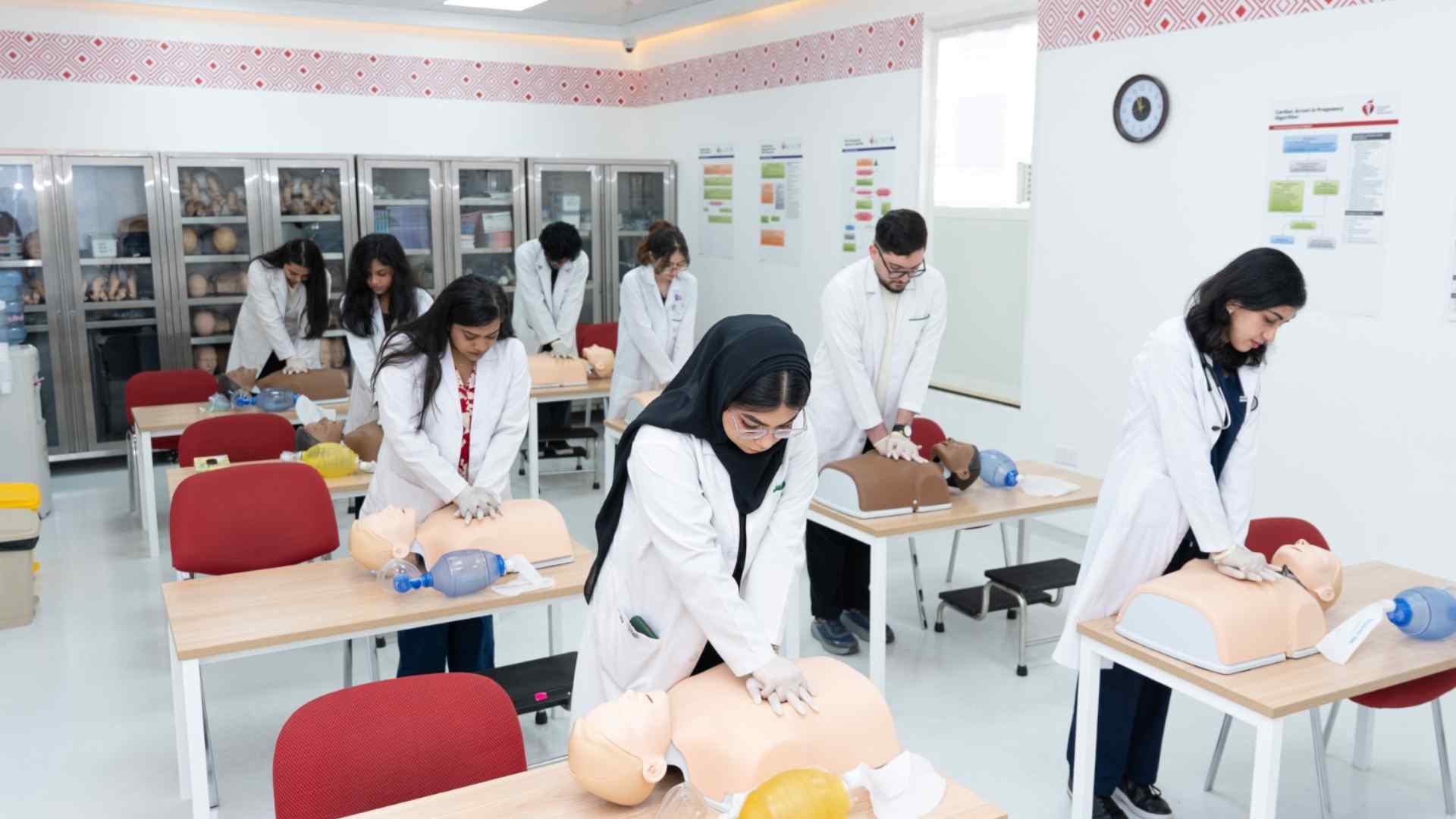
 Fees start from approximately ₹16 lakh per year, while eligible graduates receive priority consideration for the newly launched Thumbay–UMFST International Residency Pathway Program.





AJMAN, UAE — Gulf Medical University (GMU), the flagship institution of Thumbay Group, has announced that admissions will close soon for the upcoming 2026 intake of the Thumbay International Pathway Program, a structured route to an internationally awarded medical degree.
To make medical education more accessible, Annual fees start from approximately ₹16 lakh, with flexible instalment plans available to enrolled students.
Study in the UAE, Complete the Medical Degree Abroad
Students complete the first three years of the program at GMU in Ajman, UAE, earning the CAA-accredited Higher Diploma in Pre-Clinical Sciences (HDPCS). After successfully meeting the prescribed academic and progression requirements, they transfer to a selected partner university without an additional entrance examination for three years of clinical education. The final medical degree is awarded by the respective partner university.
Students can choose from an expanding network of international clinical destinations in Poland, Romania, Malta, Italy, the United Kingdom, Malaysia, Ghana and Uzbekistan, enabling them to select a pathway aligned with their career and licensing objectives.
Priority Route to Residency Training in Romania
Students pursuing the Thumbay International Pathway MD Program will also benefit from the newly launched Thumbay–UMFST International Residency Pathway, developed in collaboration with the George Emil Palade University of Medicine, Pharmacy, Science and Technology of Târgu Mureș (UMFST), a leading Romanian public university.
Eligible MD graduates of the Thumbay International Pathway Program will receive priority consideration for this residency pathway, creating a guided route from pre-clinical education in Ajman to medical specialisation in Europe.
The pathway covers 49 medical specialties recognised under the Romanian and European healthcare systems, including:
- 28 clinical specialties
- 13 surgical specialties
- 8 paraclinical specialties
Nearly a Decade of Proven Progress
Launched in 2017 with 27 students, the Thumbay International Pathway Program now has 335 students from more than 45 nationalities enrolled across the three pre-clinical years at GMU.
The Poland pathway, offered in partnership with the Medical University of Lublin, has already produced 90 medical graduates, while its tenth student cohort is currently progressing through the program.
Key Program Advantages
- Fees starting at approximately ₹16 lakh per year
- Flexible instalment payment options
- CAA-accredited HDPCS qualification after the first three years
- Structured progression to international partner universities
- No additional entrance examination upon progression
- Multiple international clinical study destinations
- Priority consideration for the Thumbay–UMFST International Residency Pathway
- Advanced simulation facilities and early clinical exposure
- Integrated academic health system and multicultural learning environment
Admissions Closing Soon
Applications for the upcoming intake are currently open. Students and parents can obtain information about admissions, fees, instalment plans and available destinations by visiting gmu.ac.ae or contacting the admissions team at admissions@gmu.ac.ae.
For enquiries regarding the Romania residency pathway, contact pathway@gmu.ac.ae.
Progression to partner universities and residency training is subject to successful completion of academic requirements, eligibility criteria, regulatory approvals, available capacity and the admission policies of the respective institutions.





-23-300x250.png)





















