Tuesday, October 06, 2026
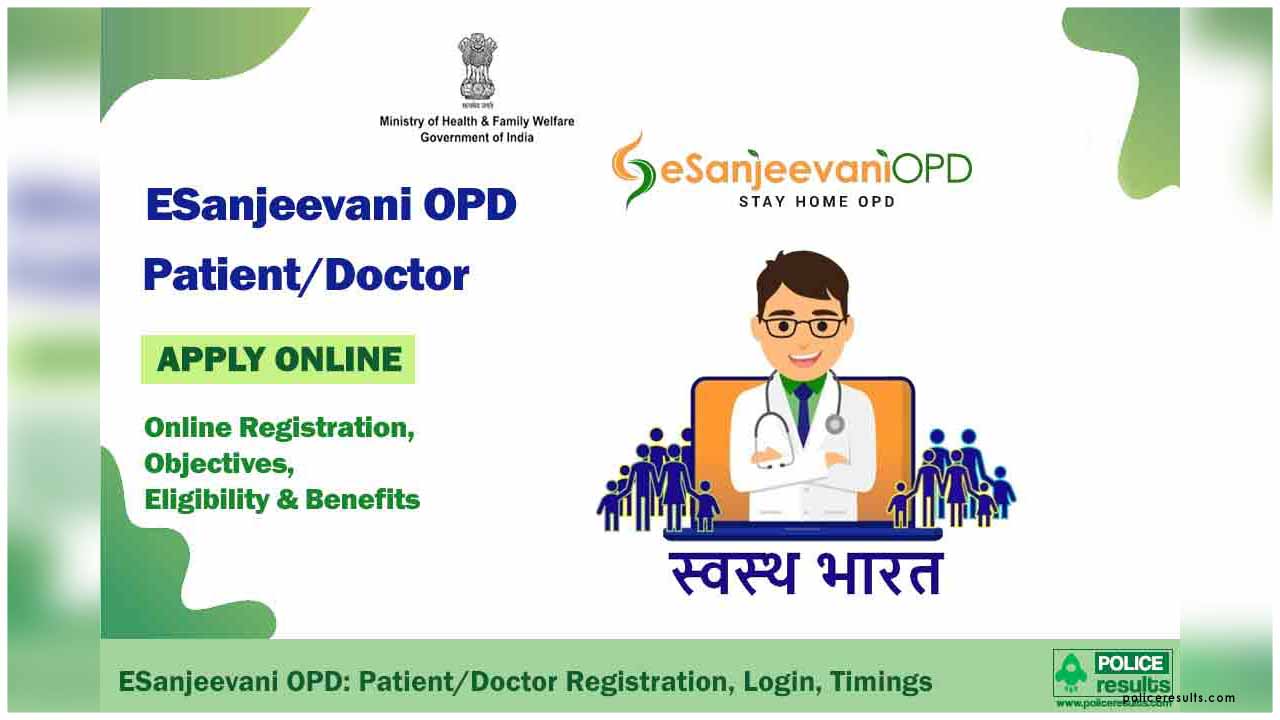
 Over 8500 consultations registered per day on eSanjeevani





eSanjeevani, Ministry of Health and Family Welfare’s telemedicine initiative has completed 6 Lakh tele consultations. It took only 15 days to complete the last one lakh consultations. In what can be seen as a big push for the ‘Digital India’ initiative of the Prime Minister, the eSanjeevani digital platform has proved its usefulness and easy access for the caregivers and the medical community, and those seeking healthcare services in the times of COVID. States like Tamil Nadu, Kerala and Gujarat run eSanjeevani OPD for 12 hours a day and 7 days a week. It is a testimony to the fact that eSanjeevani is gradually gaining traction with patients and doctors.
eSanjeevani is accessible to the population in 27 States/UTs across India. The digital platform provides eHealth services through more than 6000 doctors who man 217 online OPDs in patient to doctor telemedicine model i.e. eSanjeevaniOPD.
States are also extending the reach of specialized health services to the people in smaller towns and rural areas through eSanjeevani (AB-HWC) that is operational at around 4000 Health & Wellness Centres linked with over 175 hubs (set up at District Hospitals and Medical colleges). Over 20,000 clinicians and health workers have been on eSanjeevani’s two variants. Currently, eSanjeevani is recording up to over 8500 consultations per day.
A customized eSanjeevani OPD was rolled out by the Union Health Ministry on 13th of April 2020 during the first lockdown when the OPDs across the country were shutdown whereas eSanjeevani (AB-HWC) was launched by Ministry of Health and Family Welfare in November 2019. It will be implemented at 1,55,000 Health and Wellness Centres under Govt. of India’s Ayushman Bharat Scheme in ‘Hub & Spoke’ model by December 2022. eSanjeevani AB-HWC is functional at around 4,000 Health and Wellness Centerspresently and on boarding of an equal number of HWCs is underway.
The top ten States which have registered the highest consultations through eSanjeevani and eSanjeevani OPD platforms are Tamil Nadu (203286), Uttar Pradesh (168553), Kerala (48081), Himachal Pradesh (41607), Andhra Pradesh (31749), Madhya Pradesh (21580), Uttarakhand (21451), Gujarat (16346), Karnataka (13703), and Maharashtra (8747). Health Ministry is complementing efforts of State Governments by establishing a robust digital health ecosystem and resources (human and infrastructural) to boost the adoption of eSanjeevani. The Ministry has roped in Mohali branch of the Centre for Development of Advanced Computing (CDAC) for providing end-to-end technical services like development, implementation, operations, and technical support including training of health personnel.
Considering the usefulness and ease of use of eSanjeevani for extending the reach of health services, States are actively considering using eSanjeevaniOPD for inmates of old-age homes and prisons.






.jpeg)
.jpg)
.jpg)
.jpg)
.jpg)
.jpg)
.jpg)


.jpg)
.jpg)
.jpg)
.jpg)
.jpg)
.jpg)