 Wednesday, November 18, 2026
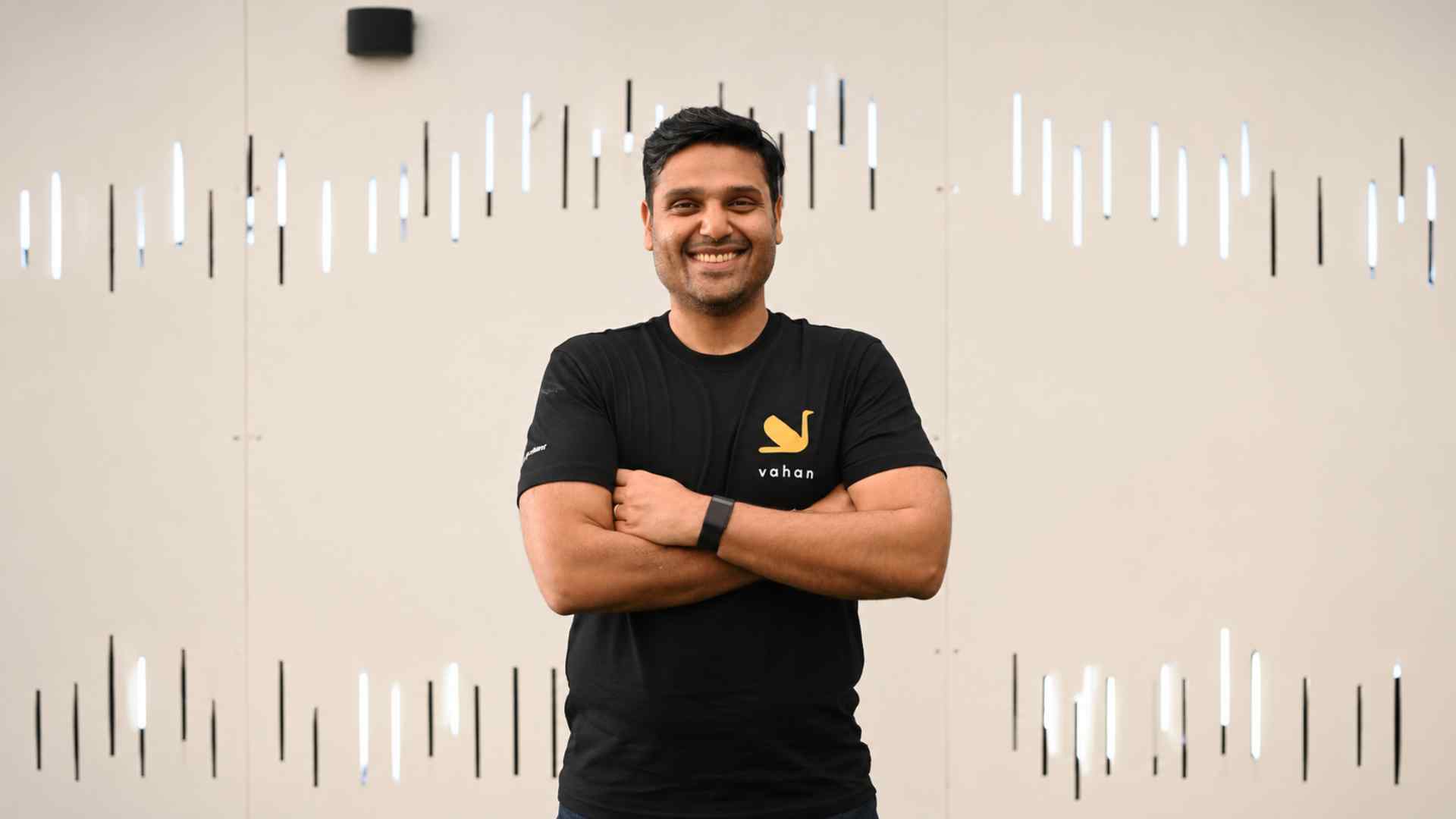
 Vahan.ai's multilingual AI recruiter developed in collaboration with NVIDIA technical experts to optimize NVIDIA Nemotron 3 Nano.





Vahan.ai, India's leading AI-powered recruitment platform for blue-collar and frontline workers, today announced a significant milestone in its AI journey. The company has fine-tuned the NVIDIA Nemotron 3 Nano open model for its AI recruiter, working closely with NVIDIA technical experts through the NVIDIA Inception program, strengthening multilingual hiring capabilities while enabling faster, more seamless candidate interactions.
Vahan.ai's platform has enabled over 1.5 million job placements across 920+ cities in India, working with leading employers across quick commerce, food delivery, mobility, warehousing and manufacturing. To date, the platform has connected nearly 50 million Indians with employment opportunities.
At the heart of the platform is a voice-based AI recruiter capable of conducting human-like conversations with job seekers in English and Hindi over a simple phone call. The AI streamlines the hiring journey—from job discovery and application to interview scheduling—overcoming barriers related to digital literacy, language and infrastructure. Managing thousands of simultaneous conversations every day, Vahan.ai plans to further expand the platform to support eight additional Indian languages, making employment more accessible to first-time internet users and candidates across the country.
India's blue-collar recruitment landscape presents one of the most complex conversational AI challenges due to its linguistic diversity, regional dialects and varying employment contexts. To address this, Vahan.ai fine-tuned NVIDIA Nemotron 3 Nano using its proprietary production datasets of real, human-corrected multilingual recruitment conversations to optimize the model for recruitment-specific workflows and function execution.
The fine-tuning delivered significant improvements in multilingual recruitment performance. Benchmarking against multiple leading open-source and proprietary models across seven recruitment-critical parameters—including response correctness, function calling, human-like interactions, language matching and tool argument accuracy—showed that the model consistently outperformed both the base Nemotron model and the previous cloud-hosted 120-billion-parameter model being used by Vahan.ai. It also demonstrated stronger performance on unseen recruitment conversations, highlighting its ability to generalize beyond its training data while maintaining high conversational quality.
The optimized deployment also translated these gains into production efficiency, delivering nearly 6.7x faster time-to-first response and over 3x lower average end-to-end response latency while substantially reducing inference costs. Building on this milestone, Vahan.ai plans to develop specialized Small Language Models (SLMs) for recruitment and has established a continuous evaluation and fine-tuning pipeline that uses production conversations to continually improve model performance over time.
"At Vahan.ai, we're focused on building AI that is purpose-built for recruitment rather than relying solely on general-purpose language models," said Madhav Krishna, Founder and CEO of Vahan.ai. "Working closely with the NVIDIA team in India has enabled us to optimize NVIDIA Nemotron 3 Nano for one of the most complex conversational AI challenges - multilingual recruitment at scale. This is an important step in our journey towards building specialized language models for hiring that can deliver faster, more intuitive experiences for job seekers while helping us scale efficiently."
As Vahan.ai continues to advance its AI capabilities, the company remains focused on making hiring more accessible, efficient and inclusive through multilingual conversational AI tailored to India's frontline workforce.





-23-300x250.png)





















