Friday, October 30, 2026
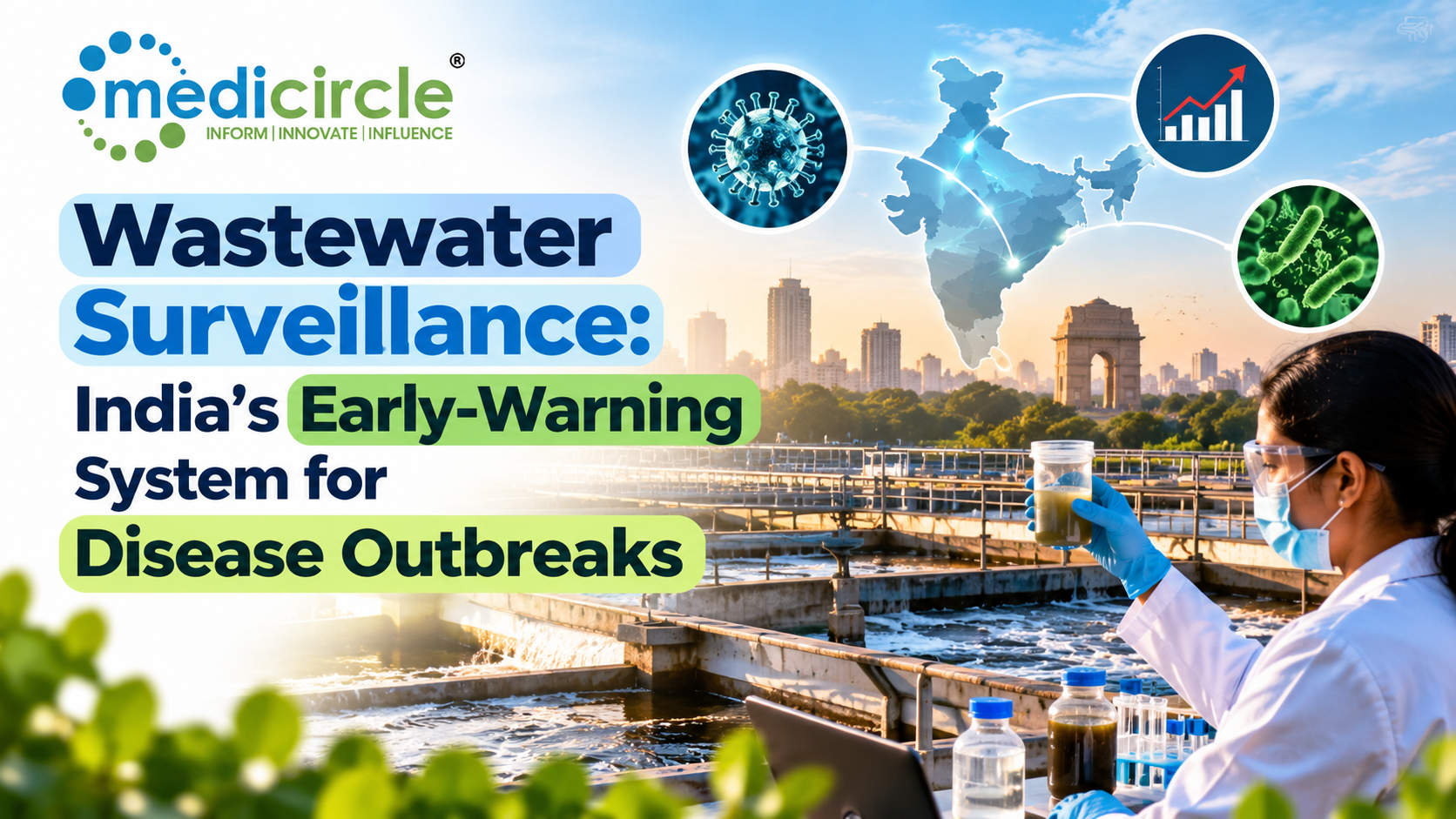
 Wastewater surveillance enables population-wide disease detection before clinical cases emerge, offering India a scalable, non-invasive early-warning tool for infectious disease outbreaks and antimicrobial resistance monitoring.





Introduction
Across centuries of public health history, most disease surveillance has relied on a single chain of events: a person falls ill, seeks medical care, gets tested, receives a confirmed diagnosis, and only then does that case become part of an official count. By the time a cluster of cases registers as a concern for health authorities, an outbreak may already be weeks old, and the window for early containment may have narrowed considerably.
Wastewater surveillance offers a fundamentally different approach. Instead of waiting for people to report illness, it monitors what communities silently and continuously discharge into their sewage systems every single day. Pathogens, viral particles, bacteria, chemical residues, and markers of disease all travel through sewage before most infected individuals even know they are unwell. By sampling and analysing that wastewater, public health teams can detect signals of emerging outbreaks days to weeks before clinical case counts begin to rise.
This discipline, formally known as wastewater-based epidemiology (WBE) or environmental surveillance, is rapidly gaining global recognition as a cost-effective, non-invasive, and population-wide complement to conventional disease monitoring. For a country as populous and epidemiologically complex as India, where healthcare access remains uneven and disease underreporting is a persistent challenge, wastewater surveillance represents one of the most promising public health tools of the coming decade.
What Is Wastewater Surveillance and How Does It Work
At its core, wastewater surveillance is the science of reading human health signals encoded in sewage. When a person carries a pathogen, whether a virus like SARS-CoV-2 or poliovirus, a bacterium like Vibrio cholerae, or a parasitic organism, they shed fragments of that pathogen through their stool, urine, saliva, and respiratory mucus. These biological materials enter household drains, flow through municipal sewage networks, and arrive at sewage treatment plants or open wastewater discharge points.
Public health teams collect samples from these sites at regular intervals. In a laboratory setting, scientists apply sensitive molecular techniques such as reverse transcription polymerase chain reaction (RT-PCR) or next-generation sequencing (NGS) to detect and quantify pathogen genetic material within those samples. Even if only a small fraction of a community's population is infected, the pooled nature of wastewater allows detectable concentrations of pathogen markers to accumulate and be identified.
The logic is straightforward: a single wastewater sample from a treatment plant can represent the collective biological output of tens of thousands or even hundreds of thousands of people living upstream. No individual testing is required. No patient needs to present to a hospital. The community itself, through its daily biological activity, provides a continuous, anonymous, and remarkably democratic health signal.
The COVID-19 Turning Point for Wastewater Epidemiology
While the principles of wastewater surveillance date back to the 1990s, when polio eradication programmes began testing sewage for poliovirus in low-vaccination communities, the COVID-19 pandemic transformed the discipline from a niche scientific tool into a mainstream public health instrument.
In 2020 and 2021, researchers in the Netherlands, the United States, Australia, and the United Kingdom demonstrated that SARS-CoV-2 RNA could be detected in municipal wastewater four to seven days before a surge in COVID-19 hospitalisations became visible in clinical data. These findings drew enormous attention from governments and health agencies worldwide.
India was not far behind. ICMR-supported pilot programmes, conducted in collaboration with institutions such as the National Environmental Engineering Research Institute (NEERI), demonstrated that wastewater surveillance could track COVID-19 waves in Indian cities with reasonable accuracy. During the devastating second wave of 2021, wastewater signals in several Indian cities preceded reported case surges, validating the approach in an Indian context.
The pandemic effectively stress-tested wastewater surveillance at scale and produced a global scientific consensus that this tool deserves a permanent place in national disease surveillance architectures.
What Diseases Can Wastewater Surveillance Monitor
One of the most compelling aspects of wastewater-based epidemiology is its versatility. Unlike disease-specific surveillance programmes, a well-designed wastewater monitoring network can simultaneously track multiple pathogens from the same sample. This is particularly valuable in a country like India, where several infectious diseases co-circulate across different seasons and geographies.
Diseases and threats currently tracked or studied through wastewater surveillance include:
- Poliovirus: India has used environmental surveillance of sewage for poliovirus detection since the polio eradication era, including in high-risk urban pockets in Uttar Pradesh and Bihar.
- Cholera and other enteric pathogens: Vibrio cholerae, rotavirus, hepatitis A and E viruses, and norovirus all shed into wastewater and can be detected even when clinical cases are underreported.
- SARS-CoV-2 and future respiratory viruses: Wastewater surveillance is now considered an essential complement to clinical COVID-19 monitoring and could similarly serve as an early-warning system for future pandemic-potential respiratory pathogens.
- Antimicrobial resistance (AMR): Wastewater carries antimicrobial resistance genes from both human and agricultural sources. Monitoring AMR markers in sewage provides community-level intelligence on resistance patterns without requiring individual clinical testing.
- Drug use trends: Several countries have used wastewater analysis to track illicit drug consumption at the population level, a method that India's health policymakers could apply to monitor prescription drug misuse.
- Mpox and emerging pathogens: International experience has shown that wastewater can detect mpox viral DNA, demonstrating the tool's potential to serve as a sentinel system for novel or re-emerging threats.
Wastewater Surveillance in India: Current Status and Government Initiatives
India's formal engagement with wastewater surveillance has been building steadily, particularly through institutions and programmes aligned with the One Health framework, which recognises the interconnections between human, animal, and environmental health.
ICMR has been the primary driver of wastewater surveillance research in India, having funded multiple pilot studies during and after the COVID-19 pandemic. The National Institute of Epidemiology (NIE), Chennai, has also contributed significantly to developing standardised protocols for Indian conditions.
Under the National One Health Mission, launched following the COVID-19 pandemic as a cross-ministerial initiative involving the Ministries of Health, Animal Husbandry, and Environment, wastewater surveillance has been identified as a key pillar of India's pandemic preparedness architecture. The Integrated Disease Surveillance Programme (IDSP), which operates under the Ministry of Health and Family Welfare, is gradually incorporating environmental surveillance data as a complementary stream alongside clinical reporting from its district-level network.
Several Indian cities and states have also conducted independent pilots. Tamil Nadu, Maharashtra, and Delhi have hosted wastewater surveillance studies. NEERI, based in Nagpur, has developed laboratory protocols adapted to Indian sewage conditions, which differ considerably from the relatively homogeneous sewage compositions found in high-income countries.
However, scaling wastewater surveillance across India faces challenges that are both infrastructural and systemic. Approximately 60 percent of India's population still lacks access to piped sewerage systems. In rural and peri-urban areas, wastewater flows through open drains, septic tanks, or informal channels that are far harder to sample systematically than centralised sewage treatment plants. This means that wastewater surveillance, in its current form, is better suited to India's urban population than to the rural communities that may carry the highest burden of infectious disease.
Challenges India Must Address to Scale This System
For wastewater surveillance to realise its potential as a national early-warning system, India will need to address several interconnected challenges.
The first and most fundamental challenge is sewerage infrastructure. Without expanded coverage of piped sewer networks, particularly in Tier 2 cities, small towns, and rural areas, wastewater surveillance will remain an urban tool with limited national reach. The AMRUT 2.0 mission, which aims to expand urban infrastructure including sewerage, offers a policy vehicle for ensuring that new sewerage infrastructure is built with public health surveillance needs in mind.
The second challenge is laboratory capacity. Detecting pathogen signals in wastewater requires sensitive molecular equipment and trained laboratory personnel. India's public health laboratory network, though improved significantly since the COVID-19 pandemic, remains unevenly distributed and under-resourced in several states. Integrating wastewater testing into existing public health laboratory workflows will require both investment and standardisation.
Data governance presents a third challenge. Wastewater surveillance generates large quantities of environmental genomic data. Without a national framework for how this data is collected, stored, analysed, shared, and acted upon, the insights it produces cannot be translated efficiently into public health responses. A centralised wastewater surveillance dashboard, similar to the COVID-19 data portals that several countries maintained during the pandemic, would significantly improve the utility of this tool.
Finally, community communication will be essential. While wastewater surveillance is anonymous and does not track individuals, communicating its purpose and safety to communities will be important for maintaining public trust, particularly in a country with a complex history of vaccine hesitancy and health programme scepticism.
The Global Experience and What India Can Learn
Countries that have most effectively deployed wastewater surveillance share several characteristics: they have invested in standardised protocols, integrated wastewater data with clinical surveillance, built clear public health response triggers based on wastewater signals, and maintained these systems even when no active outbreak is occurring.
The Netherlands was among the earliest adopters and has maintained a national wastewater surveillance network that now monitors dozens of pathogens continuously. The United States, through the CDC's National Wastewater Surveillance System (NWSS), collects data from hundreds of sites and publishes near-real-time trends for COVID-19, influenza, RSV, and mpox. Australia's programme demonstrated that wastewater signals for SARS-CoV-2 could predict regional case surges with a lead time of up to nine days.
For India, the most relevant international comparators may be lower-middle-income countries with similar infrastructure constraints. Bangladesh and Pakistan have both developed wastewater surveillance capabilities specifically for poliovirus and cholera monitoring in dense urban environments, demonstrating that cost-effective approaches are achievable even without extensive sewage infrastructure.
Why Wastewater Surveillance Matters for India's Public Health Future
India accounts for roughly 18 percent of the world's population and carries a disproportionate share of the global infectious disease burden. Waterborne diseases, respiratory infections, vector-borne illnesses, and the looming threat of antimicrobial resistance collectively represent a massive challenge for India's healthcare system.
Traditional disease surveillance in India has long been constrained by the healthcare-seeking behaviour of the population. A significant proportion of infectious disease cases, particularly in rural areas and among low-income urban communities, never result in a formal medical consultation or laboratory test. These invisible cases are lost to surveillance, creating blind spots in the data that public health planners rely upon.
Wastewater surveillance does not require individuals to seek care. It does not depend on healthcare workers filing reports or laboratories running tests on individual patients. It operates silently, continuously, and equitably across the populations whose sewage flows through monitored systems. In that sense, it is one of the most genuinely population-level tools available to public health.
For Medicircle readers who include doctors, hospital administrators, healthcare leaders, and public health advocates, this matters because timely outbreak intelligence translates directly into earlier clinical preparedness. When a hospital in a monitored city can see a wastewater signal suggesting an impending surge in a respiratory pathogen three weeks before case counts rise, it can adjust staffing, procure consumables, and prepare communication for patients in advance. That lead time saves lives.
Conclusion
Wastewater surveillance is not a replacement for clinical disease monitoring. It is a powerful and complementary layer of intelligence that allows public health systems to see what individual case reports cannot. For India, a country of extraordinary epidemiological complexity, this tool offers something rare: a way to listen to the health of entire populations without waiting for them to fall sick enough to seek care.
The scientific evidence is robust, international experience is encouraging, and India has already demonstrated through its COVID-19 and polio surveillance experience that the approach is feasible in Indian conditions. What is now needed is a committed national policy framework, sustained investment in laboratory infrastructure, expanded sewerage coverage, and integrated data systems that can translate wastewater signals into timely public health action.
Building that system will not happen overnight, but the foundations are in place. India has the scientific institutions, the policy frameworks, and the public health workforce needed to make wastewater surveillance a cornerstone of its future epidemic preparedness architecture. The question is not whether this early-warning system works. The question is how quickly India will invest in making it work at national scale.
Frequently Asked Questions
Q1: What is wastewater surveillance in public health?
Wastewater surveillance, also called wastewater-based epidemiology or environmental surveillance, is the process of analysing sewage and wastewater samples to detect the presence of pathogens, viruses, or chemical markers of disease before clinical cases are formally reported. It allows public health authorities to monitor community-level disease burden without requiring individual testing.
Q2: How does wastewater surveillance detect COVID-19 and other viruses?
When a person is infected, they shed viral particles or bacterial fragments through their stool, urine, and respiratory secretions. These shed particles enter the sewage system and can be detected using molecular techniques such as RT-PCR or next-generation sequencing, often days before the person develops noticeable symptoms or seeks medical care.
Q3: Is wastewater surveillance being used in India?
Yes. India began piloting wastewater surveillance during the COVID-19 pandemic through ICMR-supported programmes and research conducted by institutions such as NEERI. The approach has since been recognised within the National One Health Mission and the IDSP framework, with ongoing work to monitor poliovirus, cholera, antimicrobial resistance markers, and emerging pathogens.
Q4: What are the limitations of wastewater-based epidemiology in India?
Key limitations include poor sewerage coverage in rural and peri-urban areas, signal dilution in large or informal sewer networks, lack of fully standardised testing protocols across states, inadequate numbers of trained laboratory personnel in some regions, and the absence of a centralised national wastewater surveillance database that could translate signals into coordinated responses.
Q5: Can wastewater surveillance detect antimicrobial resistance?
Yes. Wastewater samples can reveal the presence of antimicrobial resistance genes circulating in a community, even among people who have not yet sought medical care. This makes it a powerful complementary tool for AMR monitoring alongside traditional clinical surveillance, and it is particularly relevant for India given its high AMR burden.
Resources
- Indian Council of Medical Research (ICMR): Guidelines, publications, and research on environmental surveillance and wastewater-based epidemiology in India.
- World Health Organization (WHO): Global technical guidance on wastewater surveillance, including the WHO/UNICEF framework for environmental poliovirus surveillance.
- National Environmental Engineering Research Institute (NEERI): Research outputs and protocols developed for wastewater surveillance under Indian environmental conditions.
- Ministry of Health and Family Welfare, Government of India: Policy documents on the National One Health Mission and the Integrated Disease Surveillance Programme (IDSP).
- Centers for Disease Control and Prevention (CDC), United States: National Wastewater Surveillance System (NWSS) documentation, technical methods, and dashboards useful as international reference models.
Interlinking Keywords
wastewater-based epidemiology India, environmental disease surveillance, ICMR wastewater COVID, poliovirus environmental surveillance, antimicrobial resistance monitoring India, One Health mission India, IDSP disease surveillance, sewage epidemiology, outbreak early warning system, public health surveillance India, wastewater testing pathogens, pandemic preparedness India
Last reviewed by:
Dr. Manthan Tripathi, Medicircle Editorial and Medical Advisory Team on 29, October 2026.
Disclaimer
This article is intended for informational and public health awareness purposes only. It does not constitute medical advice, clinical guidance, or a substitute for professional consultation. Readers should consult qualified medical professionals for any health-related concerns. Medicircle does not endorse any specific diagnostic products, treatment protocols, or commercial services referenced in this article. All statistics and programmatic references are based on publicly available data and are subject to change as new information emerges.





-23-300x250.png)