 Wednesday, October 28, 2026
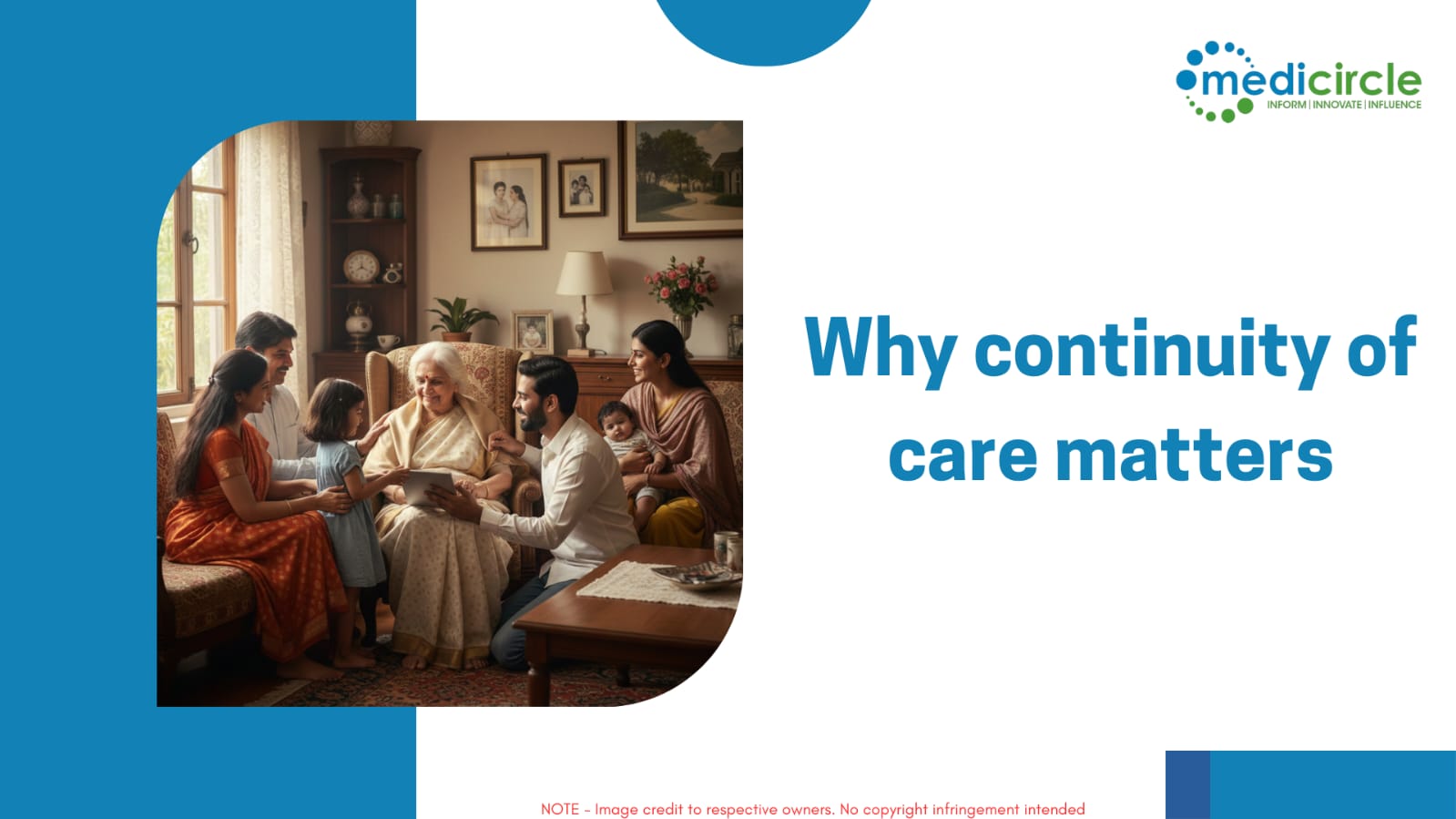
 Continuity of care is the bridge that turns medical intervention into a healthy life by building long term relationships with healthcare providers and ensuring every step of your health journey is well managed.




Healing is not simply about a single prescription or a one-time surgery. It is a long term journey that requires a roadmap. In the rapidly evolving medical scene of India, which is filled with massive hospitals and countless digital applications, it is easy to feel like a number in a system. However, the secret to truly effective medicine often lies in a concept called continuity of care. Essentially, this means having a consistent relationship with your healthcare providers where information flows smoothly from one checkup to the next. It is the difference between a series of random medical episodes and a cohesive strategy for your well-being.
Think of it in this way: when you bounce between different clinics without a central plan, you become your own unintentional medical clerk. You end up repeating your history over and over, carrying around heavy folders of old reports, and hoping you have not forgotten a small detail that might be crucial. When care is consistent, that burden is lifted. Your medical history becomes a living story that your doctor already knows, ensuring nothing important falls through the cracks.
Value of Doctor Relationships:
There is a unique clinical advantage to having a doctor who actually knows you. When a physician is familiar with your lifestyle, your family background, and how your body usually reacts to medicine, the conversation changes. It is no longer just a cold exchange of symptoms and data. It is a partnership built on trust. In our culture, where family health history and lifestyle habits play a massive role in our wellness, having a doctor who understands that context leads to much more practical and realistic health advice.
This familiarity also serves as an early warning system. A doctor who has seen you over several years will notice subtle shifts, perhaps a slight change in your energy levels or a minor trend in your blood pressure that a stranger would likely overlook. For chronic conditions such as diabetes or heart health, which are so common in India today, this kind of vigilant, long term observation is often the key to preventing a minor issue from becoming a major crisis.
Safety and Coordination:
Beyond the personal connection, staying within a coordinated system is a matter of safety. One of the biggest risks in modern medicine is fragmentation, where one specialist prescribes a drug without knowing what another has already given you. This can lead to dangerous drug interactions or unnecessary, repetitive testing. Continuity ensures that everyone on your medical team is looking at the same big picture, which is especially vital when you are transitioning from a hospital stay back to your home.
When you feel that your healthcare team is genuinely invested in your progress, you are also more likely to stick to the plan. It is much easier to stay motivated about diet changes or daily medications when you know you will be sitting across from the same trusted professional in three months. This consistency leads to fewer emergency room scares and a much higher quality of life.
Bridging Modern Gaps:
Of course, life happens. People move cities, insurance plans change, and sometimes you just need a second opinion. While staying with one doctor forever is not always possible, new digital health initiatives in India are making it easier to maintain information continuity. Using digital health identification and shared electronic records means that even if you see a new specialist, they can immediately see your past history.
However, technology is only half the battle. As patients, we have a role to play by choosing healthcare ecosystems rather than just isolated clinics. Selecting a hospital or a health platform that prioritizes follow up care and integrated records can transform a stressful, disjointed experience into a manageable and predictable part of your life.
Emotional and Mental Relief:
We often forget the mental toll of being ill. Managing a long recovery or a chronic condition can be incredibly lonely and anxiety inducing. There is immense comfort in knowing that a dedicated team is holding the map for you. It eliminates consultation fatigue, which is that exhausting feeling of having to explain your entire life story to a new face every few weeks.
In the old days, the family doctor provided this emotional anchor. Today, even as medicine becomes more high tech and institutional, we must demand that same level of personal connection. When you feel seen as an individual rather than just a case file, your body and mind are in a much better position to heal.
A Better Way Forward:
As we look toward the future of medicine, innovation alone is not enough. The most advanced robotic surgery or the newest miracle drug is only as good as the care plan that follows it. Continuity of care is the bridge that turns medical intervention into a healthy life.
By choosing consistency and building long term relationships with healthcare providers, we are not just making life easier for our doctors. We are giving ourselves the best possible chance at a long, healthy, and well managed life. It is an investment in your future self, ensuring that every step of your health journey is taken with someone who knows where you have been and where you want to go.





-23-300x250.png)

.jpeg)






.jpg)
.jpg)
.jpg)
.jpg)
.jpg)
.jpg)
.jpg)
.jpg)
.jpg)

